In this one day Trieste itinerary we’ll explore the Italian seaside city which started life as an Roman settlement named Tergeste. It was a vital commercial hub of the Habsburg Empire during the 18th and 19th century. Much of this Austrian grandeur can still be seen mixed with Italian elegance in the city’s architecture. The city attracted intellectuals and artists from across Europe – including notable residents like James Joyce, J. J. Winckelmann and Italo Svevo. After the First World War it was ceded to Italy, and it was briefly governed by the UN after the Second World War before it was returned to Italy.
We start the day at Trieste Centrale train station, as this is the place where you’ll enter the city whether you’ll come by train from Venice, by bus from Slovenia or Croatia or use the ample nearby parking for your car.
Canal Grande
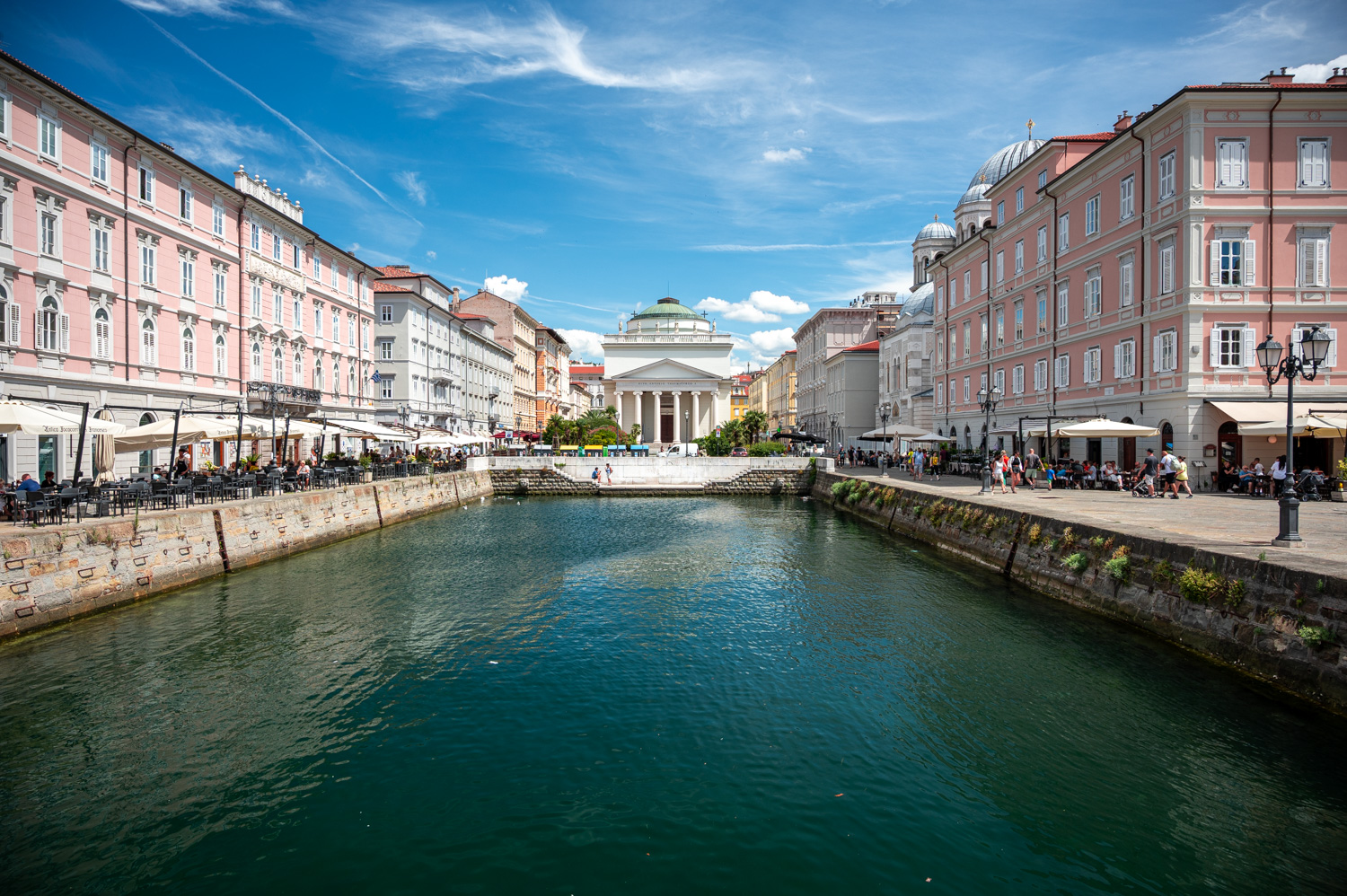
The first stop is the Canal Grande, this 18th century addition to the city enabled ships to unload their goods directly in the city center. Nowadays it is a picturesque landmark, lined with neoclassical and Art Nouveau façades. From the ponte Bianco, you’ll have the sea to your back as you look along the canal towards the Church of Sant’Antonio Nuovo. The Canal Grande is a bit of Venice mixed with Central European flavour.
Piazza Unità d’Italia
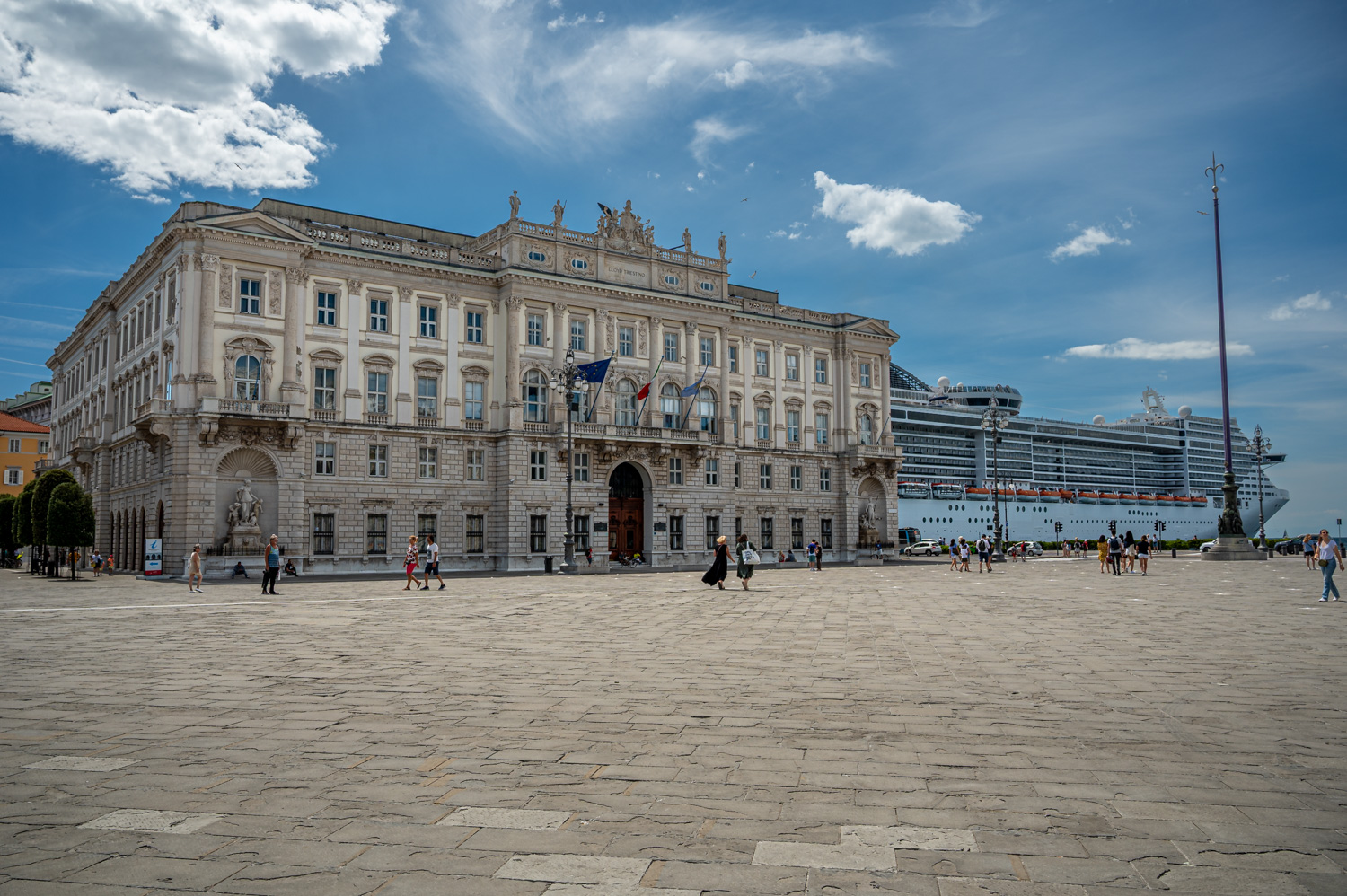
Continue along the sea boulevard until you reach the Piazza Unità d’Italia, the monumental heart of Trieste. One of Europe’s largest squares directly facing the sea, it is framed by grand 19th-century buildings including the City Hall (Palazzo Municipale) and the Palazzo del Governo. This again offers a unique blend of Central European and Italian styles and hosts major civic events.
Museo Revoltella – Galleria d’arte moderna
As we make our way to our next stop we pass some interesting more niche museums you can check out if it interests you. Just behind the square lies the Civic Museum of Oriental Art, an interesting free museum with Japanese and Chinese art. As you continue along the Via di Cavana, you’ll get to the Joyce Museum, this museum is dedicated to the Irish writer who spend almost 15 years in the city and wrote big parts of his most famous works here. In the same building you can also find the Italo Svevo museum. I you want to learn more about this region and Italian presence in Istria, visit the free Civico Museo della Civiltà Istriana Fiumana e Dalmata.
Housed in a palace, the former home of Barone Pasquale Revoltella is turned into a Modern art gallery, housing the baron’s collection of Italian modern art. The Museo Revoltella gives a nice window into the life of the well to do Austrian-Hungarian elite living in this city. The palace was joined with the nextdoor Brunner Palace, which provides the main exhibition space of the museum.
J. J. Winckelmann Antiquities Museum
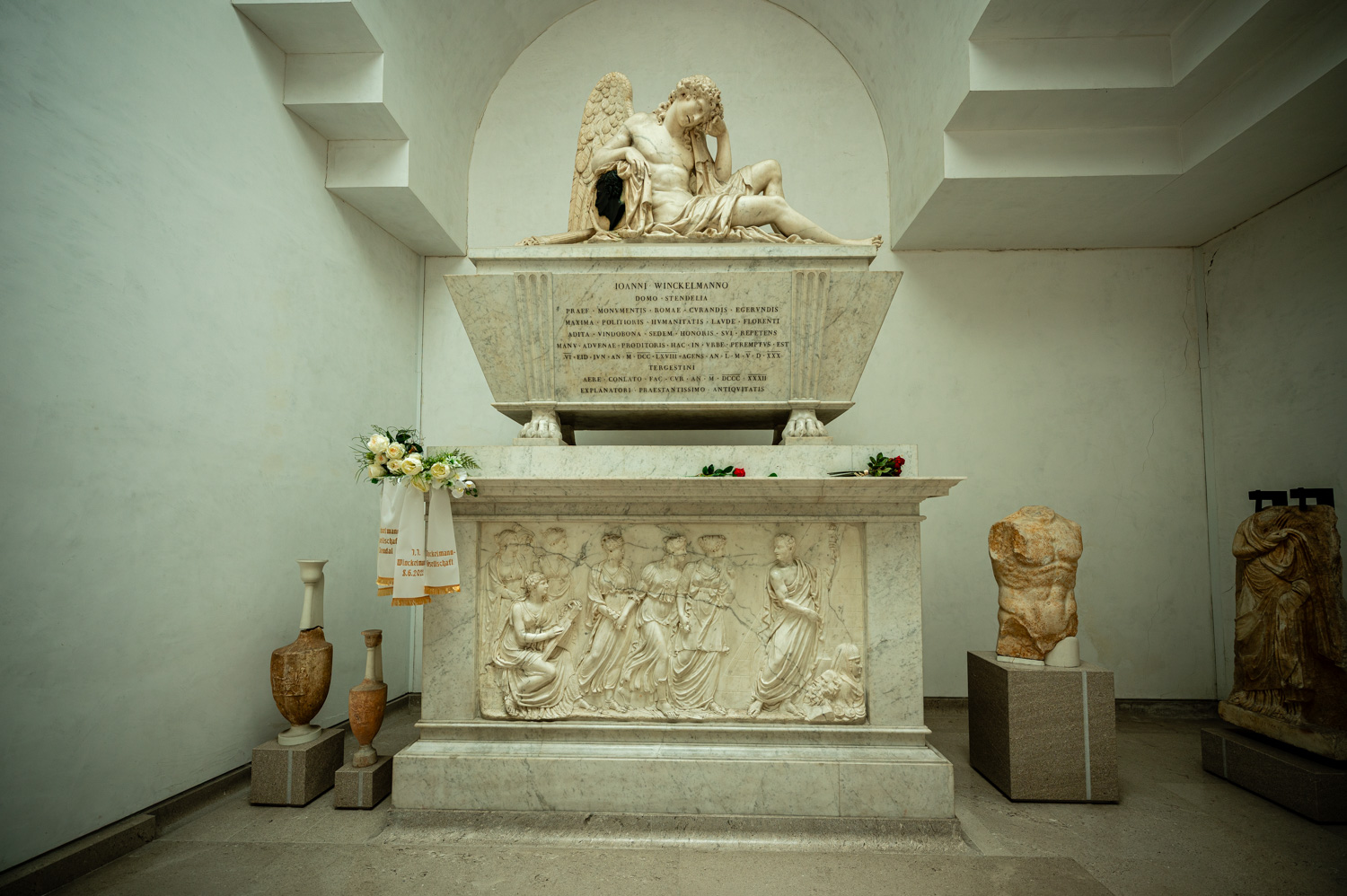
We walk back in the direction of the square before we turn right to the Via Felice Venezian starting to climb the hill of the city. We pass an ancient Roman arch, the Arco di Riccardo before we get to a panaromic point overlooking the old parts of the city with the Adriatic in the background. Next door lies the J. J. Winckelmann Antiquities Museum, the museum is named after the father of modern archeology J. J. Winckelmann, who was murdered in a hotel in Trieste in 1768. The museum houses a nice collection of local antiquities combined with pieces from Greece, Egypt and Cyprus. The highlight of the collection is the silver rhyton, the head of a young fawn worked into a silver vase with mythological scenes embossed in its neck. The museum garden houses several funeral stones and other objects. Don’t forget to take a look at the The Winckelmann Cenotaph.
Cattedrale di San Giusto
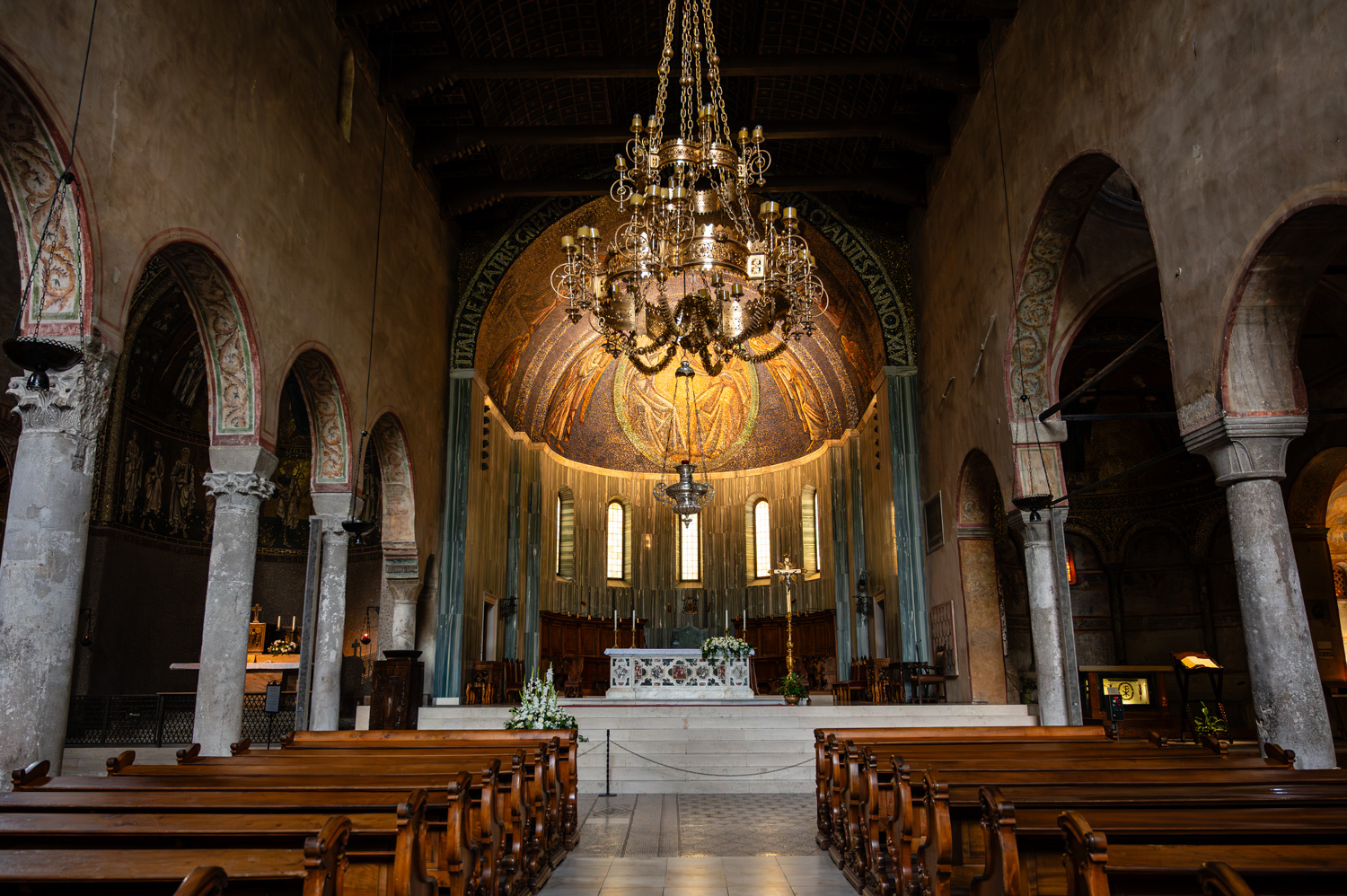
Just a little bit further, perched atop San Giusto Hill overlooking the Adriatic, lies the Cattedrale di San Giusto, dedicated to the city’s patron saint. It is a strikingly asymmetrical structure that uniquely incorporates the remains of two separate 5th‑century Romanesque basilicas. Shaped over centuries—particularly during the 14th and 15th centuries—it blends Romanesque foundations, Gothic‑Renaissance upper sections, and Baroque interior décor, featuring a prominent bell tower and richly decorated chapels where the relics of Saint Just rest.
Castello di San Giusto
The adjacent Castello di San Giusto was commissioned by the Austrian emperors in 1468 and reached its current triangular, bastioned fortification form by 1636. After being thoroughly renovated in 1936, it now serves as a museum housing the Armoury collection and the Lapidarium of Tergeste, which displays ancient Roman stone inscriptions including the famous “Melon” marble sculpture. Its parapet walkways offer sweeping panoramic views of Trieste and the Adriatic Sea.
Roman Forum
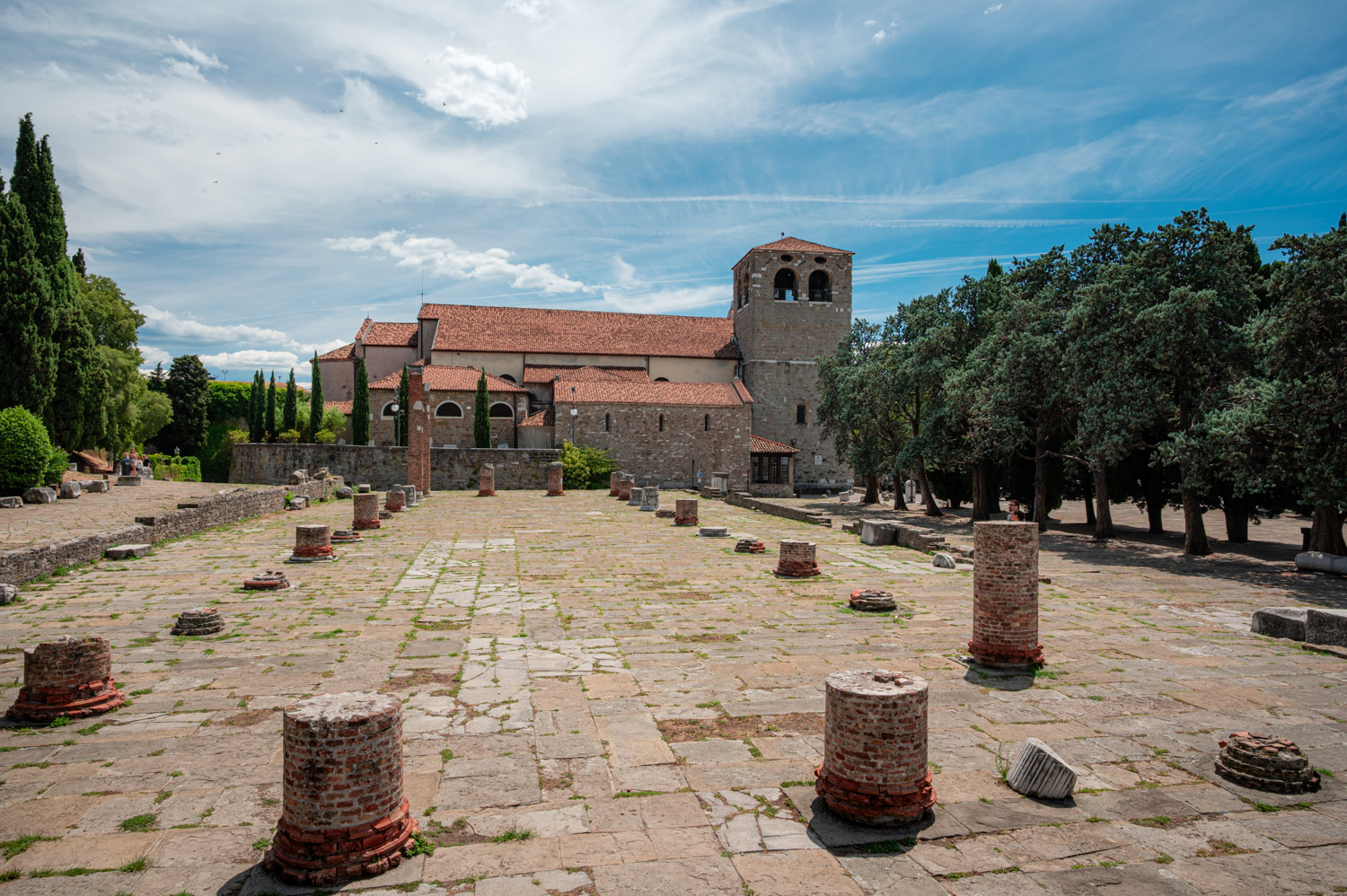
Next to the castle and the church lie the fragmentary remains of the ancient Roman forum, including the foundations of a basilica, a propylaeum, and several column bases now buried beneath modern buildings along Via del Teatro Romano and Via Cavana.
Roman Theatre
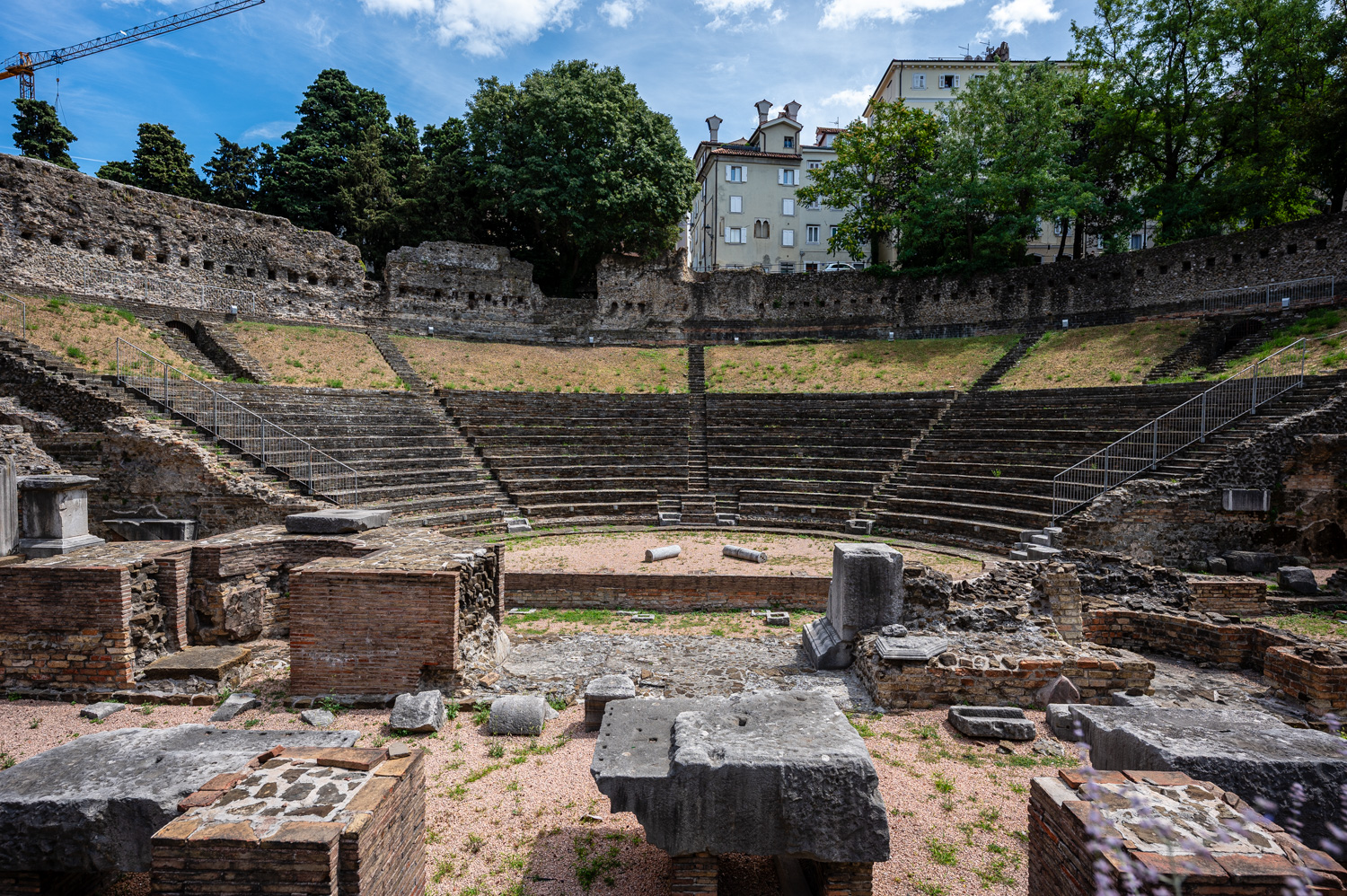
Descend the hill towards the Roman theatre of Trieste, situated on the northwestern slope of San Giusto Hill, is the city’s most significant surviving monument from Roman times. It retains its original stone seating (cavea), orchestra, and portions of the stage front facing the Gulf of Trieste. From here it’s a 15 minutes walk back to the station.
Further afield
Risiera di San Sabba
In a southern suburb of the city lies this former rice mill, which was turned into a Nazi concentration camp in 1943. Here several thousand people died, mostly partisans. For the Jews it served mainly as transit camps on their way to Auschwitz and other extermination camp.
Castello Miramare
Set on a rocky promontory overlooking the Adriatic Sea, Miramare castle was built for the Austrian Archduke Ferdinand Maximilian and his wife, Charlotte of Belgium, later Emperor Maximilian I of Mexico and Empress Carlota of Mexico. It was visited by “Sisi” at least 14 times, other famous guests were the Austrian emperor Franz Joseph, the German emperor William II. Archduke Franz Ferdinand lived at Miramare in the months leading up to his assassination in Sarajevo.


