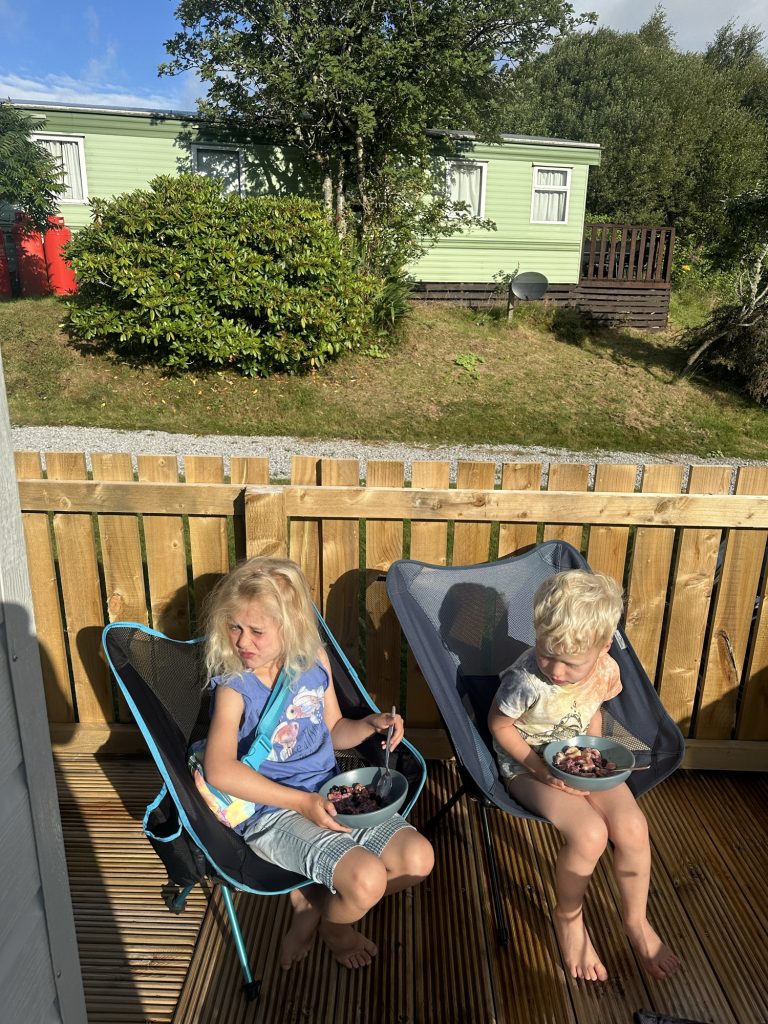
It’s sunny today, we can even have breakfast on our terrace. We pack the car and clean the caravan. The kids help with doing the dishes and bring back the four puzzles we borrowed.
We leave the remote mountains and forestry of the Scottish borders to visit the 1240 Hermitage Castle. It’s semi ruined castle, we can still recognise the kitchen and climb some stairs. It was the favourite castle of Walter Scott.
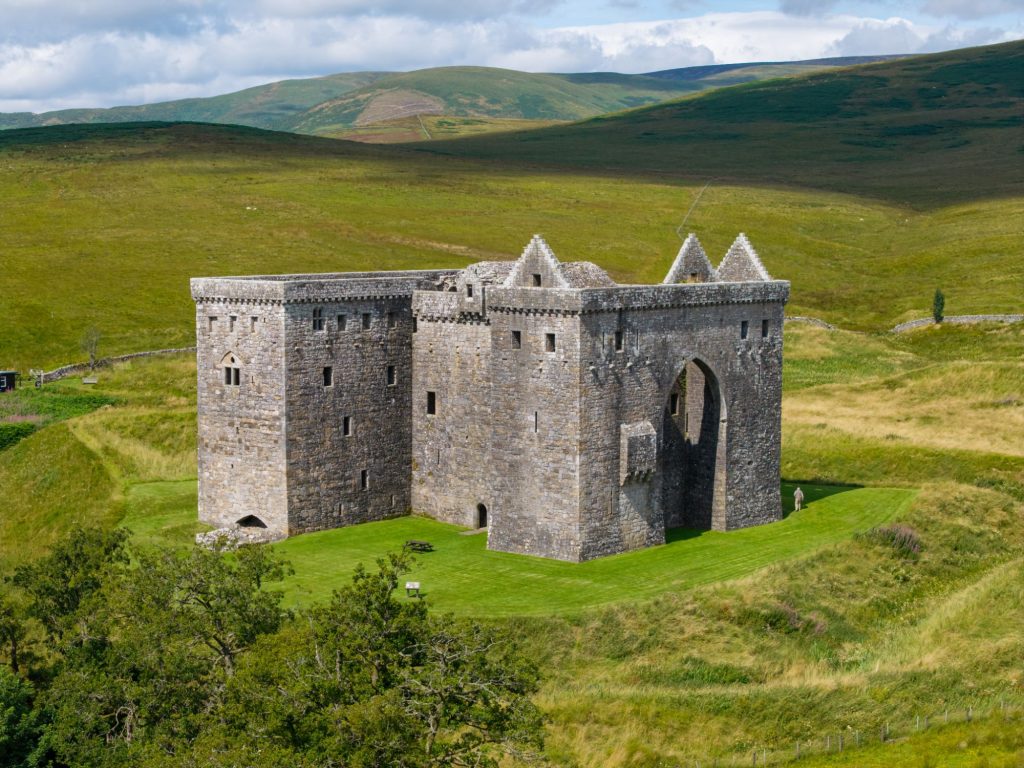
Mary, Queen of Scots, made a famous marathon journey on horseback from Jedburgh to visit a wounded Earl Bothwell there, and marrying him one year later. Mary is said to still wonder around at night… We won’t wait for her today, and go back yo our car.
We pass the border with England and enter Northumberland, the least-densely populated county, and known for its castles as it border to Scotland.
We start our travel through England after 2 weeks Scotland, however, with a country house. it’s known for a beaver family. We watched an episode about this house last year, but only realise it when writing this blog.
We can rent bikes to explore the estate and maybe spot some beavers, but Tim does not feel super fit, so we just visit the inside. There is a beaver hunt for the kids, so we still manage to spot six pluchen beavers.
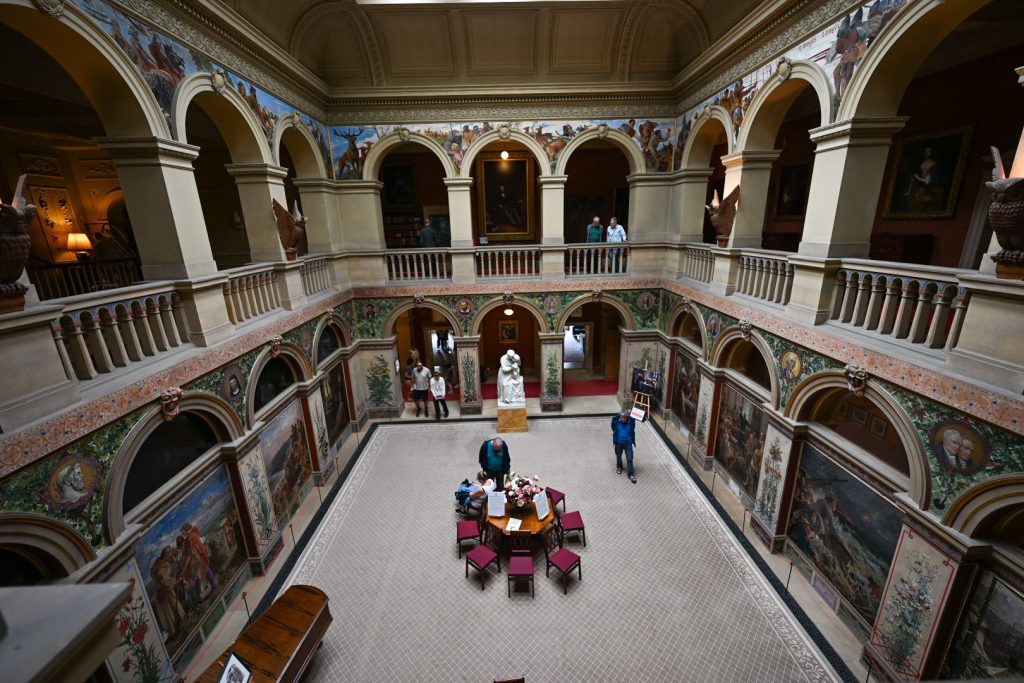
The large central hall depicts the history of Northumberland, painted by William Bell Scott. There is also a large doll house collection, one dates to 1835, another one has 36 rooms, each lit by electricity.
Outside is “The Summer of Play”, a famous festival at English National Trust sites in August. there are many games to play, we try curling and robe pulling.
Then we leave to the nearby 19th century Cargside country house of William Armatrong. We also visited it last year, but it’s so exceptional, it’s worthwhile a second visit.
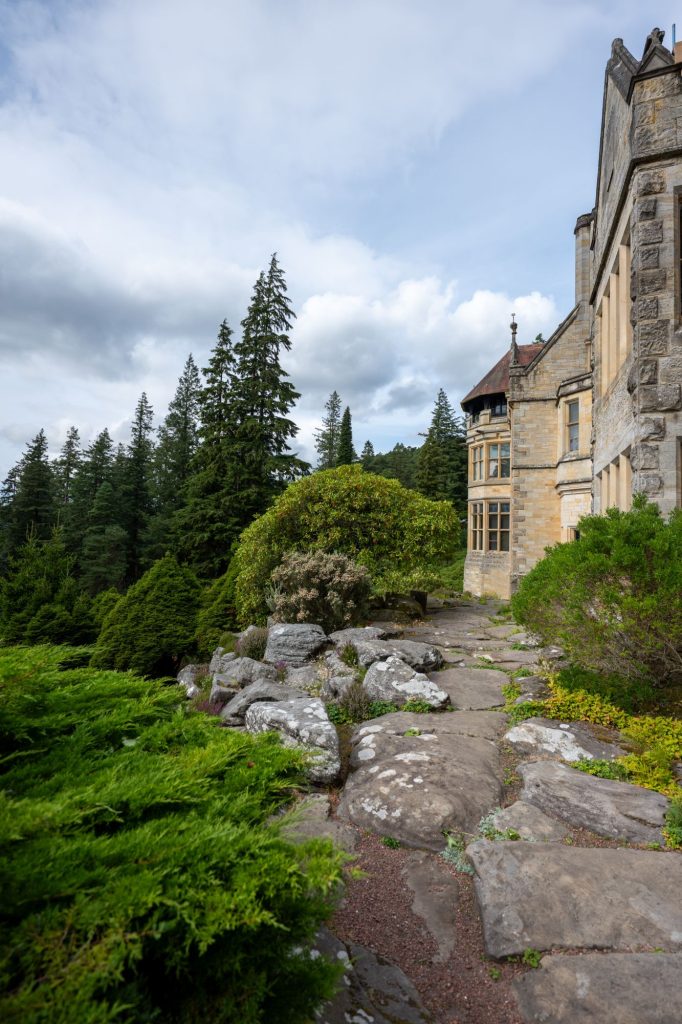
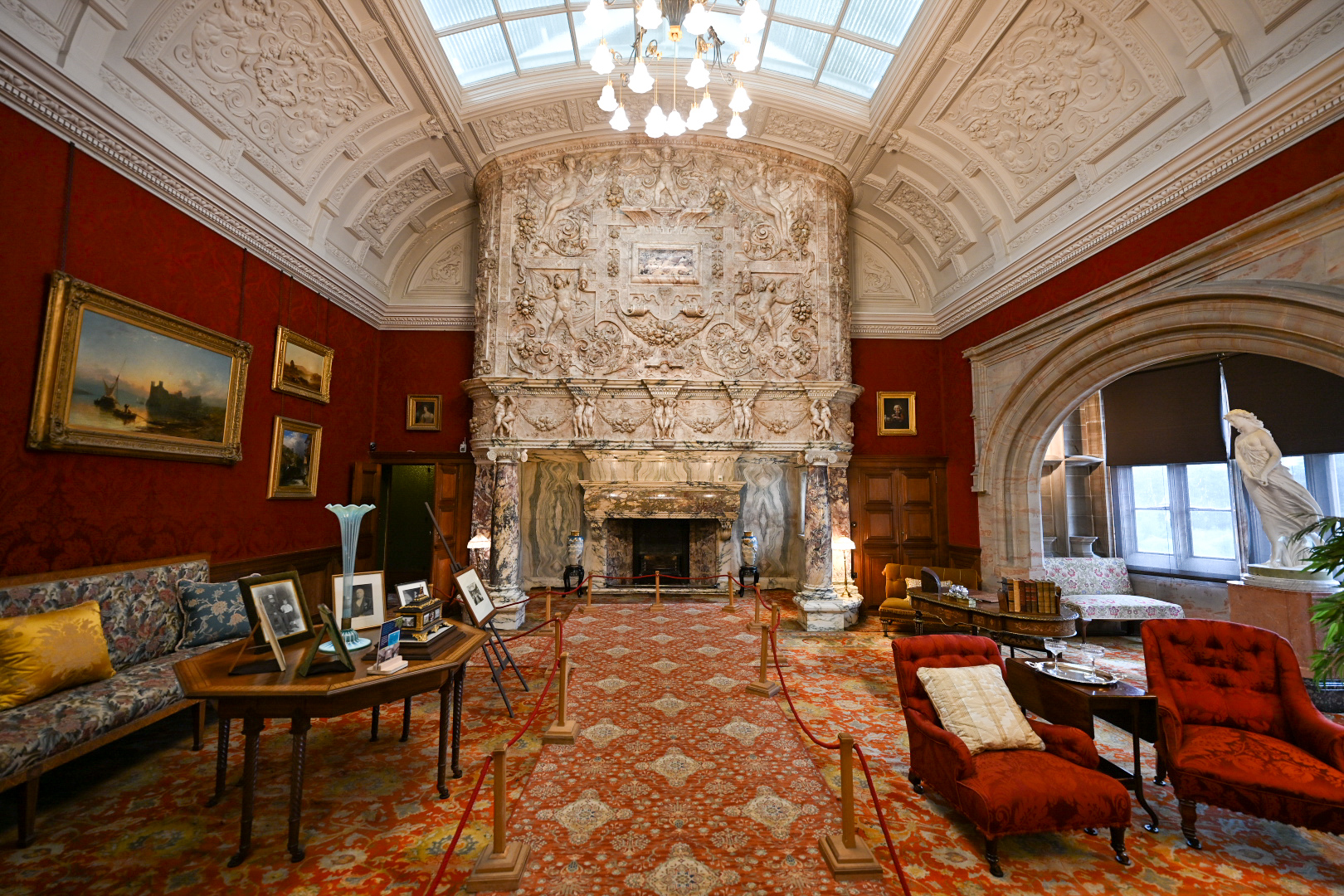
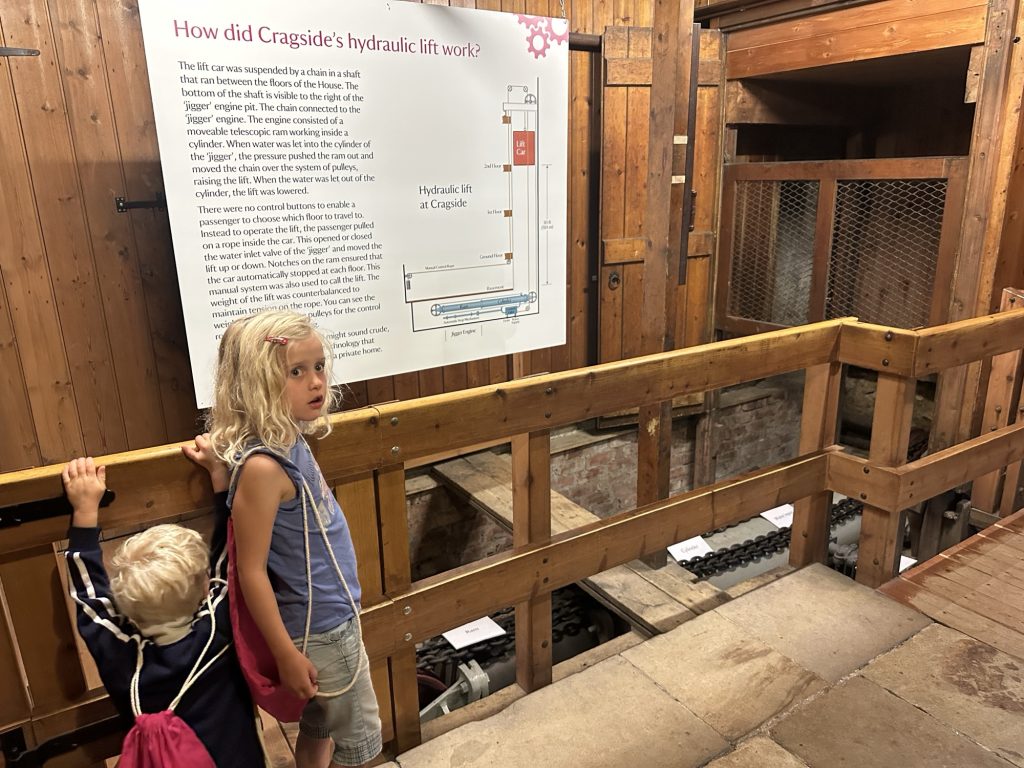
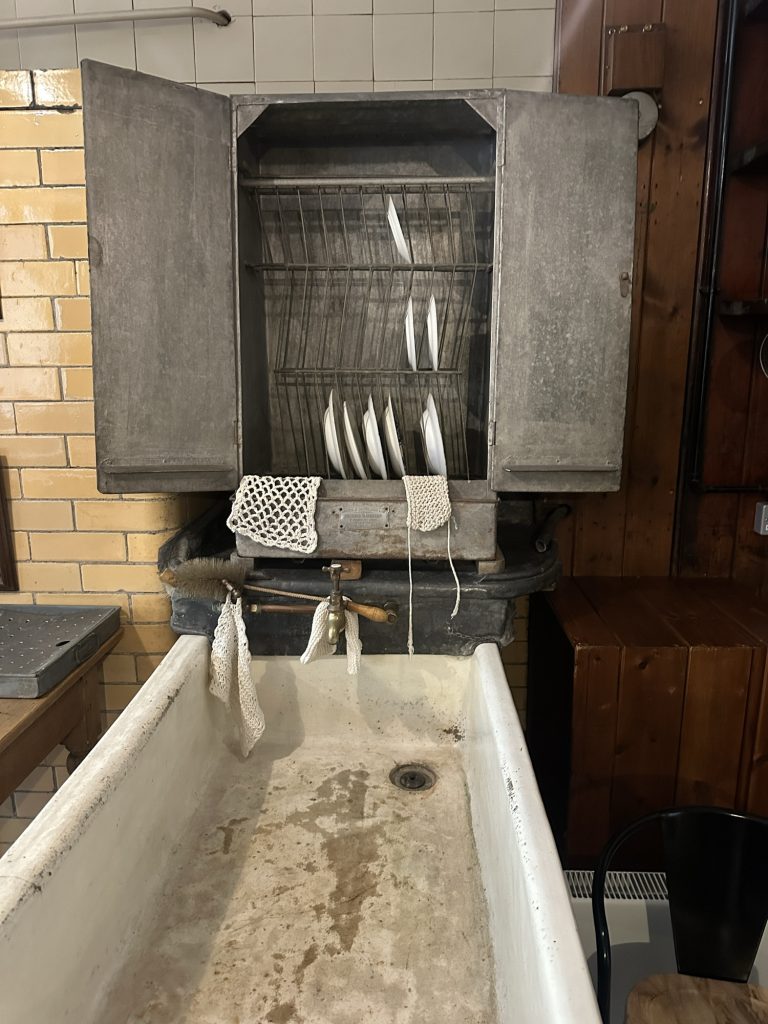
Armstrong was an industrial magnate, scientist, philanthropist and inventor of the hydreaulic crane and the Armstrong gun. He displayed his inventiveness in the domestic sphere, making Cragside the first house in the world to be lit using hydroelectric power. The estate is technologically advanced: in the grounds, Armstrong built dams and lakes to power a sawmill, a water-powered laundry, early versions of a dishwasher and a dump waiter, a hydraulic lift and a hydroelectric rotisserie.
He was also an art collector, but unfortunatelly all the art was sold to have funds to maintain the house. In 1977, it was bought by the National Trust, being the most important Victorian house in Britain.
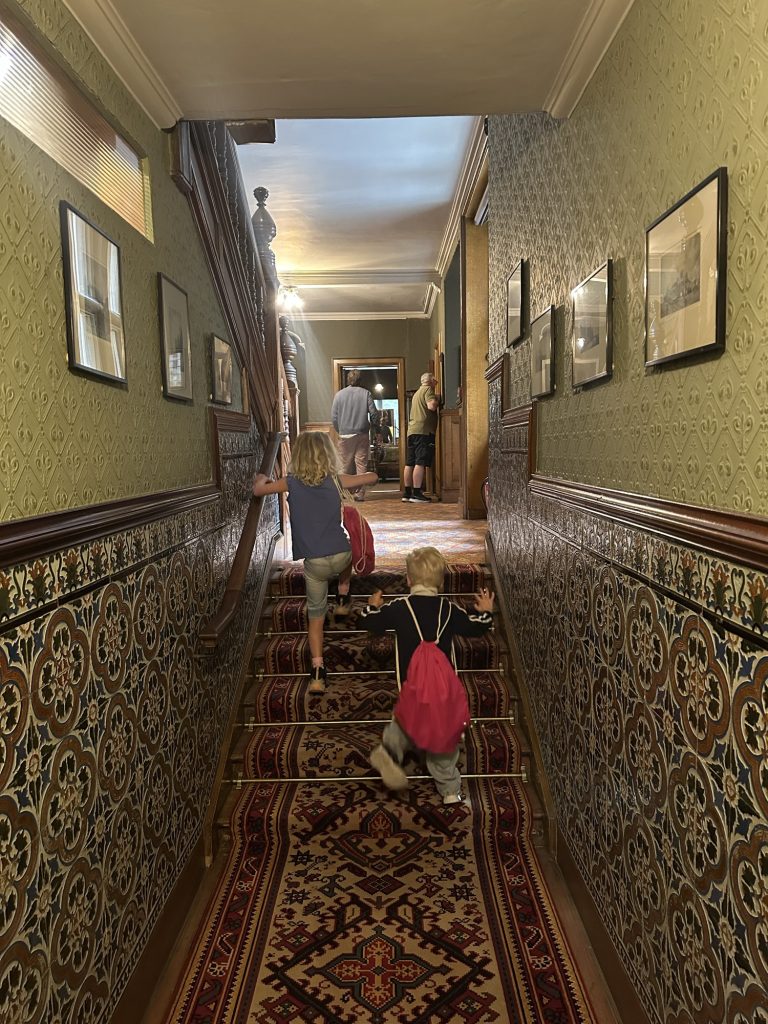
It’s much quieter inside today at 15 than last year, when we arrived sharp at opening time. We have more freedom to wonder around in the house. There is no hunt for the kids this year, which gives us more peace of mind to explore the house at our own pace. The kids do get an explorer bag with a mirror to look at the ceilings, a magnifying glass and a torch to explore dark cornors.
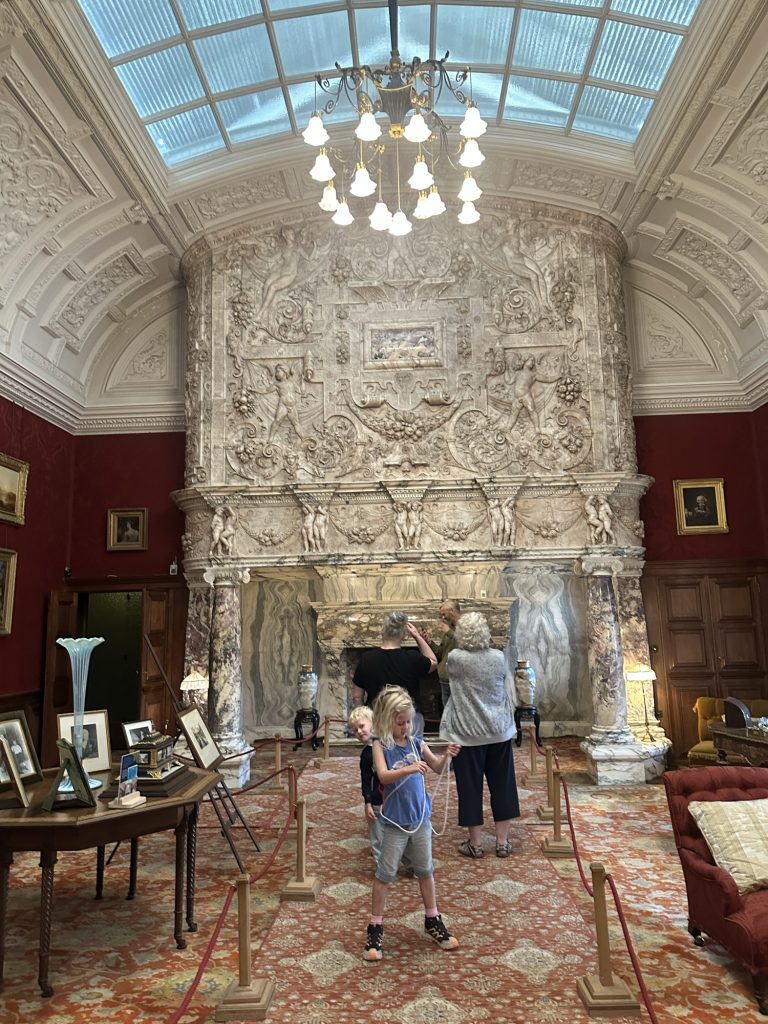
Tim is not feeling any better and unlike him he sits at a couch to wait for the rest of the family to be done. We decide to skip the (fantastic) estate and playground also here, to save energy and find a camping. It’s already 16.
Luckily, a campsite at the coast has a (camper)spot available for us. We can pitch our tent on the grass next to the camper parking. There is a playground for the kids and they even make some friends, Cleo tells every kid she encounters that she’s six years, and Zeno three, and when kids ask them wich language they speak, they answer “Belgium”.
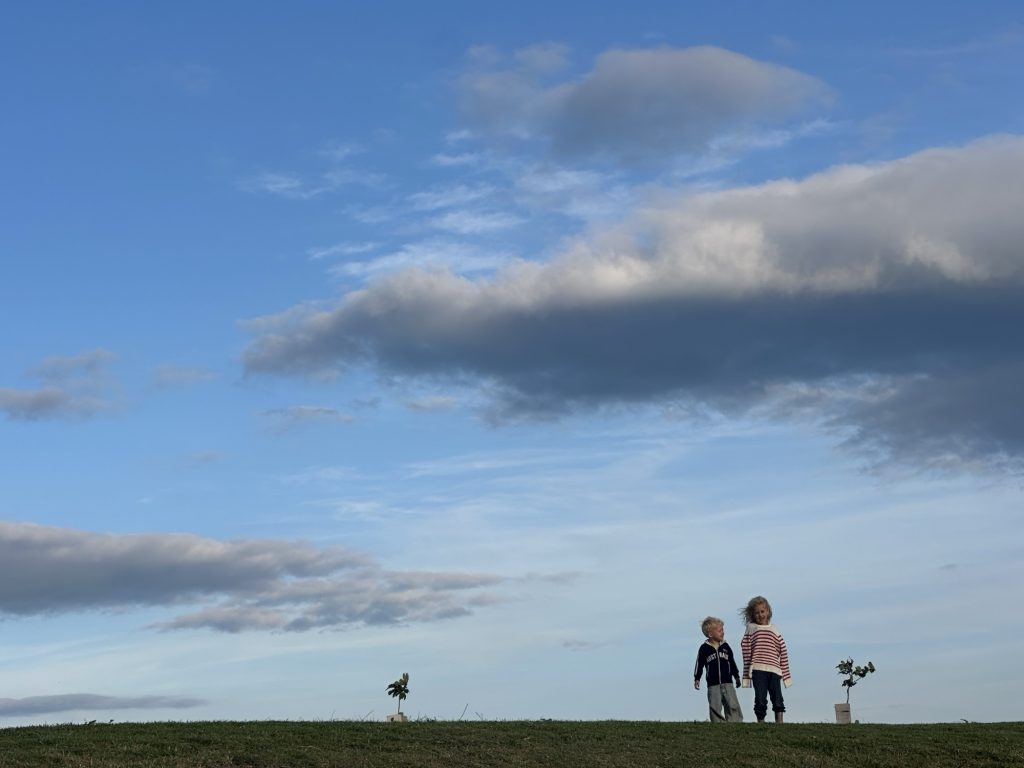
We eat a simple pasta dish, and Tim and kids go to bed early to hopefully recover, while Olga goes for an underestimated hike to the nearby beach and she’s is only back at the campsite at 22:30. Goodnight!