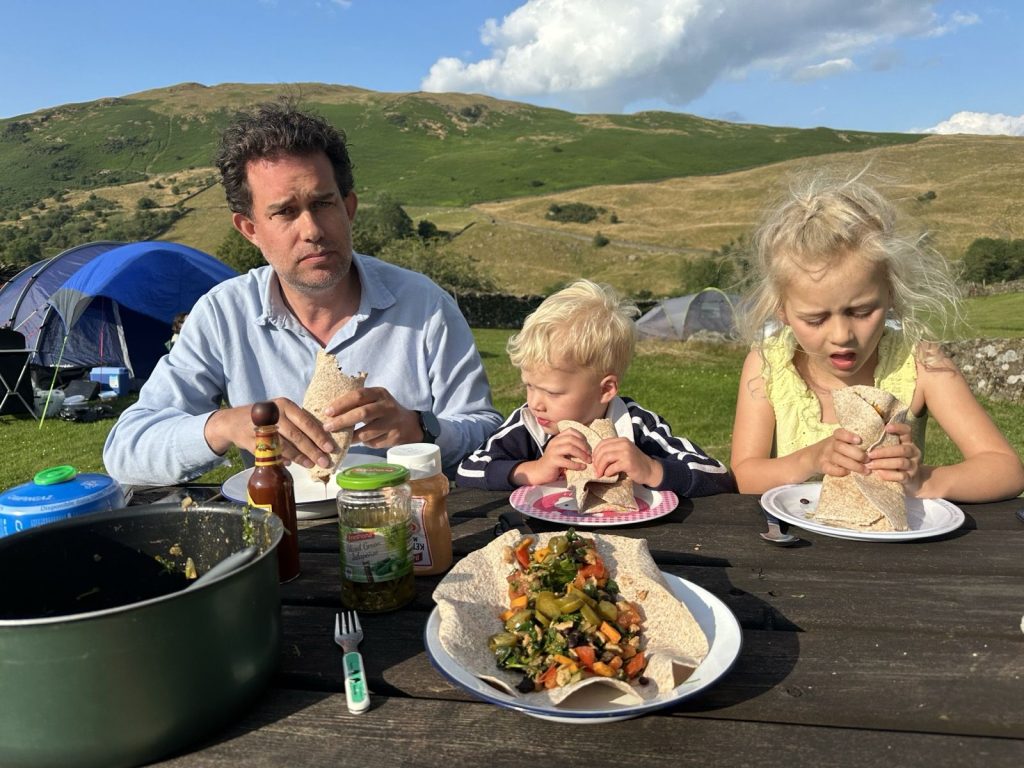
The sun wakes us at 7. Luckily it was not too cold. We take a quick shower (it has to be quick because of the water shortage on our camp site) and prepare breakfast. It’s an ideallic start of the day, with the hills surrounding us and the sheeps awakening too.
It takes us two hours before we depart. That should be quicker next time, as the lakes are most beautiful in the early morning light and when there is no wind.
It’s a 30 minute drive to lake Blea Tarn. But it takes much longer as we’re stuck in a train of cars behind a very scared driver who only drives 15 km/h.
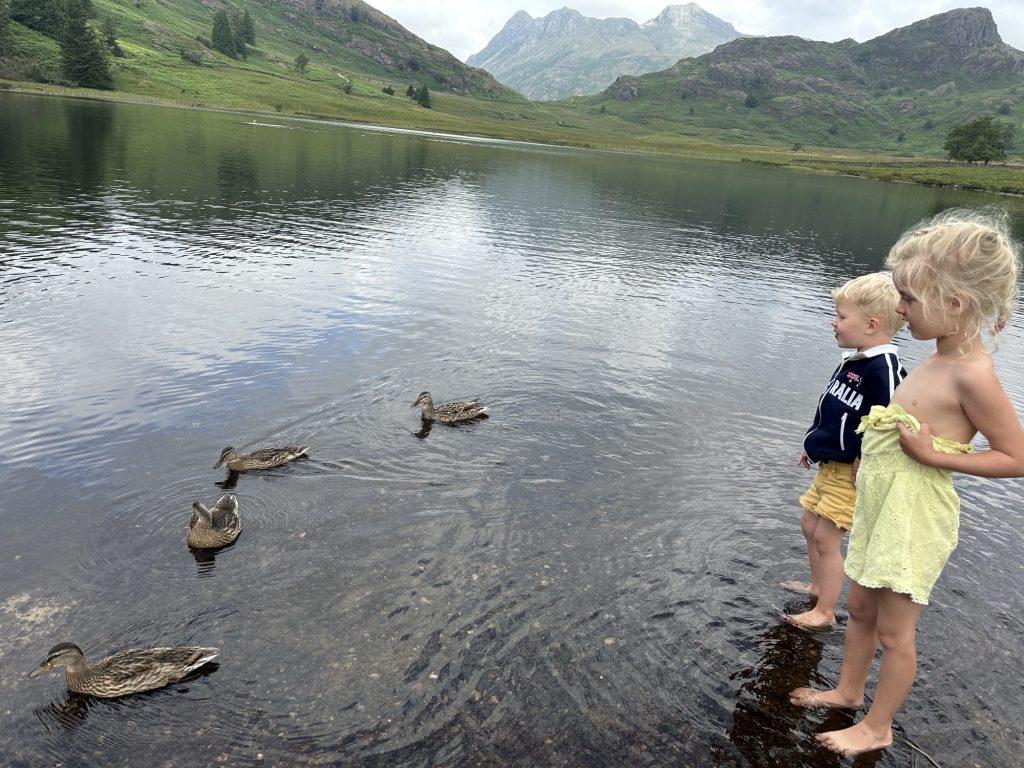
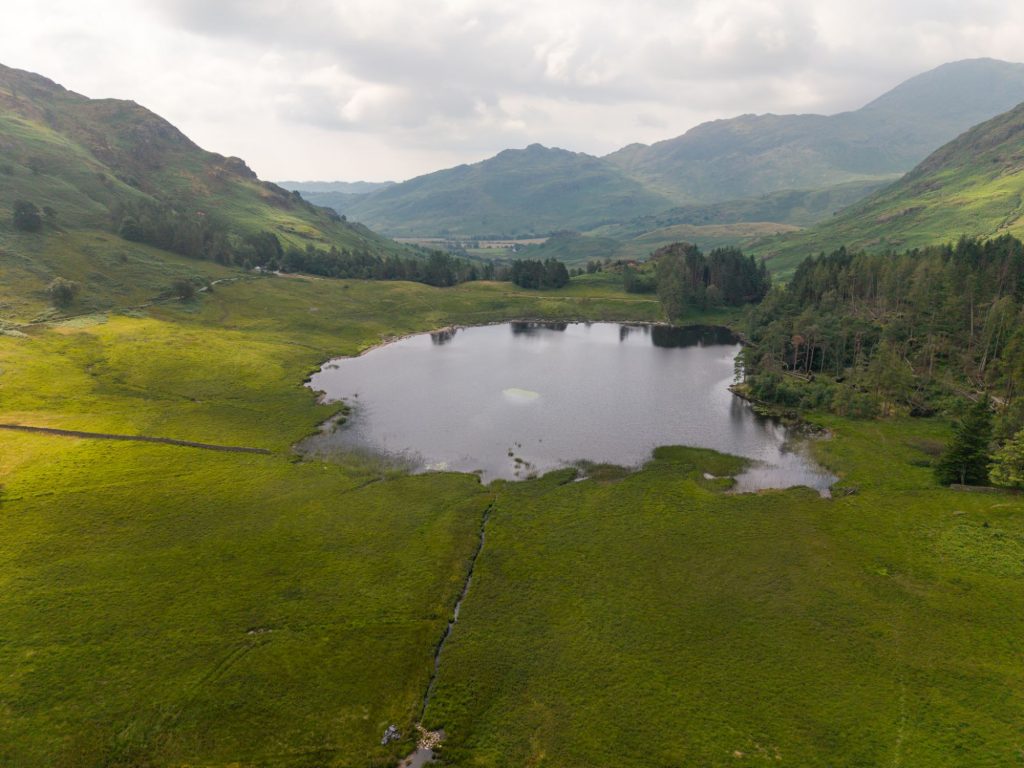
The kids immediately take off their clothes with the lake in sight. We trained them well. Although it’s not early morning anymore, it’s still an ideallic view seeing the kids splash in the clear water, surrounded by small ducks and big mountains.
It’s just a 3.2KM hike one way and back again. The sun hides itself behind some clouds and it’s the first time in two weeks we wear our sweaters.
After the hike, we set course South, and enter Wrynose pass. There are warning signs about severe bends and 30% steep hills when we enter. We’re happy the car is not fully loaded and we give it a try, as it should be stunning.
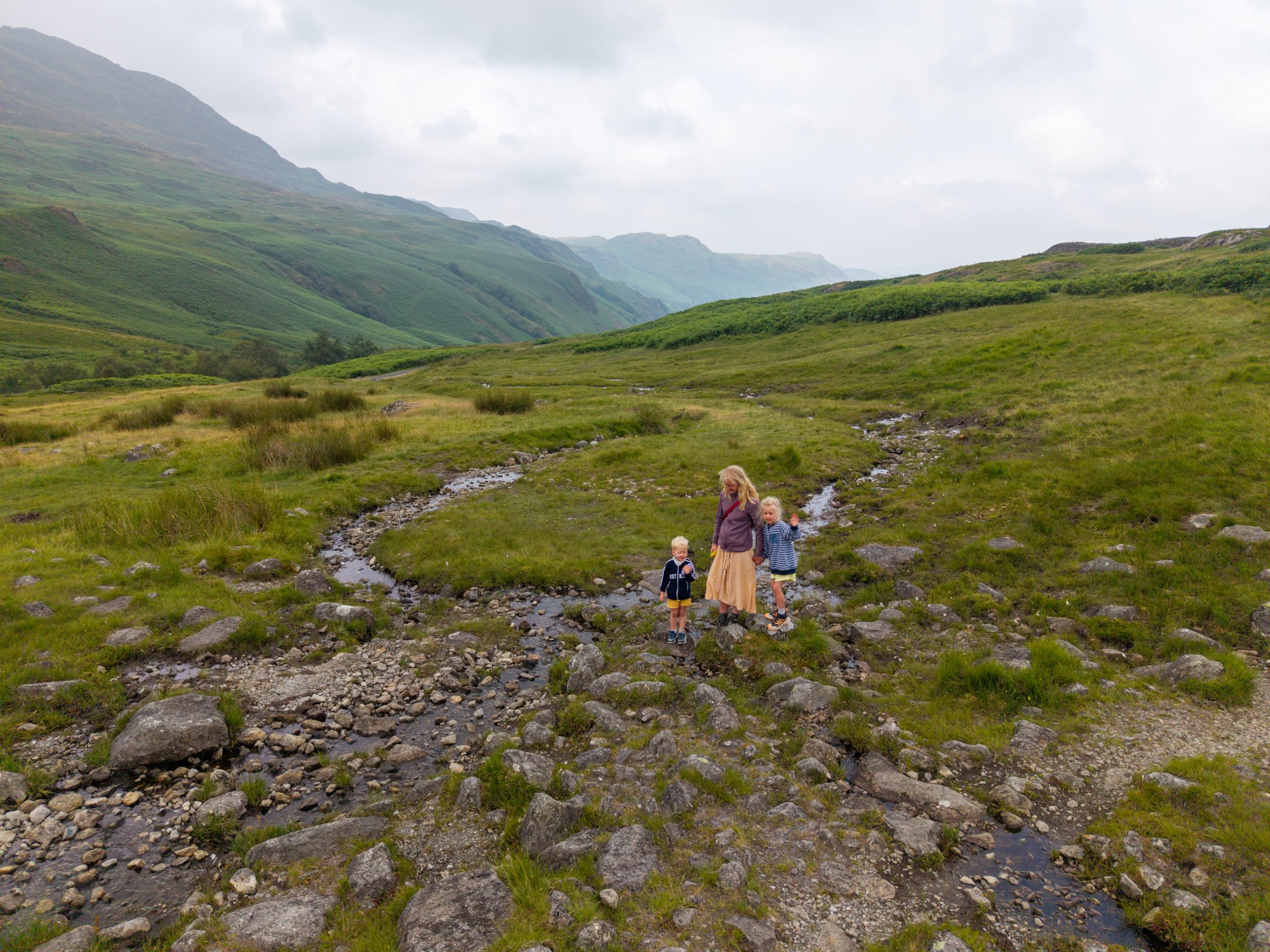
And it is stunning. The clouds become darker, but the sun still peaks through, highlighting parts of the mountains, rocks and road. We drive small parts and take many “klauter breaks”, where the kids climb the rocks and Cleo manages to sit in sheep poo. From then on, the running gag whenever we see poo is “Cleo, here’s poo, not sit in it!”. Cleo and Zeno have big laughs about it.
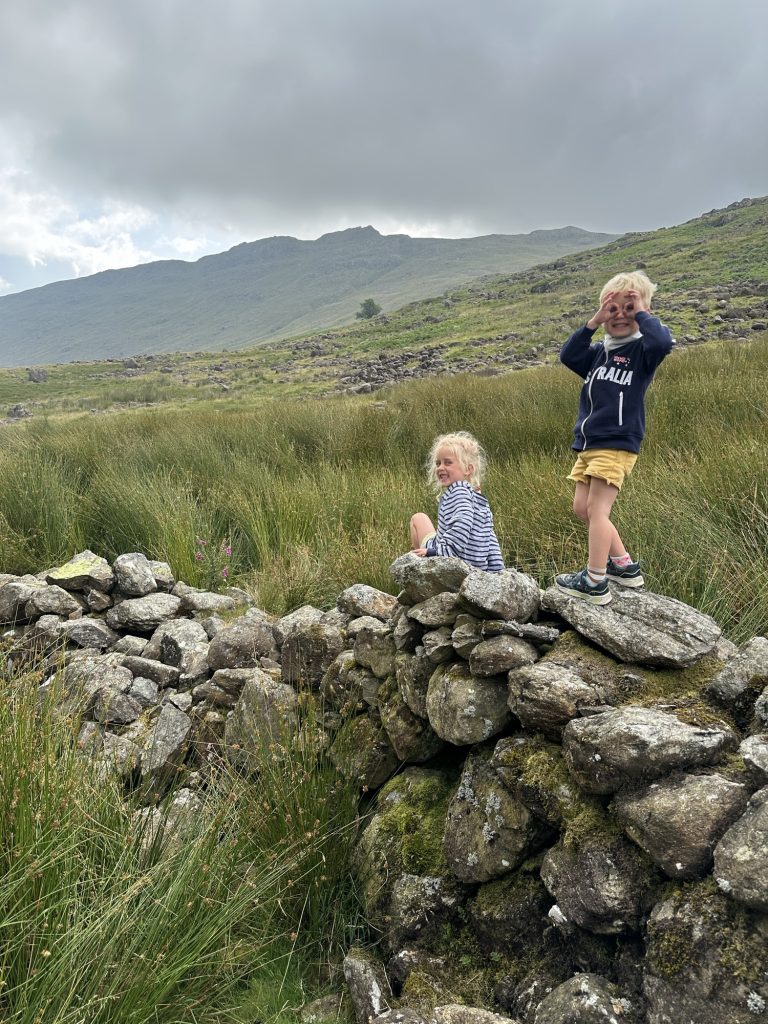
At another “klauter break”, Zeno runs through the river, despites many warning shouts from Olga, and also starts sitting in the river.
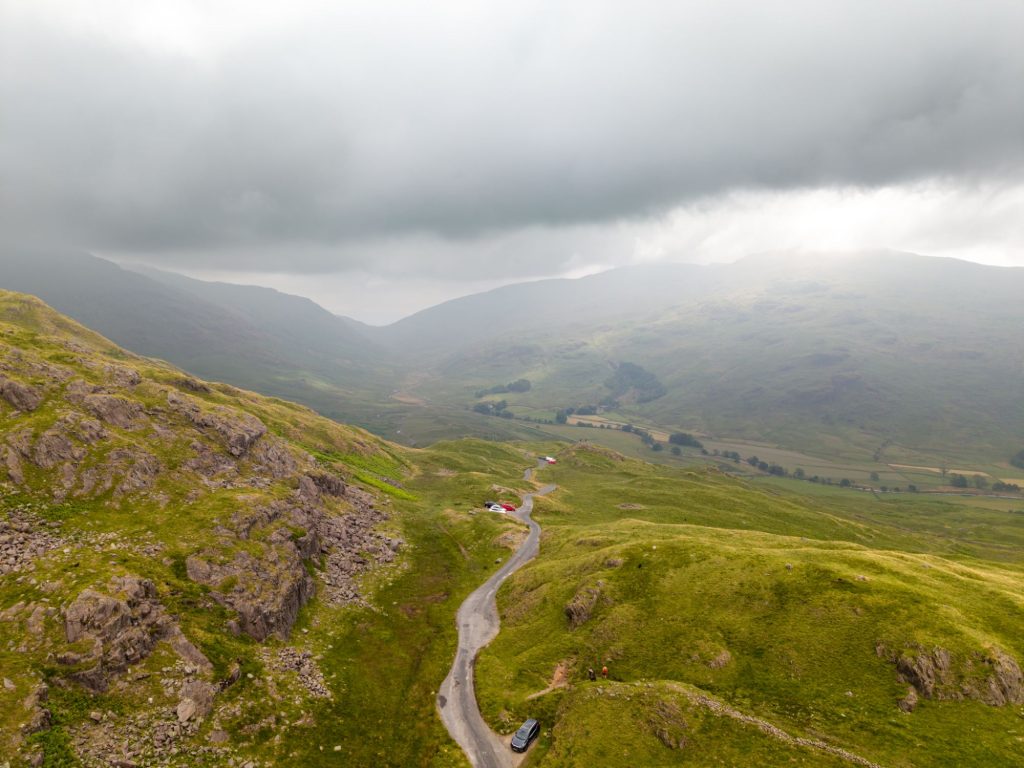
Never mind, the kids don’t mind, so why should we. Tim takes stunning drone shots and we greet the many motor cyclist with “Opa Hans”, as Olga told their grand dad used to ride them too.
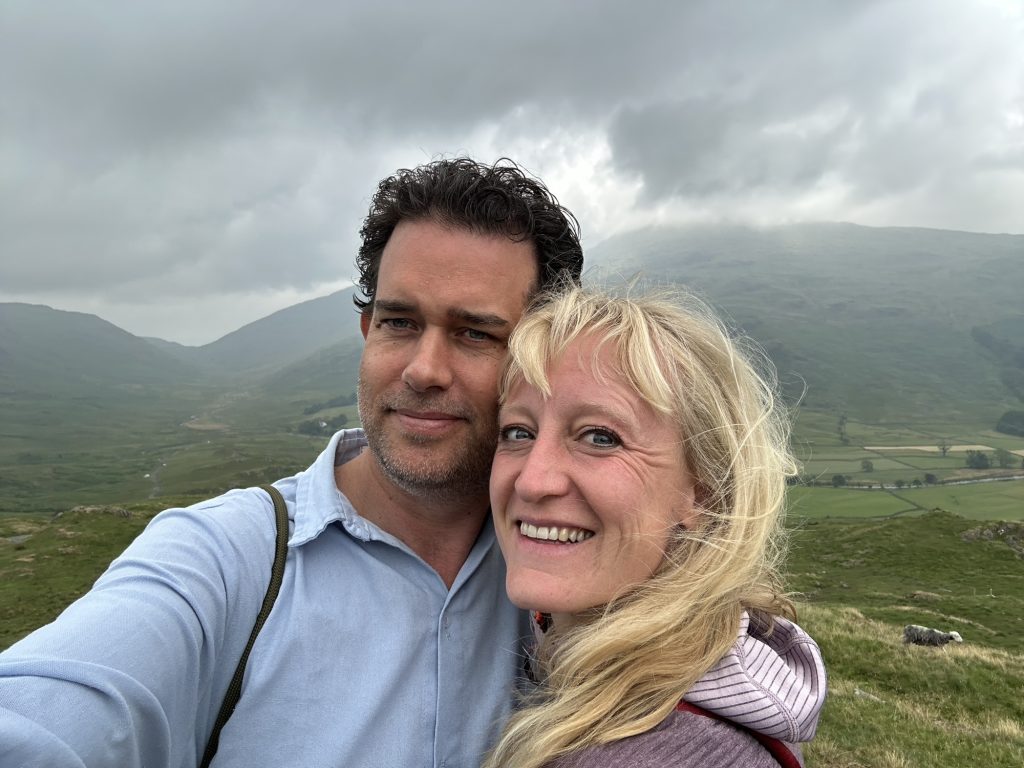
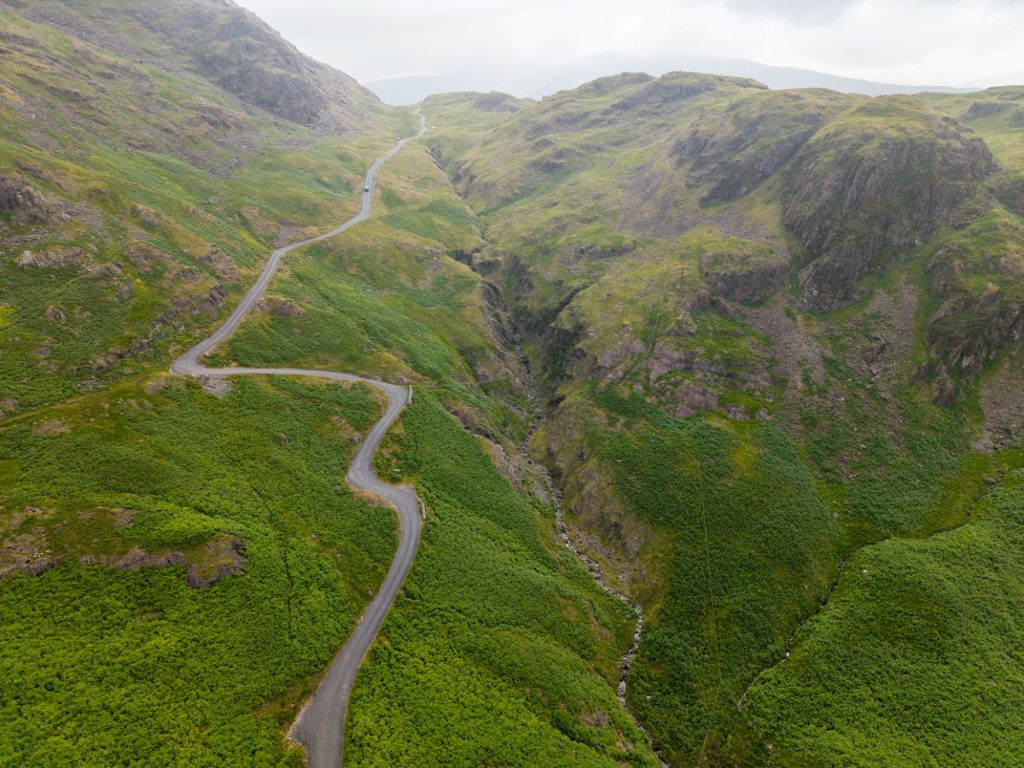
After Wrynose pass we turn to Hardknot pass. Our car conquers the pass in gear one. We enjoy the view from the top and riding down again, happy to have the right to way from all vehicles riding upwards.
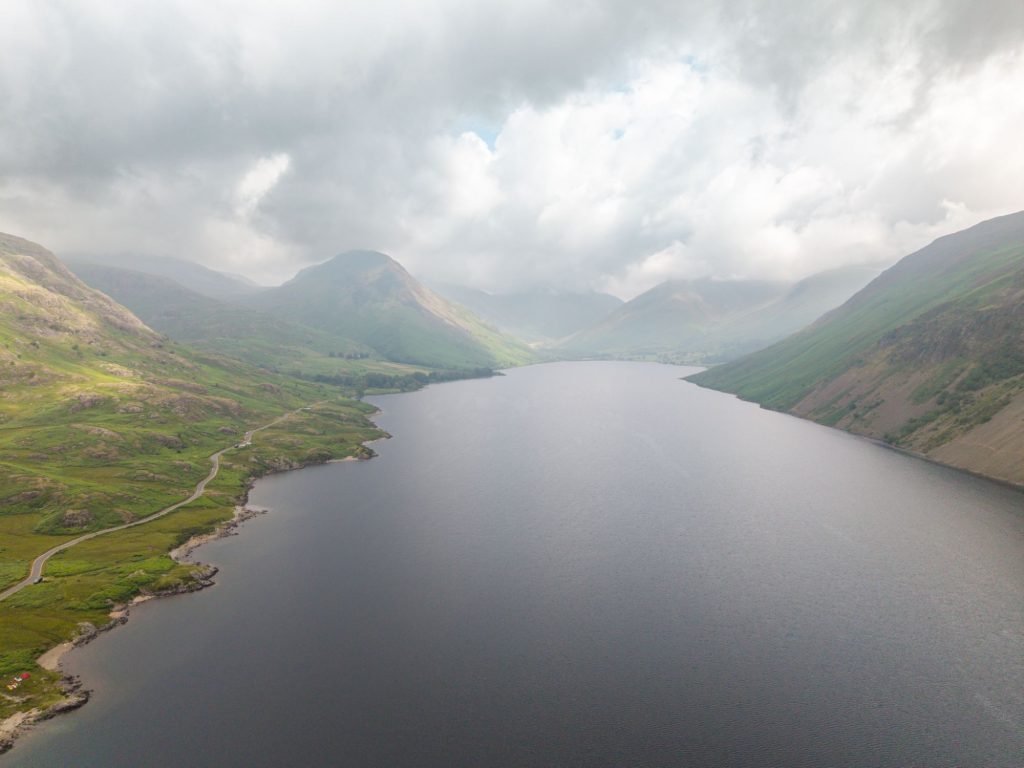
We want to take a picture of Wastwater, the deepest lake (79 meter), but there are no parking spots. It’s clear that the area is not built for mass tourism. And it’s not even peak season yet. We pause the car in front of a gate and take turns to look at the big lake with steep cliffs on its sides.
On our way to Furness Abbey we pass the ruins of a roman bath house. Also here, there is no parking, but it’s a super quiet small road so we jump out of the car to take a quick picture. The walls and arches are still standing, which is quite unique in Northern England.
Then the first raindrops of our holiday fall from the grey sky, nature will be happy. For the nature, we hope much more rain will come, but for ourselves, we hope for some more sunny days. For now, it’s only a few drops, but maybe it’s a sign that the dry days will be over soon.
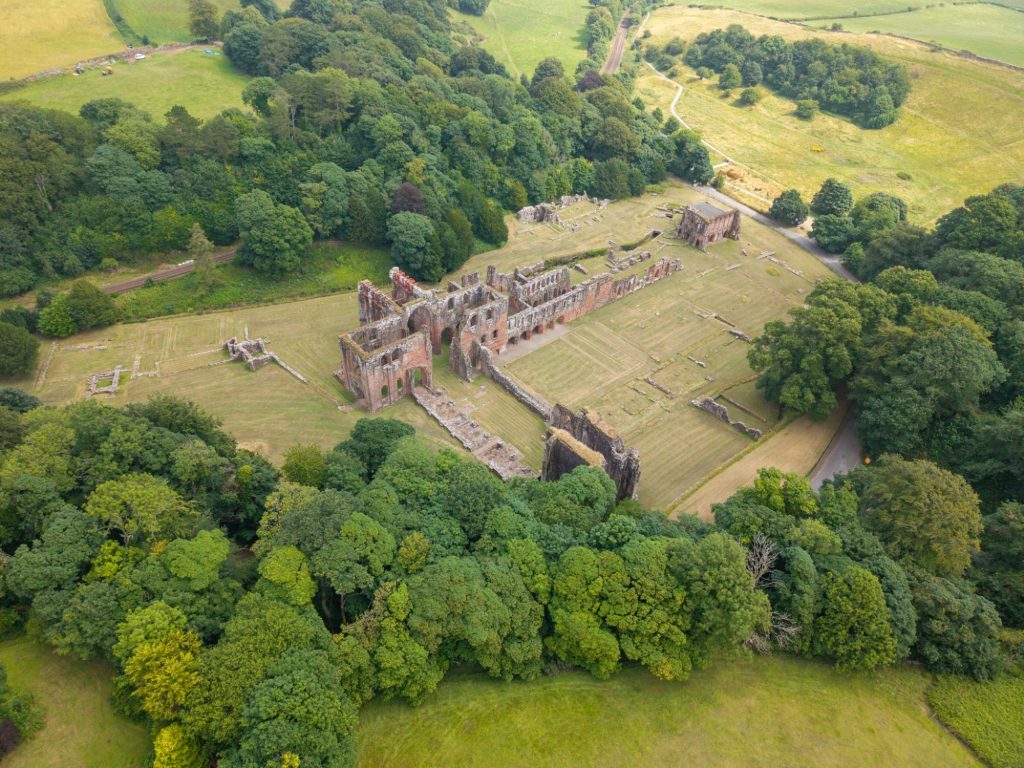
Furness Abbey dates back to 1123 and was once the second-wealthiest and most powerful Cictercian monastery in the country, prior to its dissolution during the English Reformation.
The red sandstone ruins of the abbey are impressive and extensive. Transepts and lancet windows survived. Sometimes even three stories high. The kids have a legend trial, they found 6 letters and have to put them in the right order. The solution is still not solved. The letters are E R P B U M. The word has to fit the following sentence: The Gooseberry Wife was pleased with her . . . . . . Crop of gooseberries.
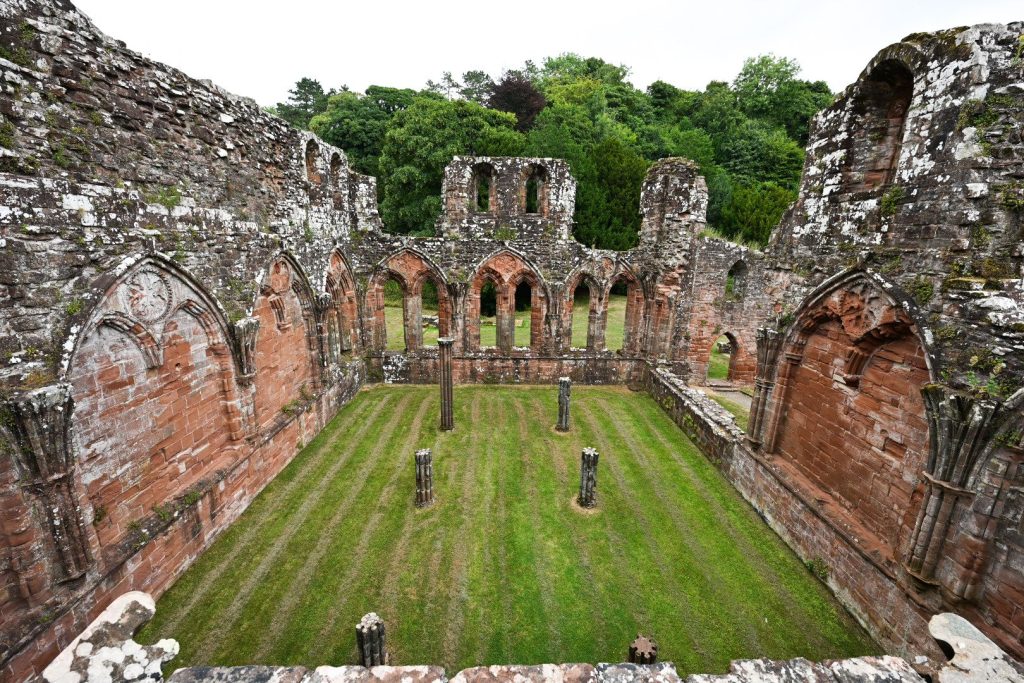
There are many stories claiming that Furness Abbey is haunted. There are supposedly at least three ghosts which are alleged to have been seen numerous times at the Abbey. There is even a story that the Holy Grail is hidden somewhere around the ruins. We did not find it.
The monks of the abbey were large landowners, and the most powerful body in what was then a remote border territory. In particular, they were heavily influential on the Isle of Man.
But a day in the life of a monk is not easy, the small museum tells us they have to wake at 2, do two services, wait for dawn, work hard and do 8th prayers in total. Spare time was spent to pray even more.
We visit a supermarket next. Tim always complains about the groceries under Olga’s supervision, so he takes charge and buys beans, tomato’s and carrots. Good luck to Olga for making a four-person tasy dinner out of this. Tim calls it a “simple” dinner and is very satisfied with himself.
Next door is the Dock museum, Barrow-in-Furness once had the largest steel industry on the world and to this day ships and submarines are built here. The kids enjoy the adjacent playground the most, although Cleo seems particulliary interested in Barrow AFC, which celebrated its 125th anniversary not so long ago.
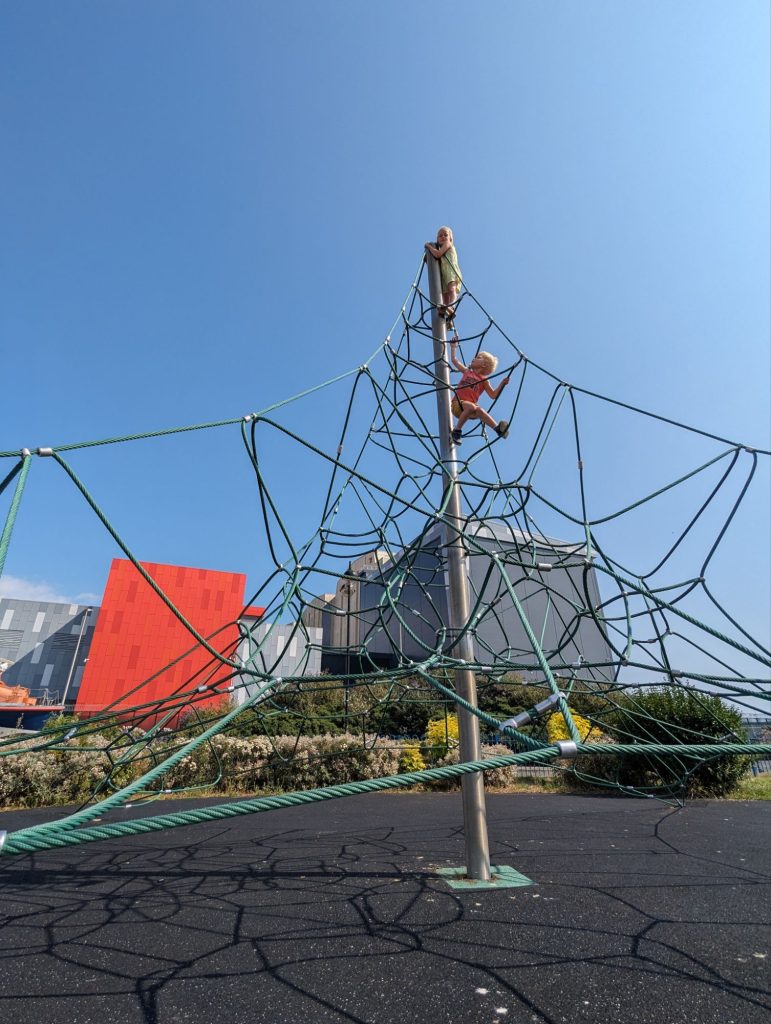
The museum is located at an old ship building site, and feels enourmous when walking around. What a work to bring those giant ships together! But when we see the next door modern submarine site, the museum looks super tiny, as that site is 10 times bigger.
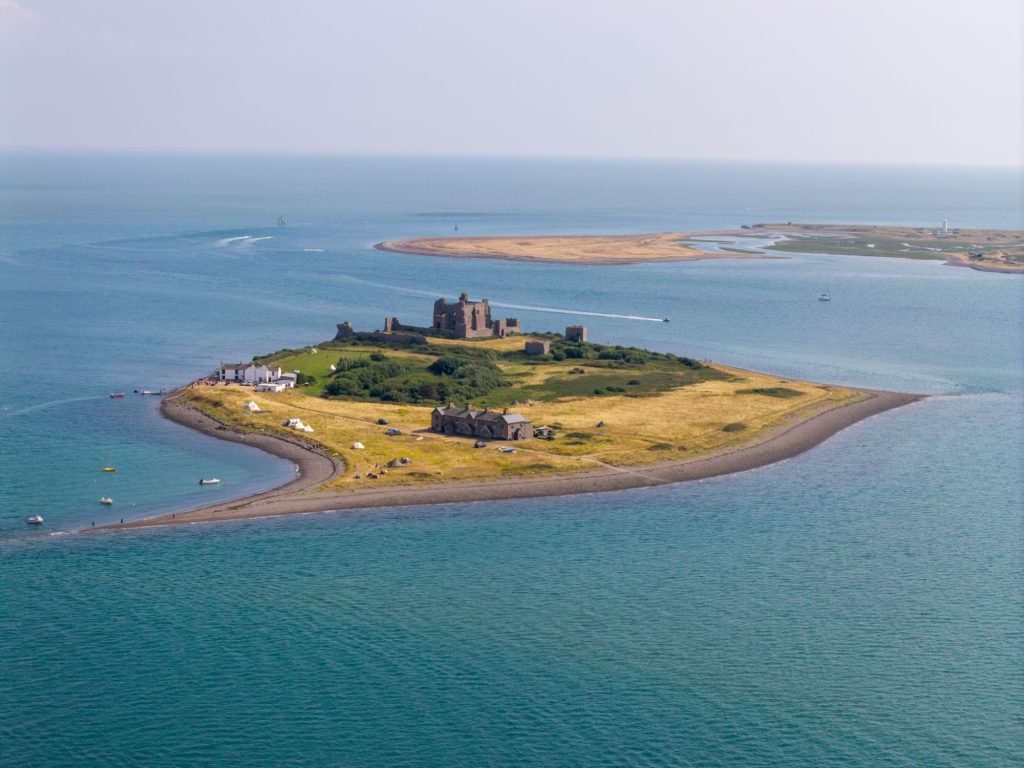
We finish the day with a drone shot of Piel castle. This castle was built by Furness abbey, to protect the abbey and its land against Scottish raiders. The sun is back, we eat our hunger away with some apples and drive one hour back through the Lake district, following campers for whom the road was not built. Singing “Witte Zwanen Zwarte Zwanen”, Zeno’s favourite song.
The dinner turned out fine, tough a bit little. Luckily there was another melon for dessert, so we end our day quite content.