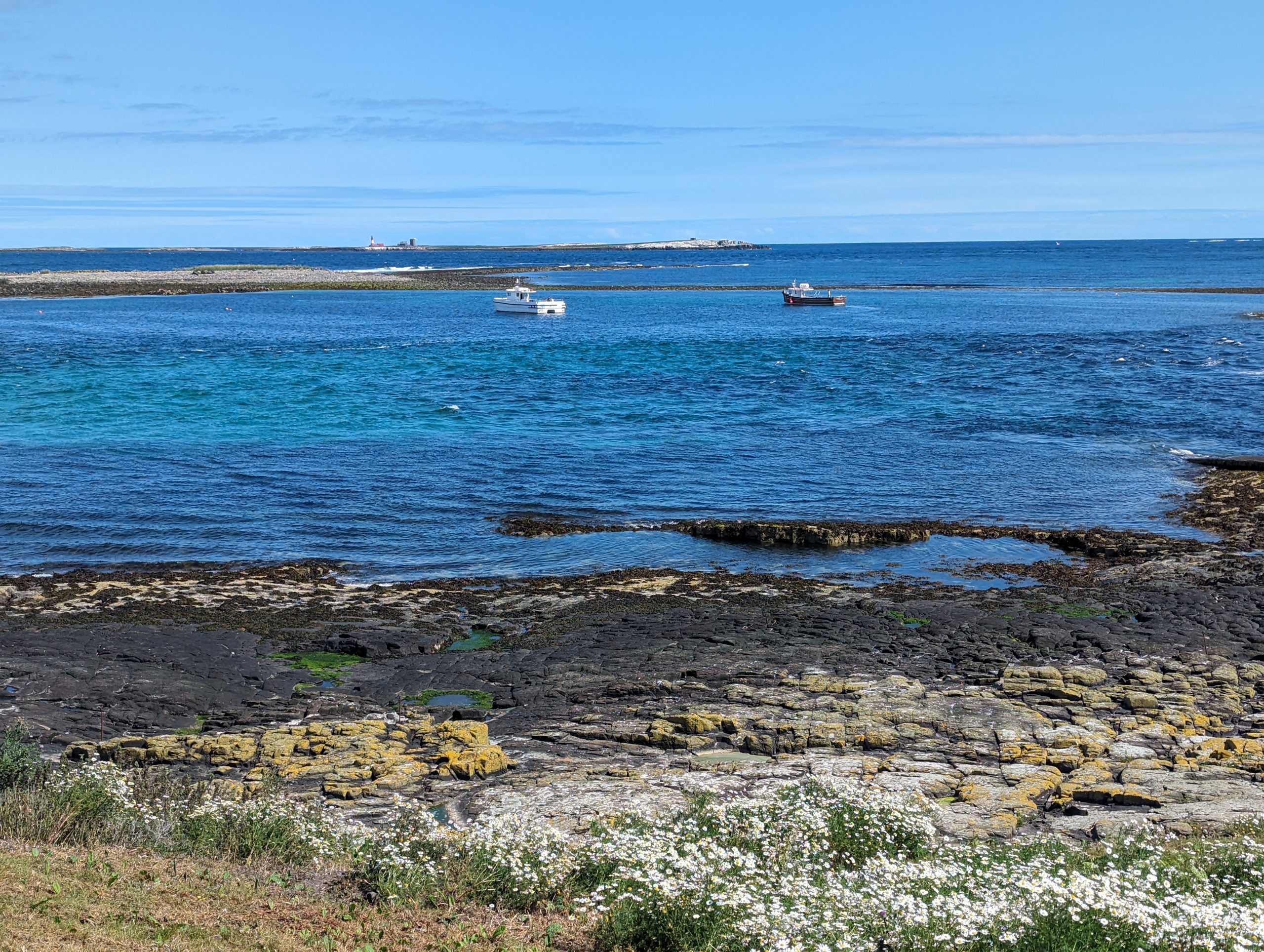
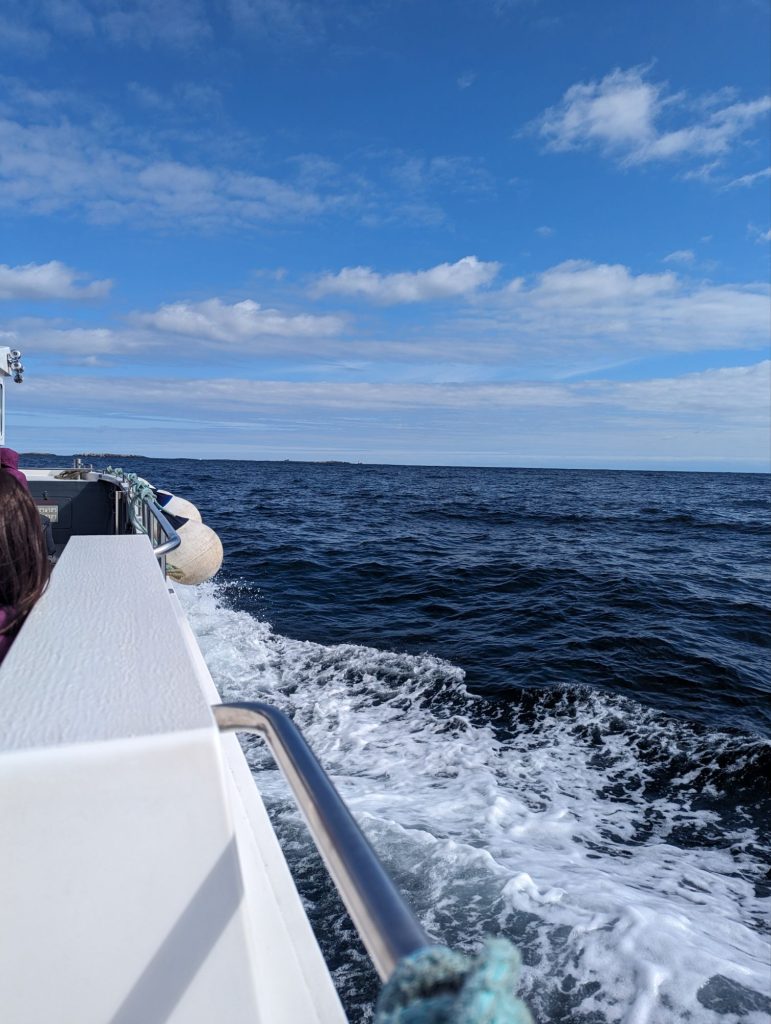
After spending yesterday in the car, we plan to spent today on a boat. We booked a 3 hour Farne Island boat tour. It’s a 1 hour drive and it leaves at 10:15. The islands off the Northumberland Heritage Coastline is know for having the most breeding pairs of birds of the UK (85.000).
When we take off, the captain already spots a Razorbill couple and young in the sea. We see them too. The captain explains that this will be the final couple of the season, as they should already have left the breeding islands to fish on the sea.
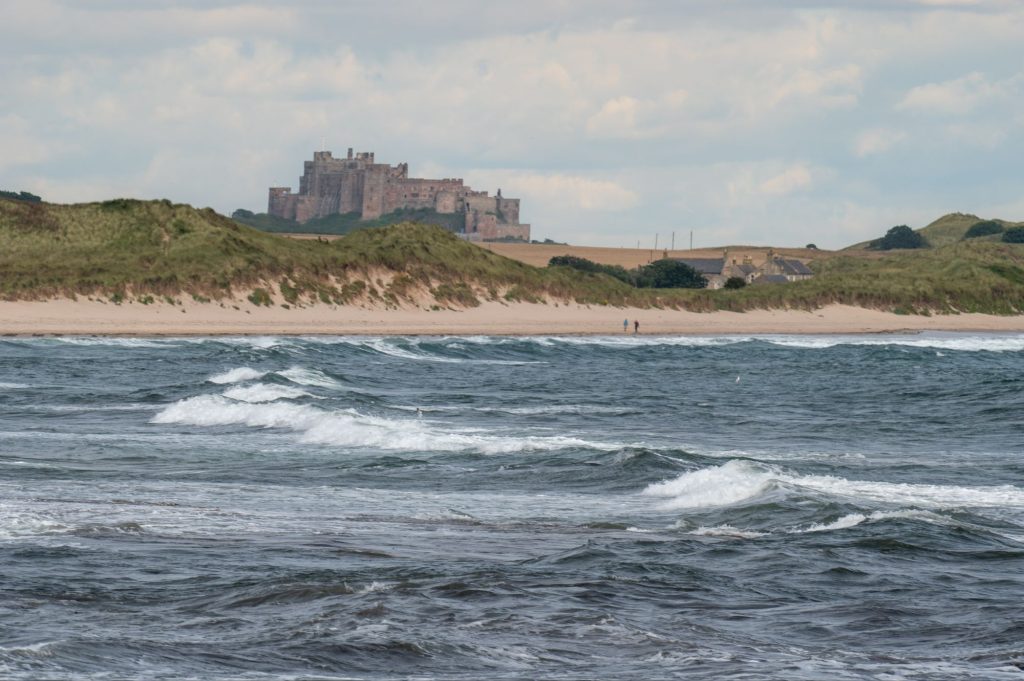
We pass the epic Bamburgh castle, which we won’t visit today as it’s not on one of our passes.
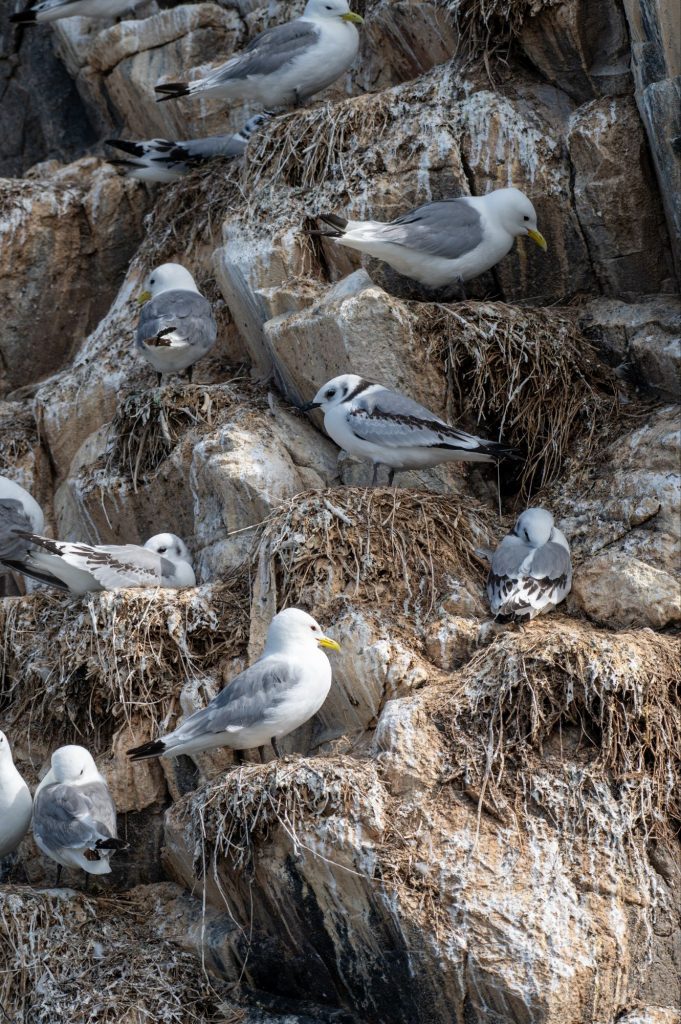
Although most birds leave mid-July, we hope to see some puffins and other birds still today. But first we pass islands full of small Kittiwakes sitting on islands with cliffs white of their own drippings.
We should watch out for the Atlatic Terns, as they attack people to protect their youngs by dive bombing your head. We were asked to bring hats as protection.
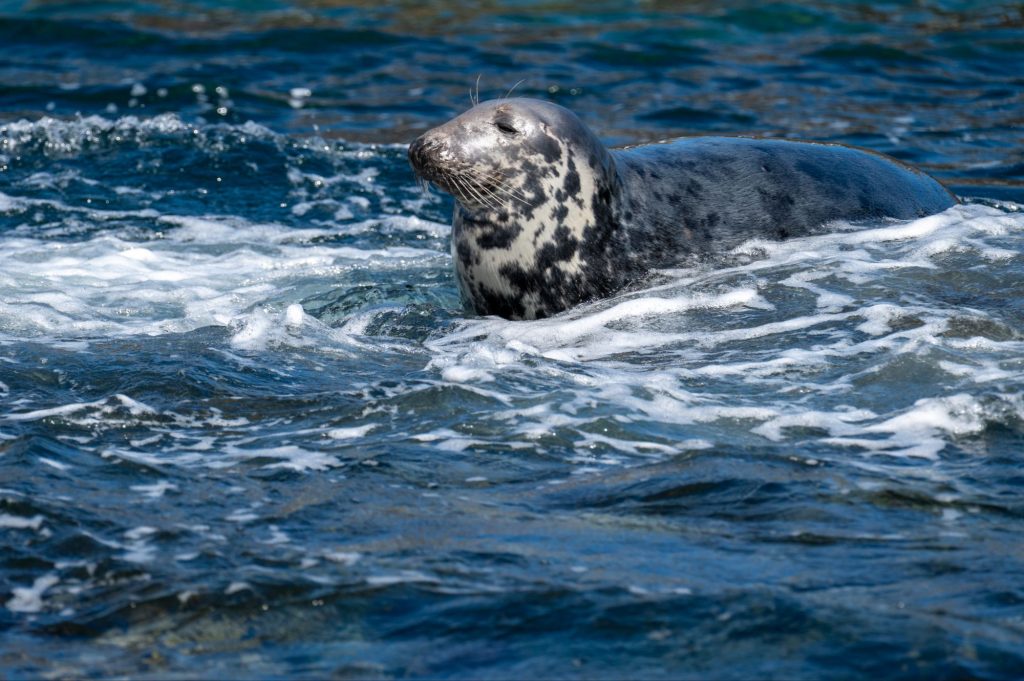
Then we pass some islands full of Grey Seals. One of the largest colonies (6.000-8.000). 50% of their youngs survive (2.500 are born annually).
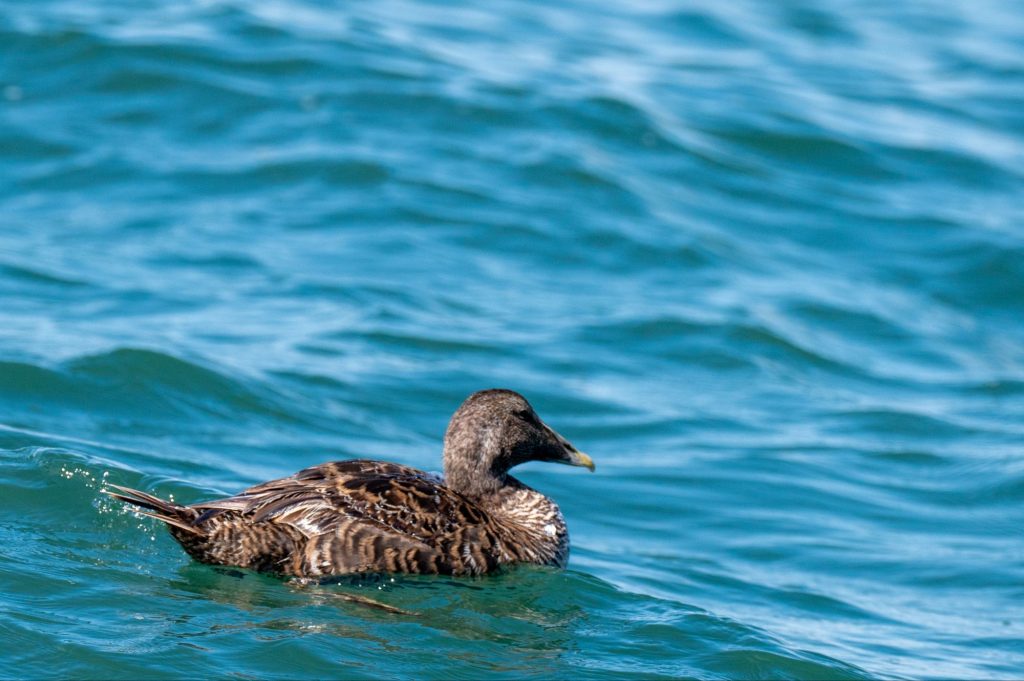
We also see some puffins flying over. They are easy to spot as their small wings move quick up and down compared to the bigger birds. one puffin even stops for us, sitting in the waves.
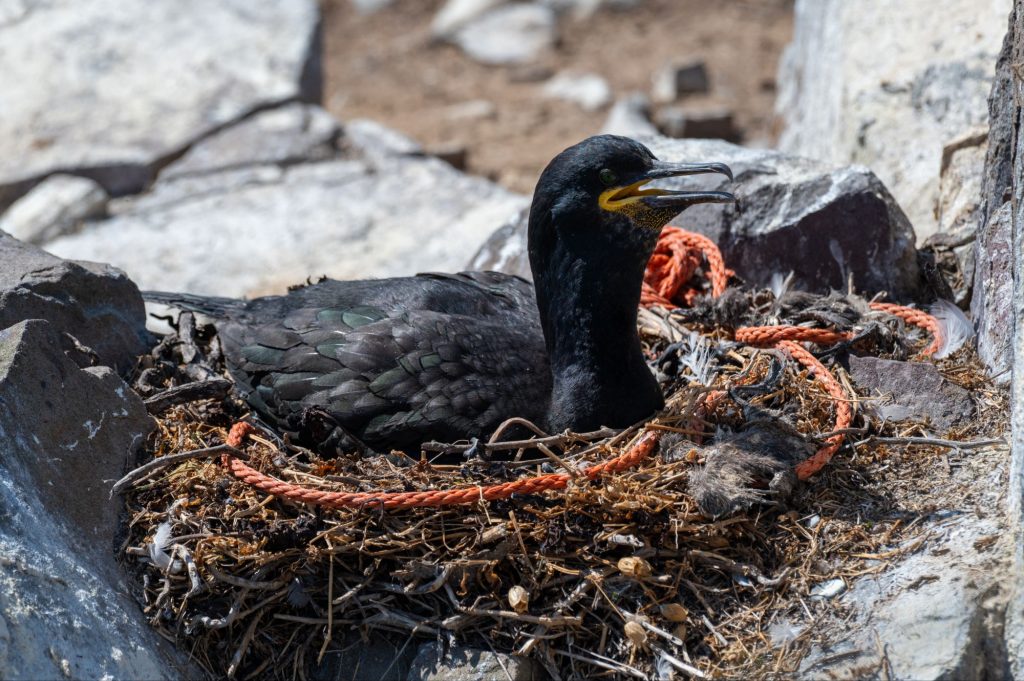
After 1,5 hours, we land on Inner Farne Island for a toilet stop, picknick, and little walk. We can see Holy Island and Lindisfarne abbey from afar.
The islands are first recorded in 651, and are known because Saint Cuthbert isolated himself on the islands until he was called to the bishopric of Lindisfarne, but after two years, he returned to the solitude of the Inner Farne and died there in 687. Among other acts, Cuthbert introduced special laws in 676 protecting the seabirds nesting on the islands; these are thought to be the earliest bird-protection laws anywhere in the world.
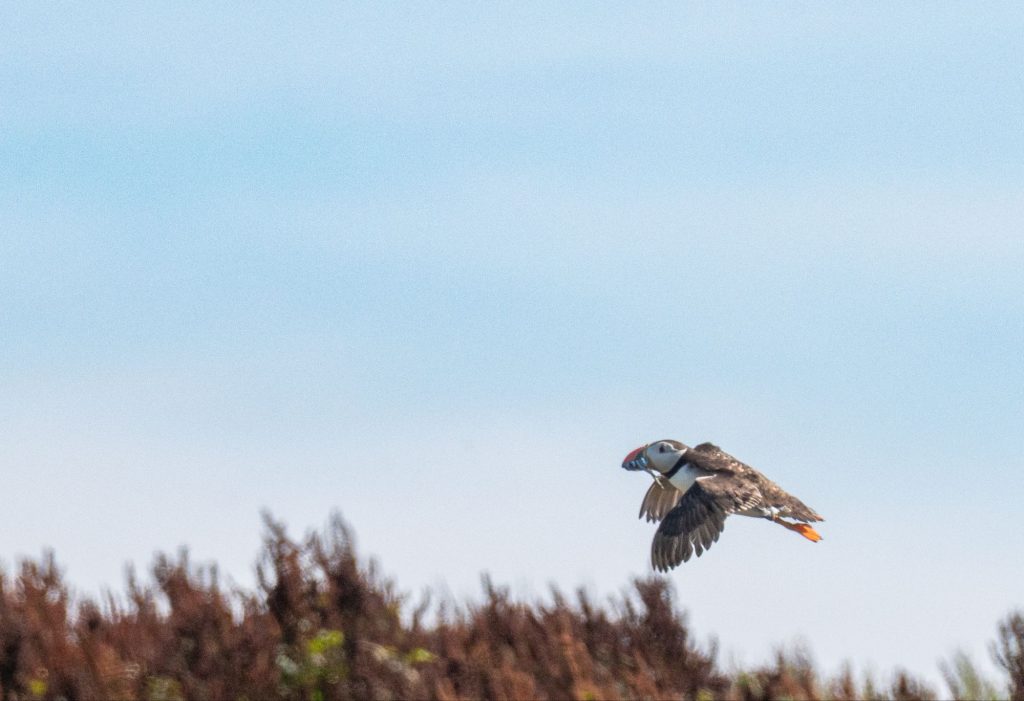
We also see a another puffin who caught some fish and is flying over its nest several times.
The way back goes fast, and at 13, we’re back at our car. We want to see Holey Island and Lindisfarne up close now, and it’s low tide untill 20H, so we can get there by car.
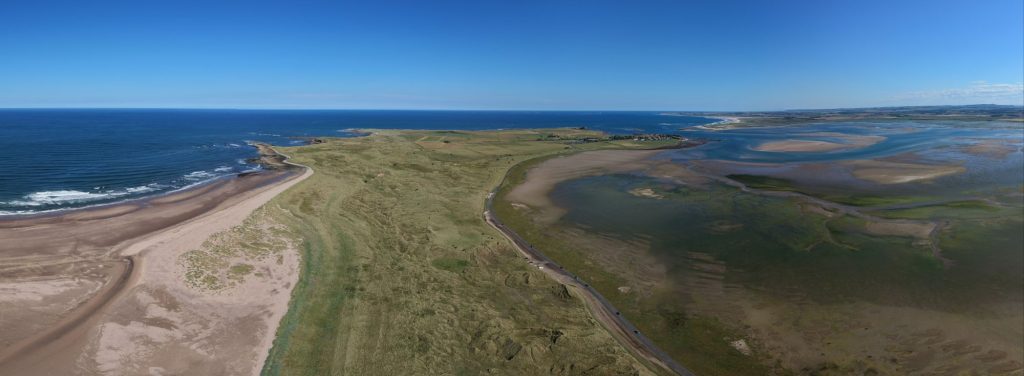
It was an important centre of Celtic Christianity with a monastery and home to different saints until it was raided in 793 by the Vikings. The raid of Lindisfarne was the first Viking raid and send shockwaves through Christian Europe. The body of abovementioned Saint Cuthbert was rescued by monks and carried through England for 7 years until it was burried at Durham Cathedral. We visited Durham cathedral 2 years ago. Monks from Durham rebuild a church on Holy Island 250 years after the raid.
We cross the tidal road to the island and park our car just outside the village. It’s short a little walk to the village, and it’s warm and sunny today, so we buy an ice cream on the way. We always share one with the four of us and we hope the children will accept this approach for many more years as it’s actually enough for all of us just to have a few bites.
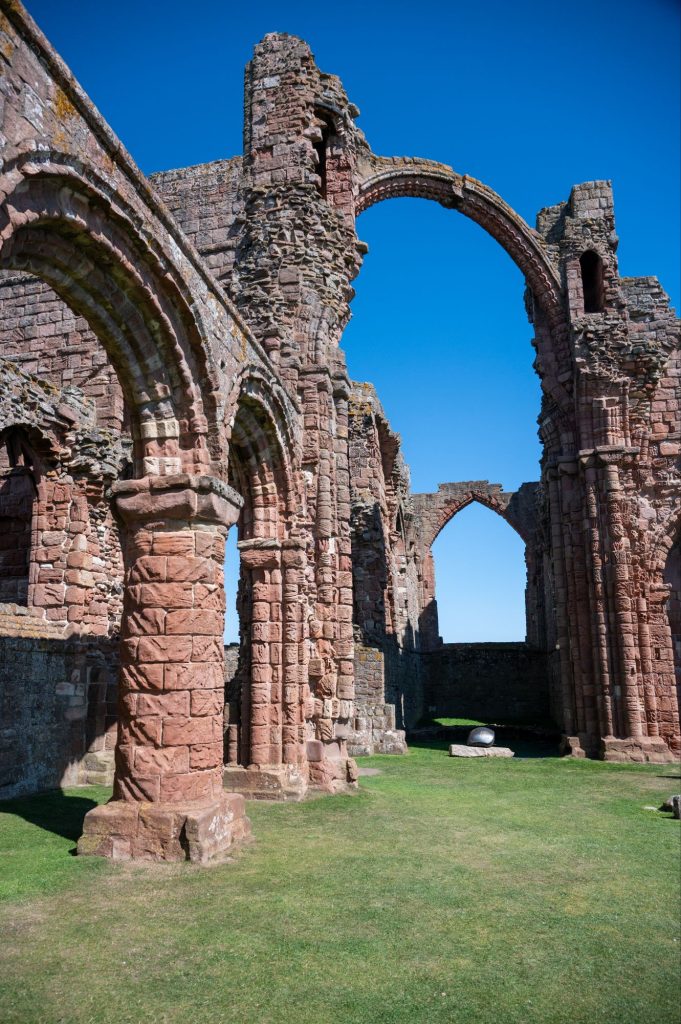
We first visit the Lindisfarne priory museum, here we read the history of the monastic comunity and its development into a pilgrimage site in later years. Outside are the remains of the second church as there are no visible remains of the Anglo Saxon building.
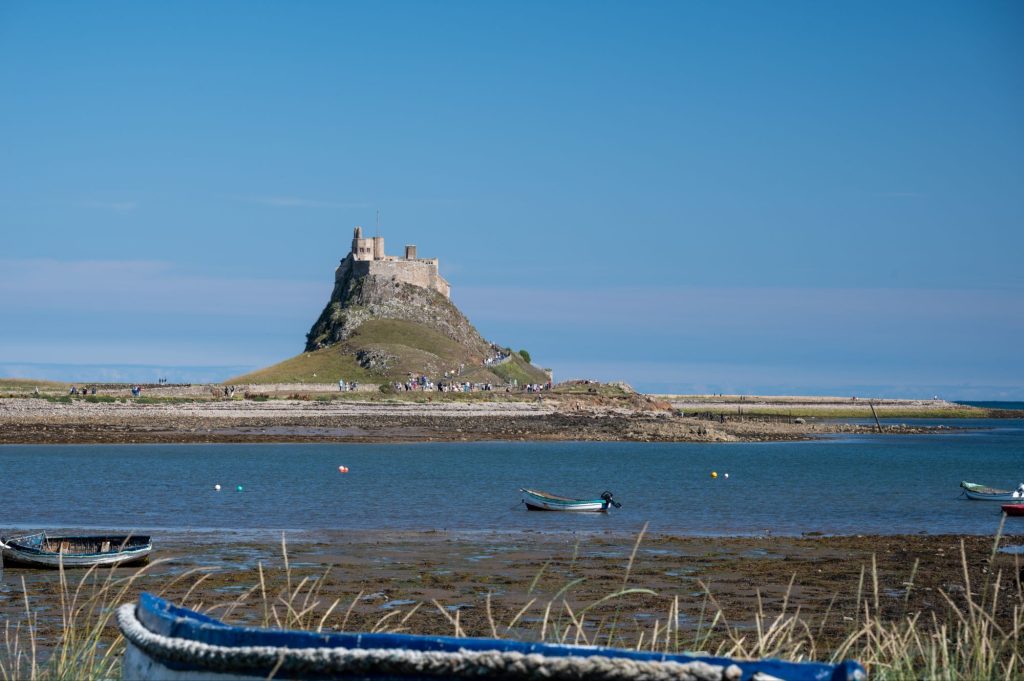
We continue our walk to Lindisfarne castle which has an idyllic location high on a cliff at the coastline of the island. Is has been nicely renovated and feels like a landhouse from the inside, but looks like a fort from the outside. The views over the North Sea are stunning and we see the Farne Islands from this side too.
We walk back to our car and end the day with a drone session over the island. Luckily, we make it off the island before the high tide comes rolling in.


