We sleep well, and Tim is taking photos when Olga and the kids wake up at 7. We shower, have breakfast, and then head to a cave. Zeno is a little scared because he thinks bears live there (we’re reading a book about bears).
The cave is part of the Villa of the Roman emperor Tiberius. It starts with a museum exhibiting sculptures and decorations of the villa, among which some giant sculptures, showing the moment when Ulysses and his companions blindes the Cyclops who was drunk and sound asleep. It was originally placed in the cave.
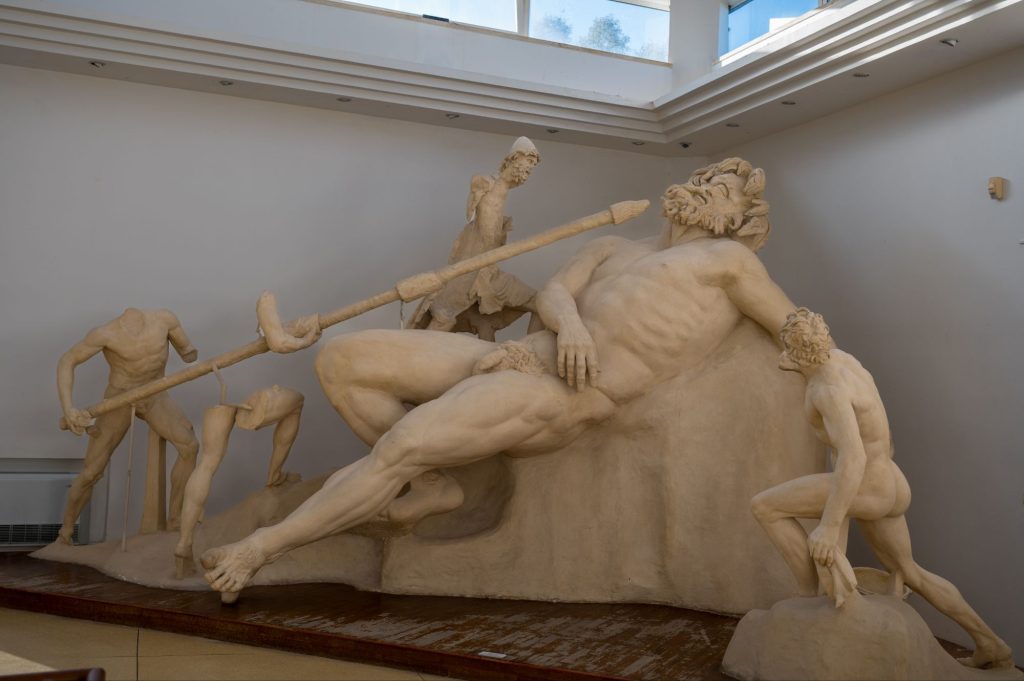
After the museum we walk down to visit the remains of the villa and to see the natural « Grotto ». It must have been spectacular in ancient times when the imposing sculpture groups were still inside. The cave was used for banquets and conversations sheltered from the summer heath.
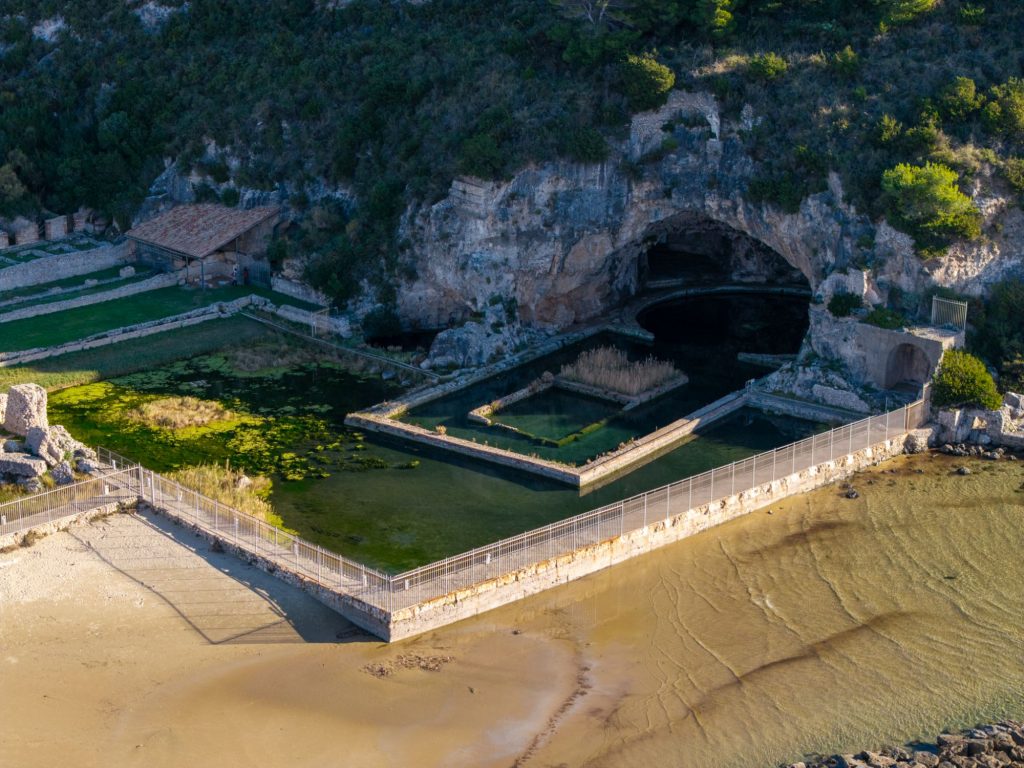
We see fish swimming in the pond which is connected to the sea. Some ruins of the villa still have the paint on the wall, we even recognise some mosaics on the floor. We’re enjoying the clear blue sky and soaking up every ray of sunshine to compensate for all those grey weeks in Belgium.
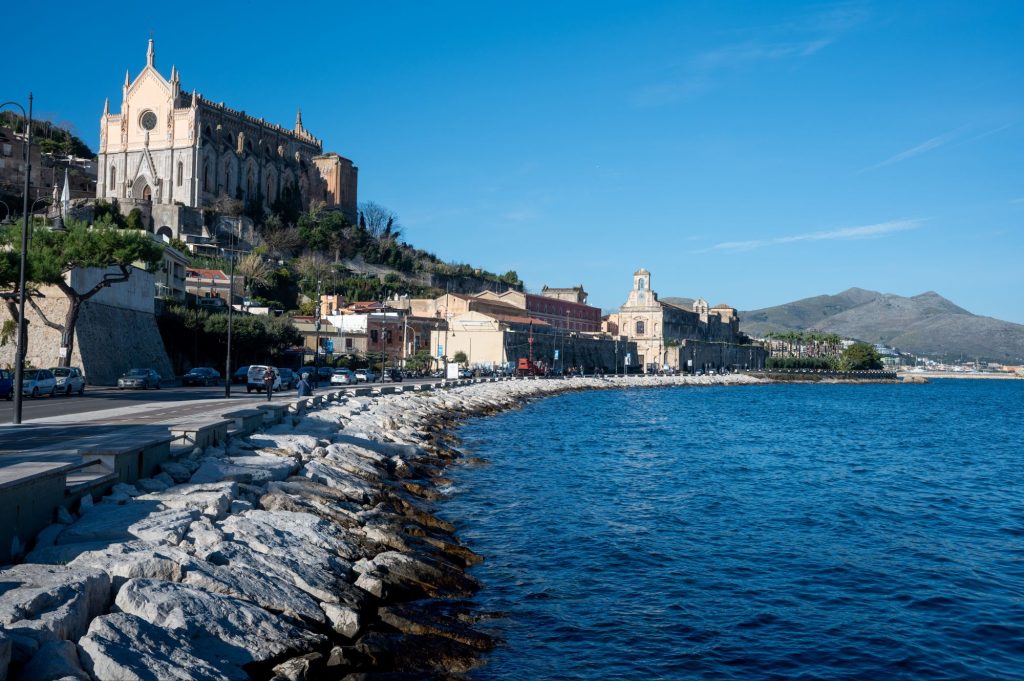
We continue our drive south along the coast towards Gaeta. Here we try two sites; the church on a cliff has limited parking and didn’t seem so special to warrant double parking. So we try the Roman mausoleum on the top of the hill ignoring some signs which say military road but decide to turn back when it says military area no access.
Our next try is downtown Gaeta, sadly our navigation app confuses footpaths with roads so we end up in a dead end on a narrow walled road. We use two small opposite entrances to turn and after 20 turns, our car faces the other way, ready for another try. We park next to the harbor, the children spot a playground filled with giant dinosaurs so Tim explores the old city centre while Olga sits in the sun.
A little further south lie the ruins of the Roman town of Minturnae. But before we can enter we are directed to the other side of the road where there is something which we can only see for 20 more minutes. So not knowing what to expect we head across the road and find a 200 year old bridge which was important during the wars that lead to the formation of Italy in the 19th century.
Back to what we came for, Roman ruins. There are the flattened remains of a temple dedicated to Julius Caesar, a restored theatre, a bath house and a road with columns. The children dance on the podium of the theatre before we head in the direction of our last stop of the day.
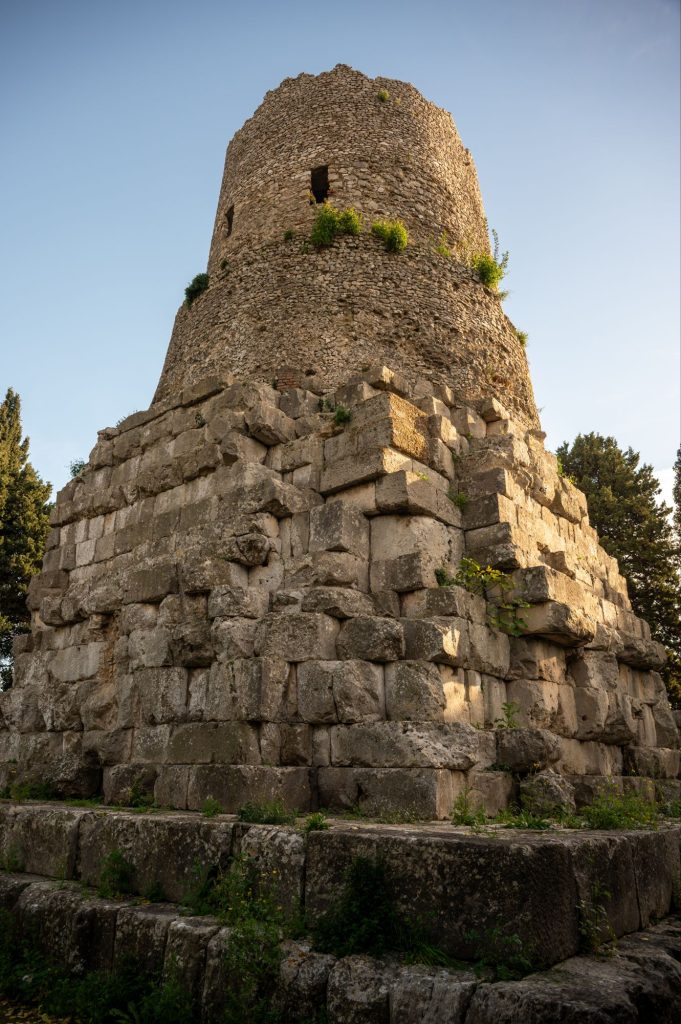
We ignore our navigation once again and drive along the Appian Way one of the oldest and most important Roman roads. Here we also find Cicero’s tomb, the great orator had a villa in nearby Formia and was killed on the road to Gaeta. This is also the only thing which links Cicero to this tomb, it dates to his time and is very big. So it could be his, or not…
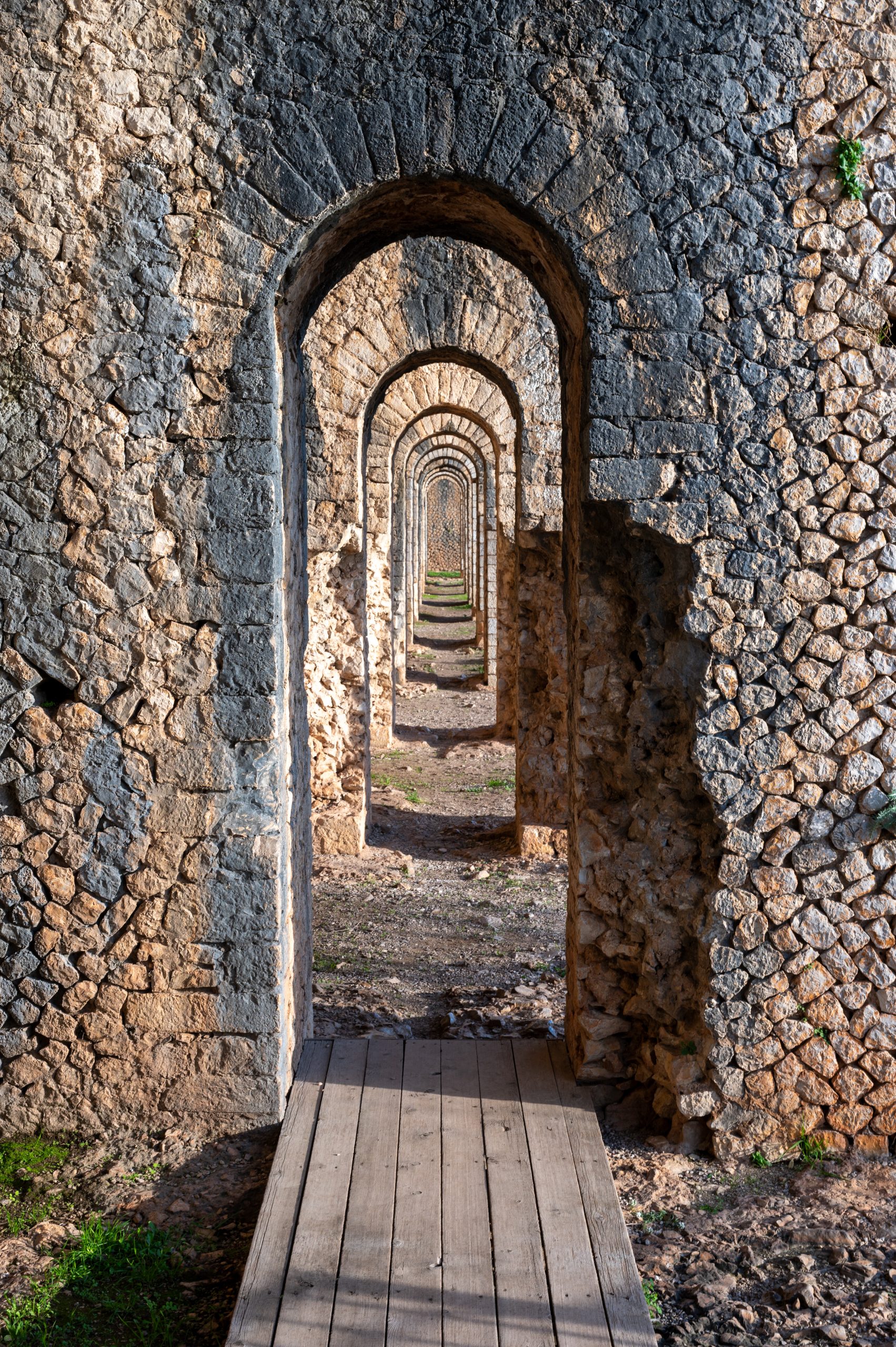
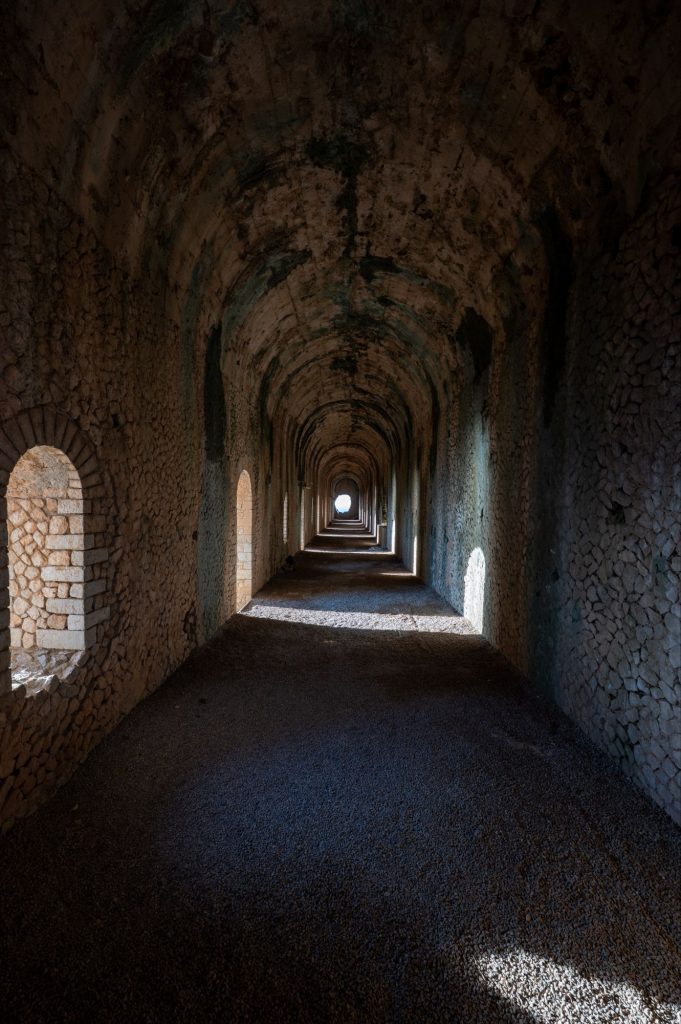
Back in Terracina, we climb the hill which overlooks the town and the bay to the majestic site which houses the temple of Jupiter Anxur. Only the podium is left of the temple but what makes this place special is the fact that it is one of the earliest examples of Roman landscaping and extensive use of concrete. The whole temple was build on top of a vaulted concrete platform, which remains to this day.
It was a long day and the children fall asleep just before we reach our holiday home. Zeno joins Olga for a short walk to the sea while Cleo gets creative with her color books. After some reading and dinner they head to bed and we put our feet up.


