We say goodbye to our camping with sea view after four relaxing nights. It’s time to go as all pitches around us filled up and we happen to be at the pitch where all balls roll, BBQ smoke blows (although open fire is prohibited in the UK now because of the drought), and our seaview is blocked by a caravan.
It takes us two hours to shower, have breakfast, break-up the tent and pack the car. At 9 we leave for Tintagel. It’s a two hour drive but we need a supermarket stop and a stop in Truro to buy some gas to cook for our final camping week. Truro is a cute town with a cathedral, much ceramics, jewlery and art, but we don’t have time to explore it.
The main activity of today is a visit to Tintagel castle. It’s extremely busy in the small town, but we find a parking spot at a giant parking, considering the size of the town. This is a warning for the crowds that await us at Tintagel Castle.
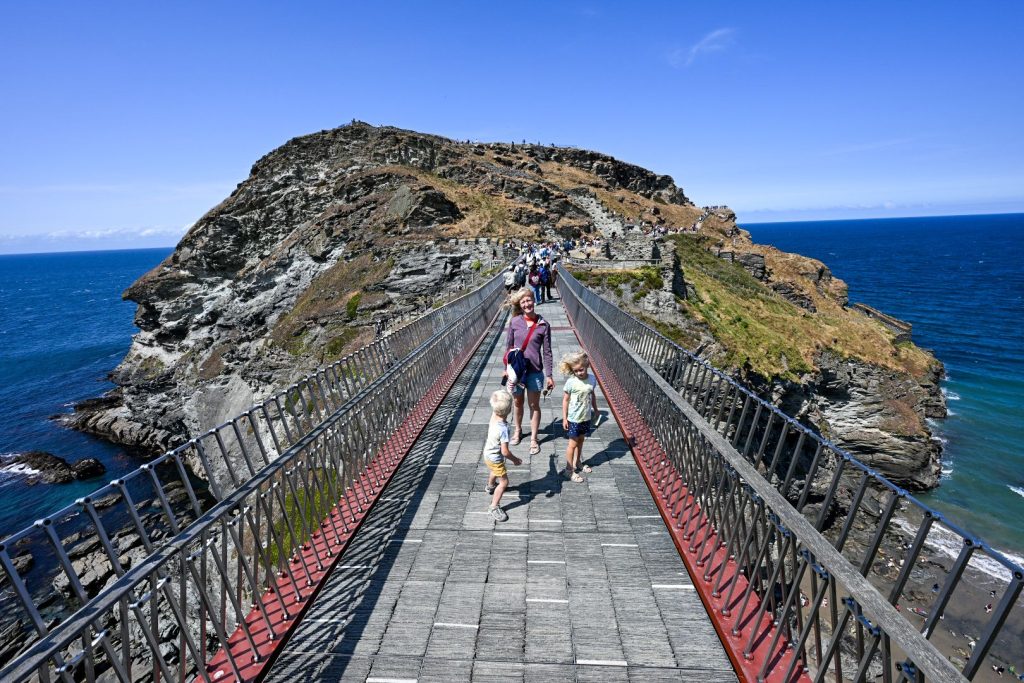
We’ve never seen anything like this in our four years of exploring English heritage, maybe only Stonehenge can compare. The giant Dover Castle is not as crowded as it is here. This might be due to the time and day (noon at a Saturday in August) and mythology: this is said to be the birthplace of King Arthur.
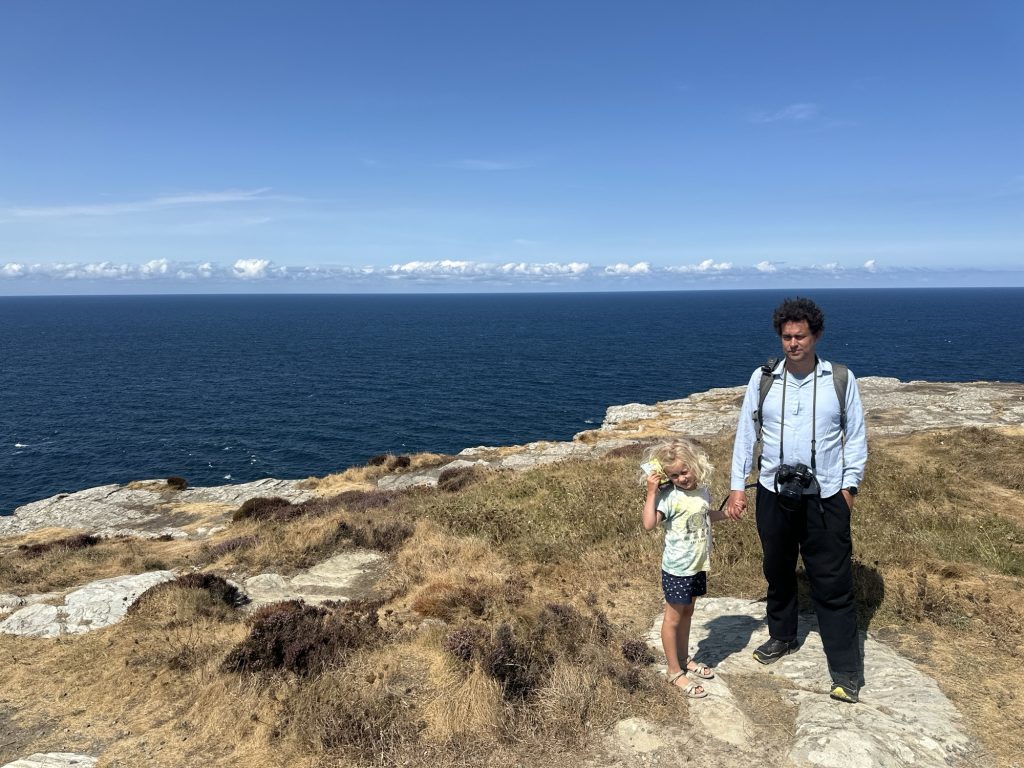
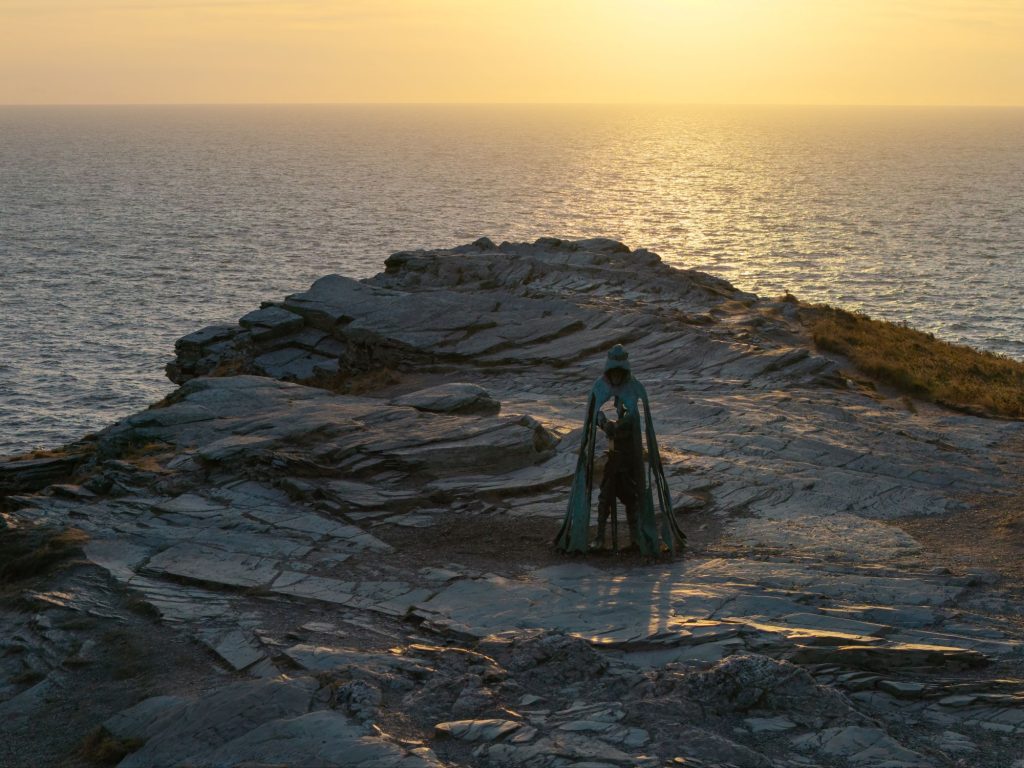
We’re walking around the ruines in queues, holding our kids so they are not pushed from the steep cliffs. There is surprisingly little information about King Arthur, despite a statute, or the history of the castle. We skip the visitor center and walk on the beach and caves, as it’s just extremely crowded, and a bit disapointed we find our way back to our car.
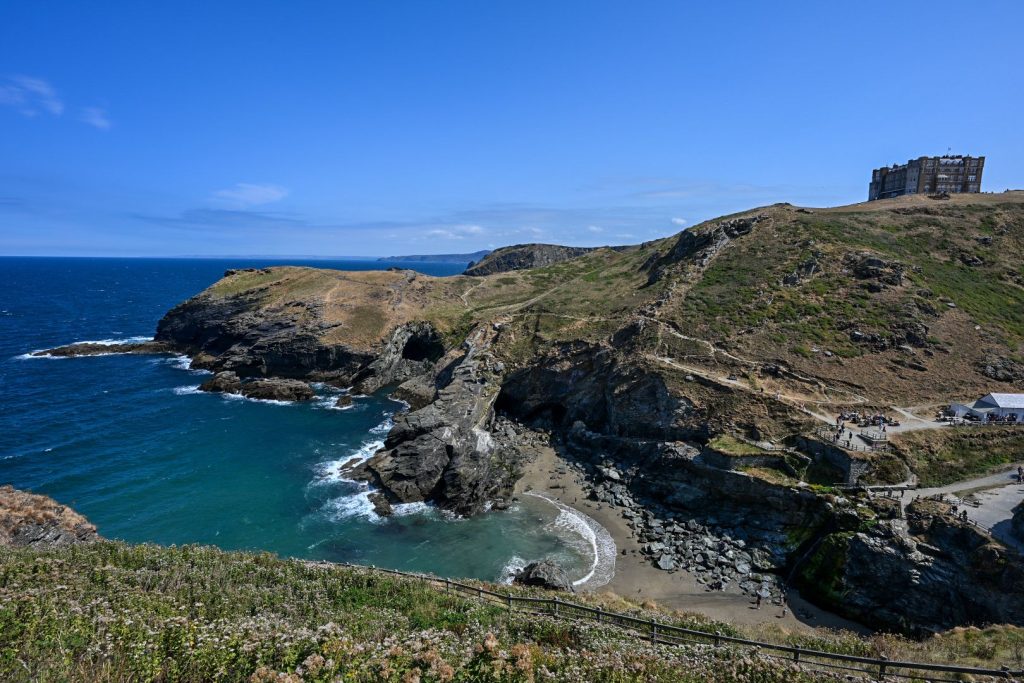
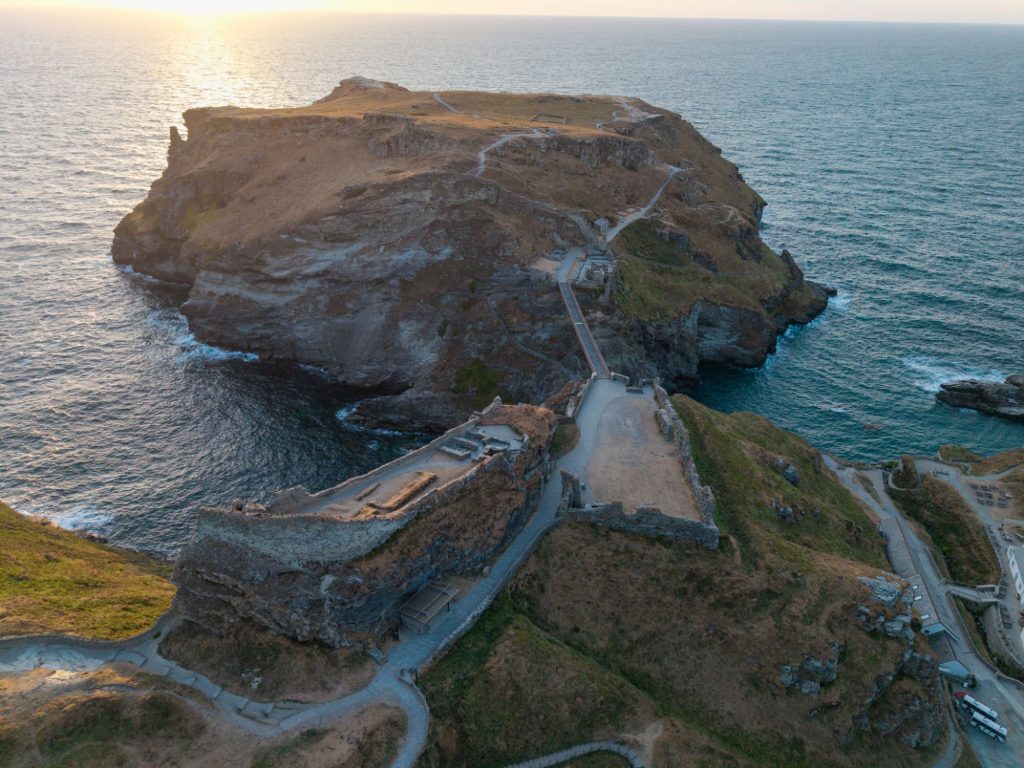
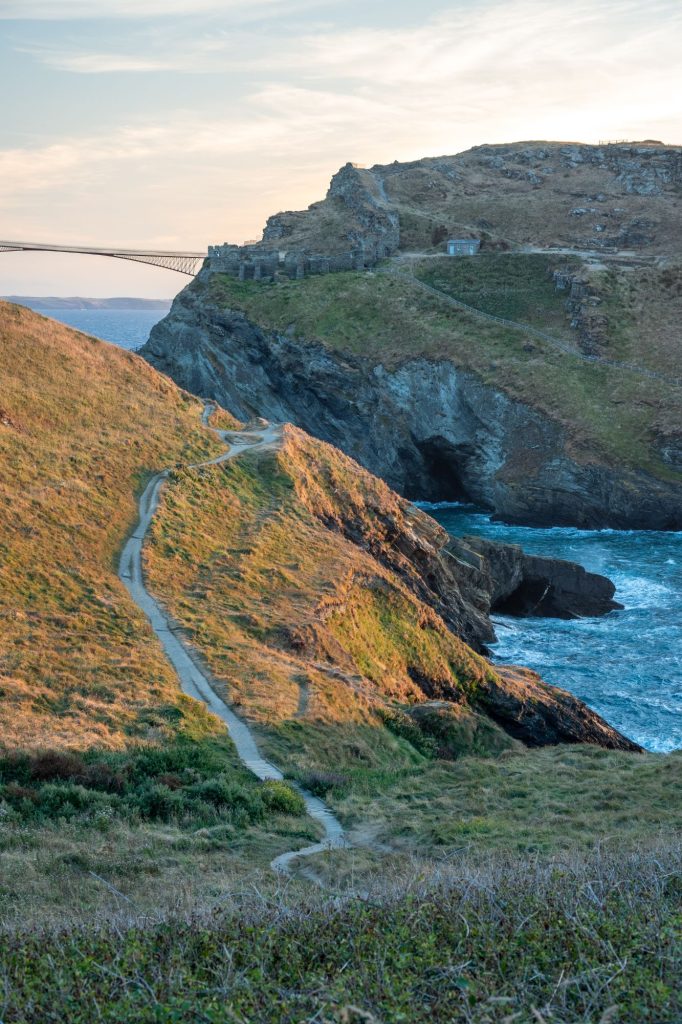
The crowds distract from the stunning cliff views. The castle is situated on an island with a dramatic footbridge connecting it to the main land. The ruins are very ruined, leaving much to our imagination, but these imaginations are hard to turn on if there are people everywhere. The ruins which are visible today (or not so visible) are of the 13th century castle. Recent excavations have found a 5th or 6th century palace at the site, this does tie in with the legend.
Our camping is at a five minute drive. We pitch our tent and eat our lunch before we go for a short hike along a stream through a glen towards a waterfall. We spot many special people on the trial, in colourful clothing, with pointy hats and bare foot. We do enjoy the absence of crowds and to be in calm and shaded nature.
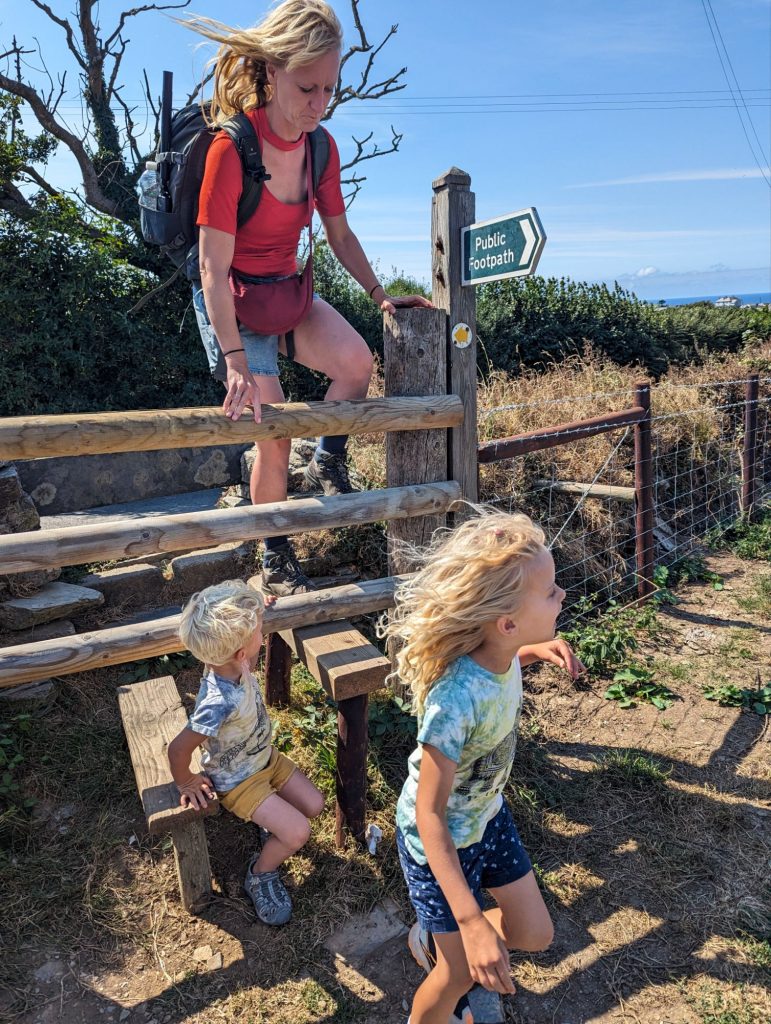
The waterfall is only accessible with a £26 ticket, which we don’t want to pay. There is another waterfall closer to the beach. As we have energy for another hike, we return to our campsite and walk down to the beach instead.
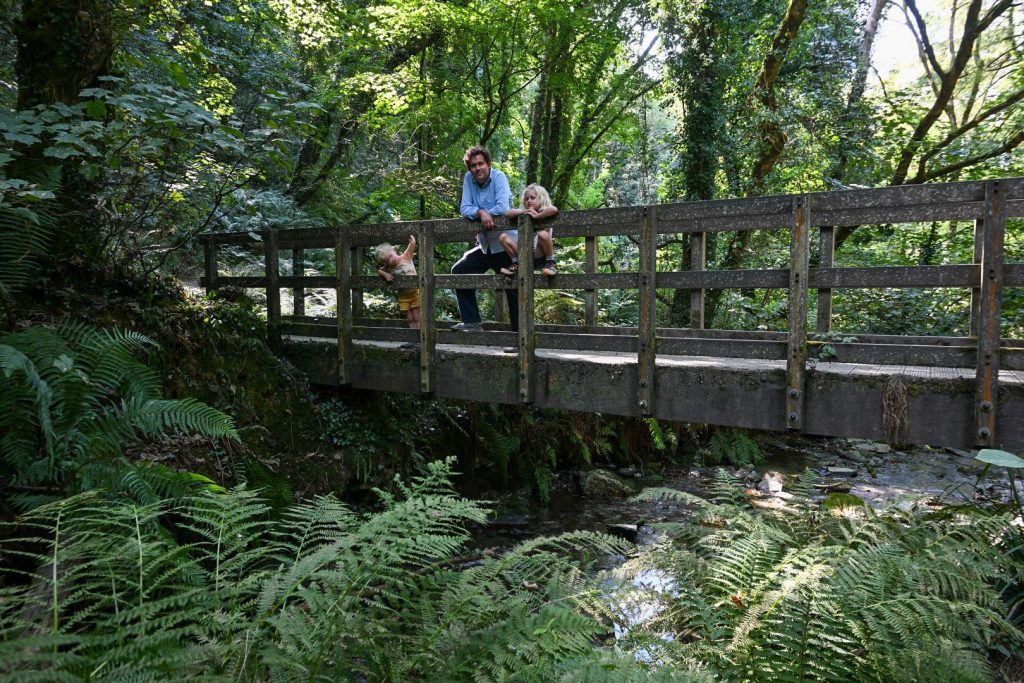
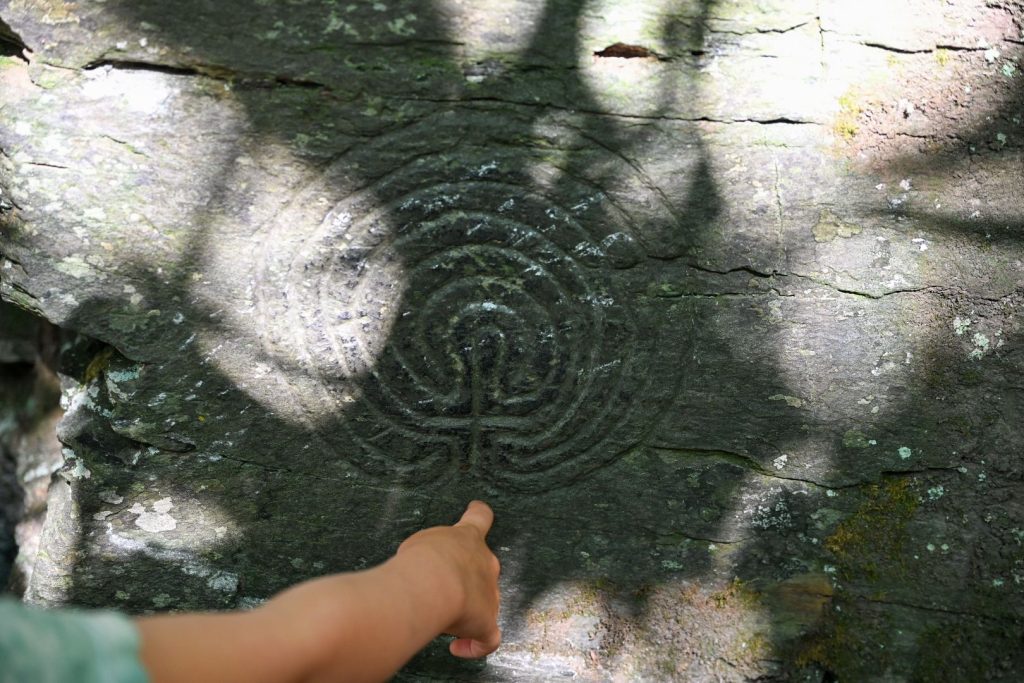
The kids walk well, and we enjoy the rocky valley carved out by a river with waterfalls and pools. There are very little other hikers, funny compared to the crowded castle earlier this afternoon. We pass a labyrinth petroglyph, supposedly from the Bronze Age but even to our untrained eyes it’s clear that this is a recent addition. This doesn’t stop more neo-pagans to light incense and meditate there.
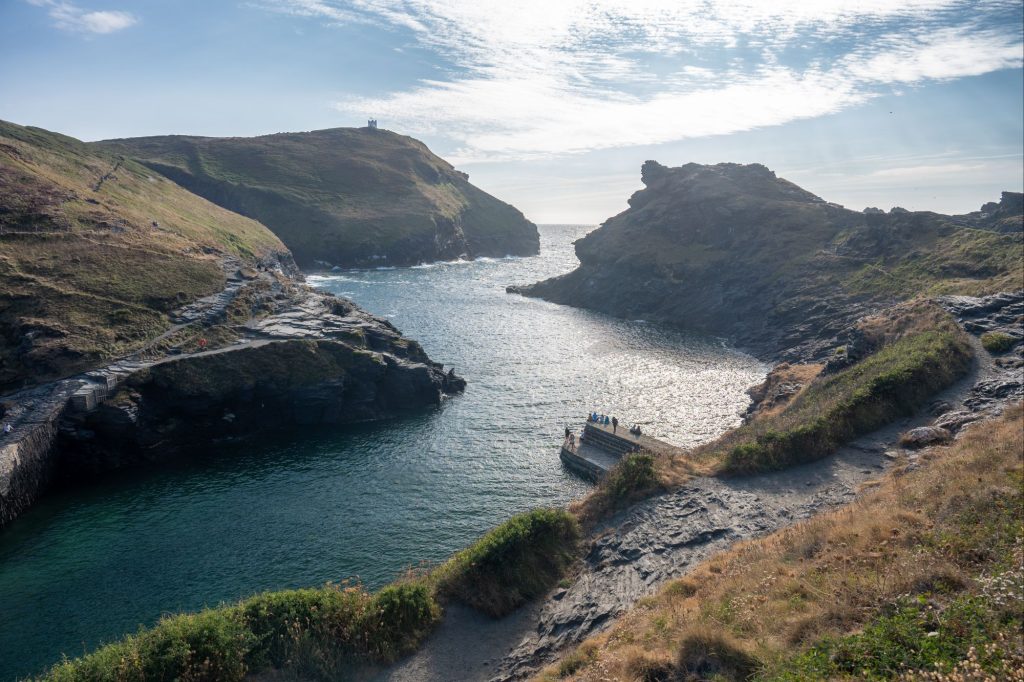
When we have reached the beach we remember the view from our campsite towards the beach, it’s very high up. A steep climb awaits us but we all make it back. The children relax, Olga cooks and Tim drives to nearby Boscastle to view the spectacular natural harbor there. Getting to a relatively quiet space to fly is often more work than anticipated and he gets an additional workout.
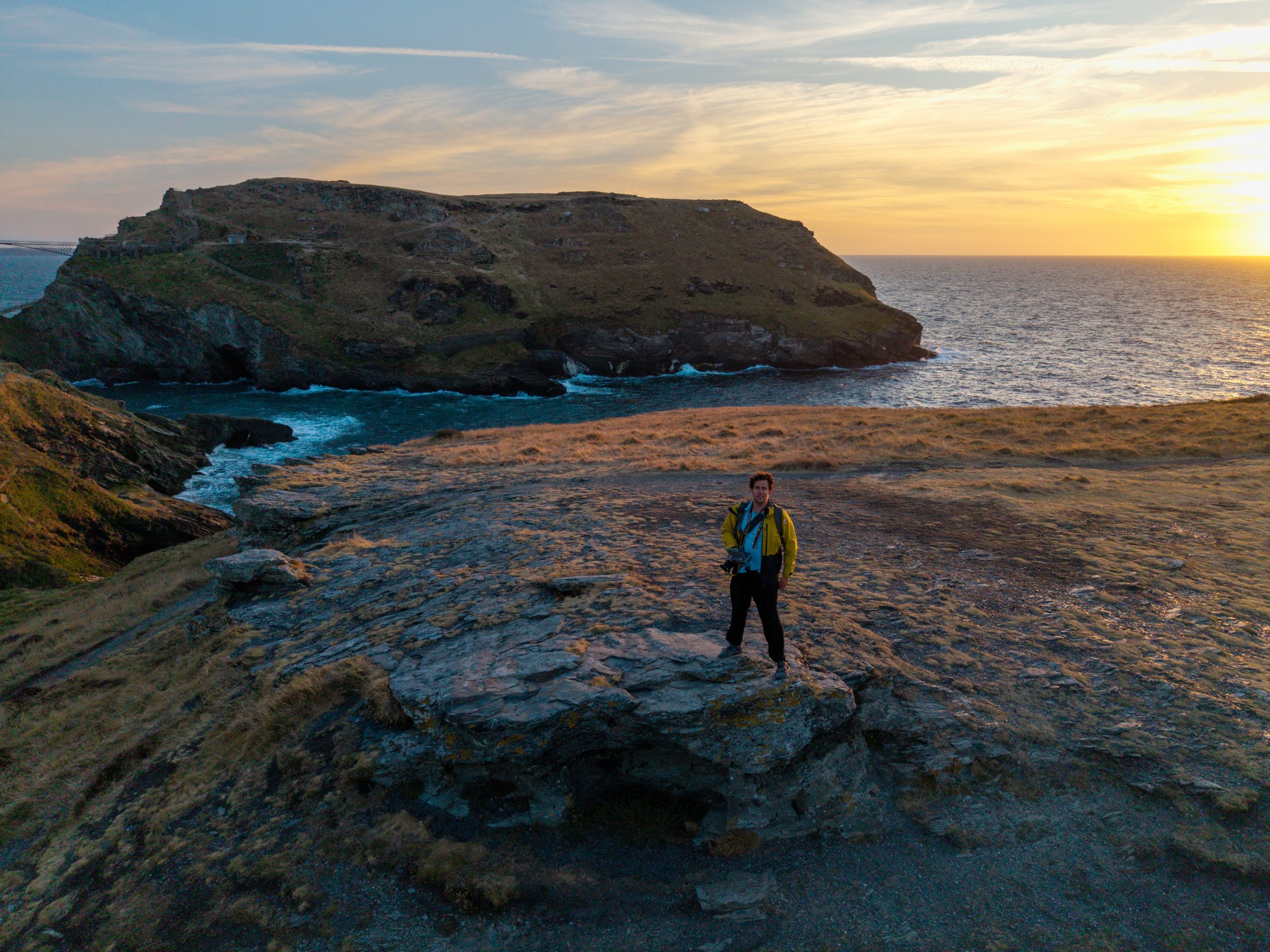
Back at the campsite diner is ready and we all dig in as we have a lot of energy to refill. The children are getting cold in the wind so we let them sit in the tent and get ready for an early bed. Tim goes out one last time back to Tintagel as the crowds have left and the sun is setting. The castle island surrounded by the Atlantic Ocean with all the cliffs and the beatiful colors of the water, the heather and grass are stunning.