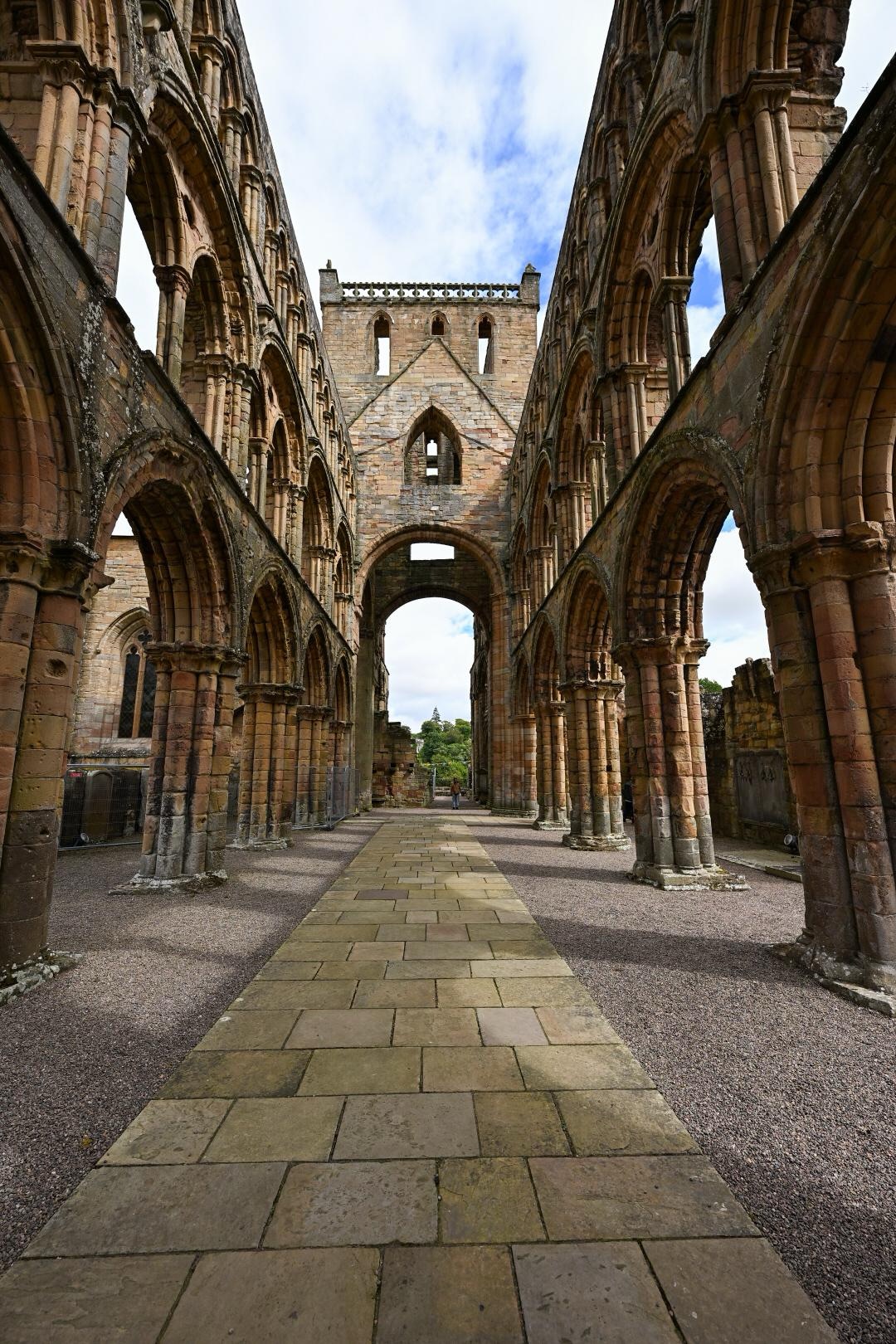
After all that relaxation yesterday we’ll do some exploration of the Scottish borders today. We leave our rainy, abonded mountains to visit four abbeys.
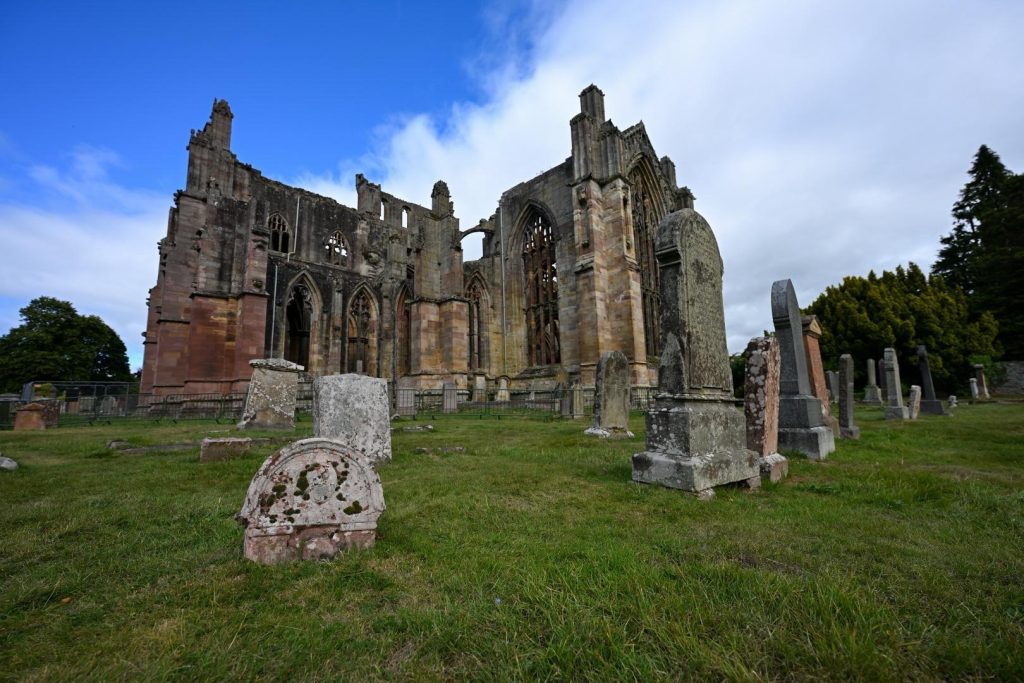
First stop is Melrose with it’s big ruined abbey from 1136. We’re there at 10 and walk round the big remains, noticing many carved decorative details, including likenesses of saints, dragons, gargoyles and plants. It’s built by Cistercian monks in ten years. They marketed Melrose wool throughout trading ports across northern Europe. A town slowly grew up around the abbey. During a time of famine four thousand starving people were fed by the monastery for three months. Melrose abbey was dear to Robert the Bruce as his heart was burried here.
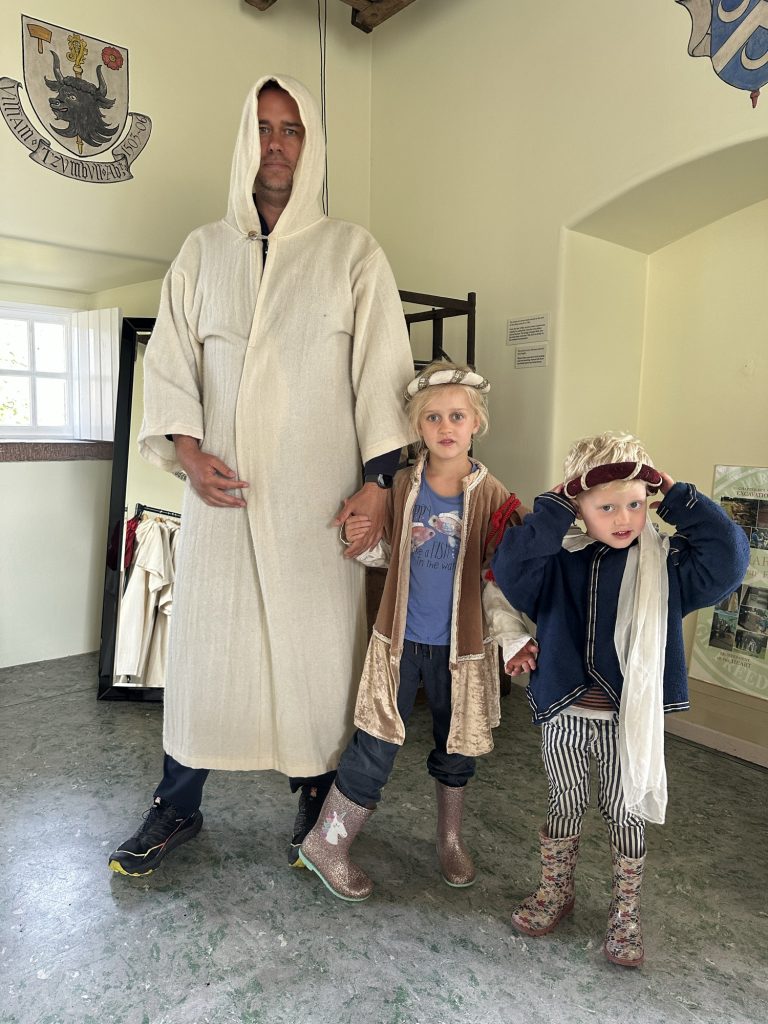
The adjacent museum tells about the history of the place and the town. There is the opportunity to dress up, so we get all medieval and pose.
Across the road is a National Trust garden, the Harmony Garden. It’s a bit of a disappointment, there is a small Georgian house in the center with some grass, shubbery and a small vegetable garden. No explanation on what and who, so we leave to the other NTS garden on the other side of the abbey.
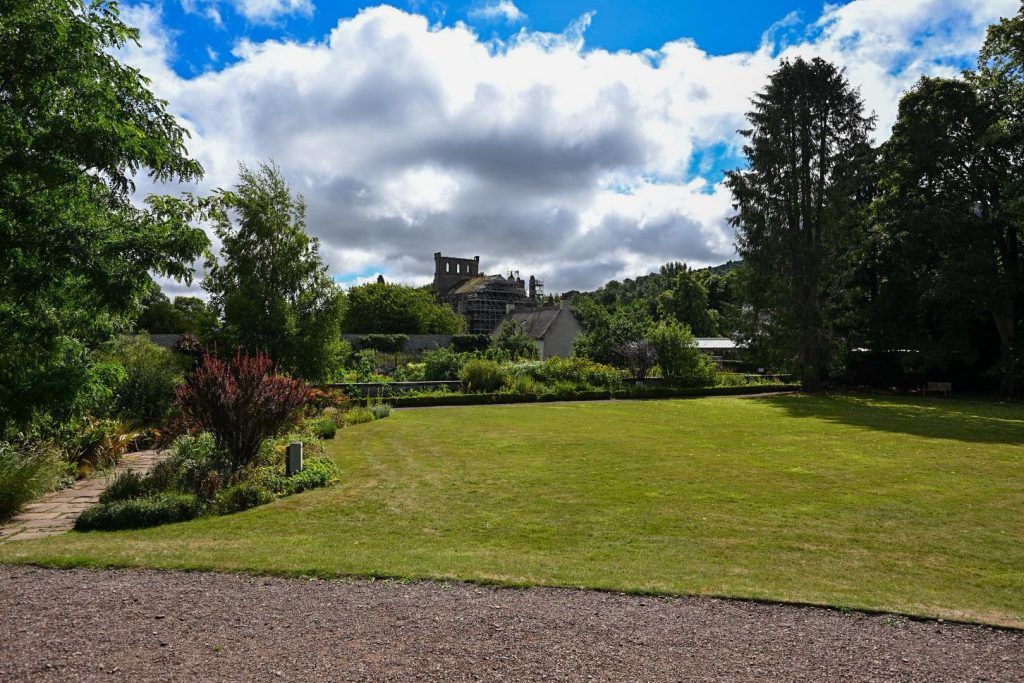
The Priorwood Garden is a bit bigger with a large orchard attached to it. The flowers are blooming and the children do a small exploitation trail. It’s a little bit better than the previous garden but still not much information about the history nor the flora.
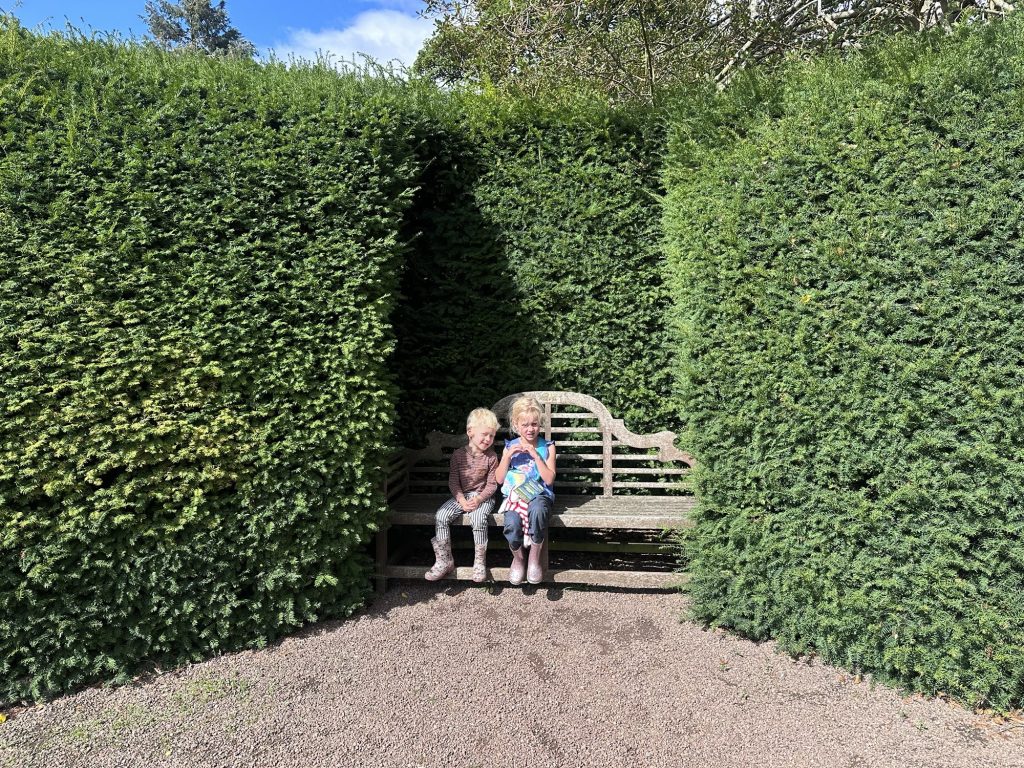
So we head to our last stop in Melrose uncertain of what to expect. It’s a Roman museum about the nearby Roman fort of Trimontium. It’s not free so we’ll have to pay 18 pounds as a family to get in. The volunteer gives us some background information about the place as a movie plays on the screen. It’s not the most interessting of talks but we have the time to listen as the kids can make their own Roman helmets.
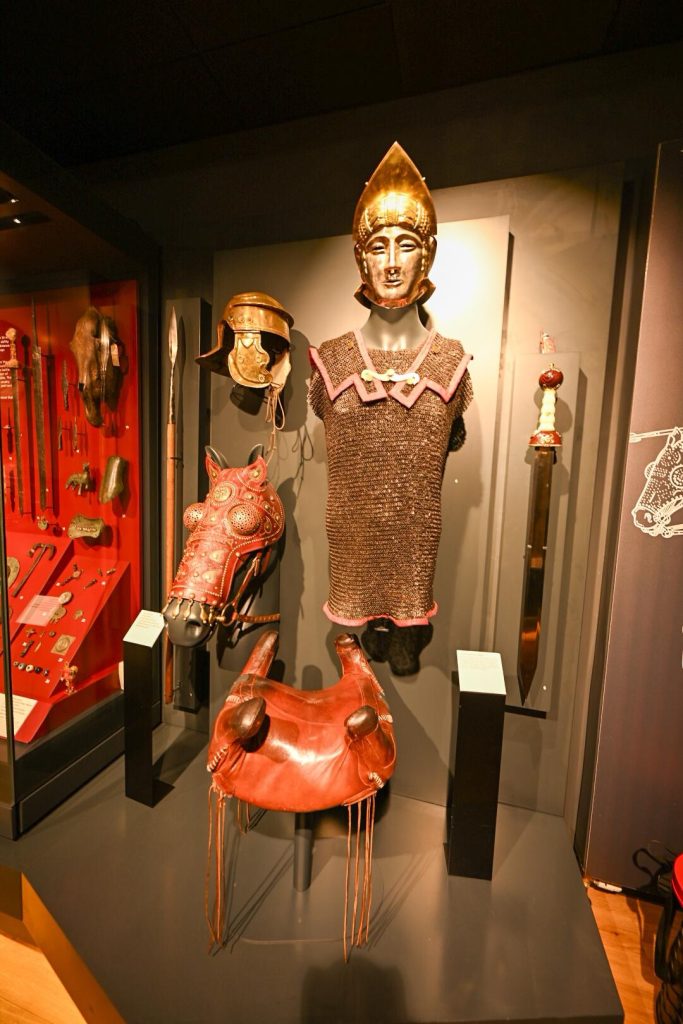
The museum is really small, only one exhibition room with an adjacent movie room. It’s only redeemed by the quality of the pieces, all local finds from the fort. The fort is named Trimontium after the three hills dominating the landscape here. It was the largest of the “outpost” forts after the construction of Hadrians wall.
We’ll see the three hills the rest of the day. We like the leather decorated shield that’s exhibited, normally we only see the bare wooden shields.
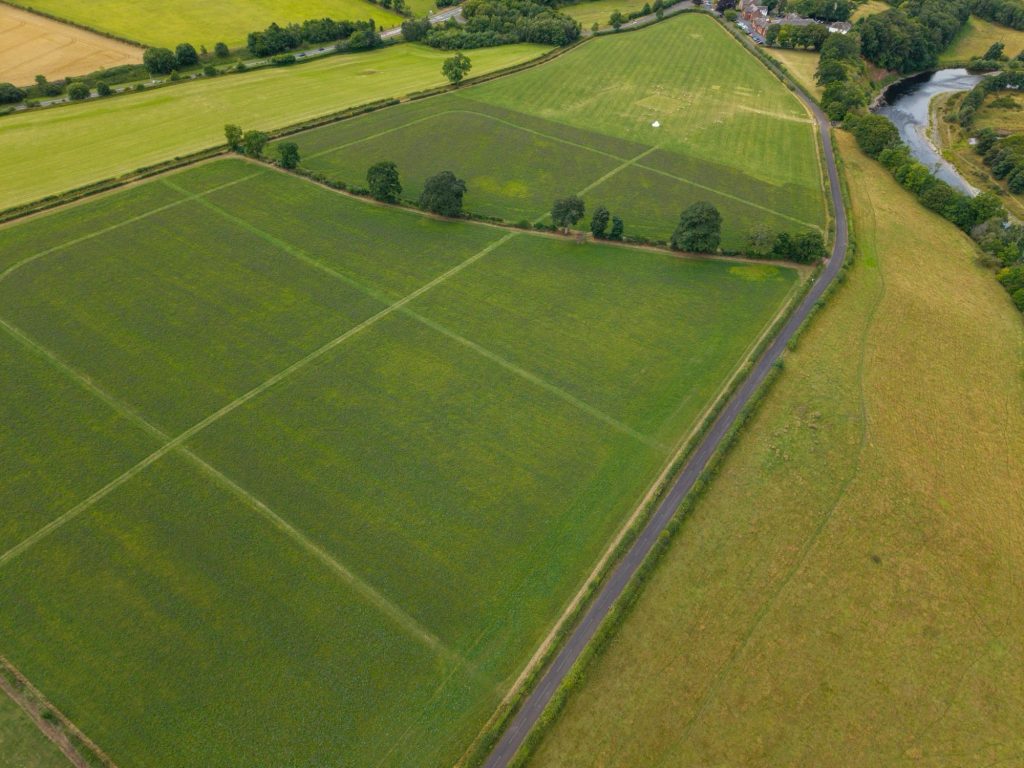
Hungry we get back to the car to have lunch / breakfast for Tim. On our way to Dryburgh we stop at the site of the fort to take some drone shots of the layout and the adjacent arena. This is the most northern Roman arena in existence. There are also some nice looking bridges here from later eras.
15 minutes later we arrive at Dryburgh for a visit to our second border abbey from 1150. This one is famous as the burial place of Walter Scott, the writer of Ivanhoe. Besides an information sheet about the abbey, we also get one about the trees on the estate. The oldest was there already when the abbey was founded in the 12th century. The kids play chess on a big board while we explore the ruins. Cleo seems to be winning until Olga helps Zeno to a stolen victory.
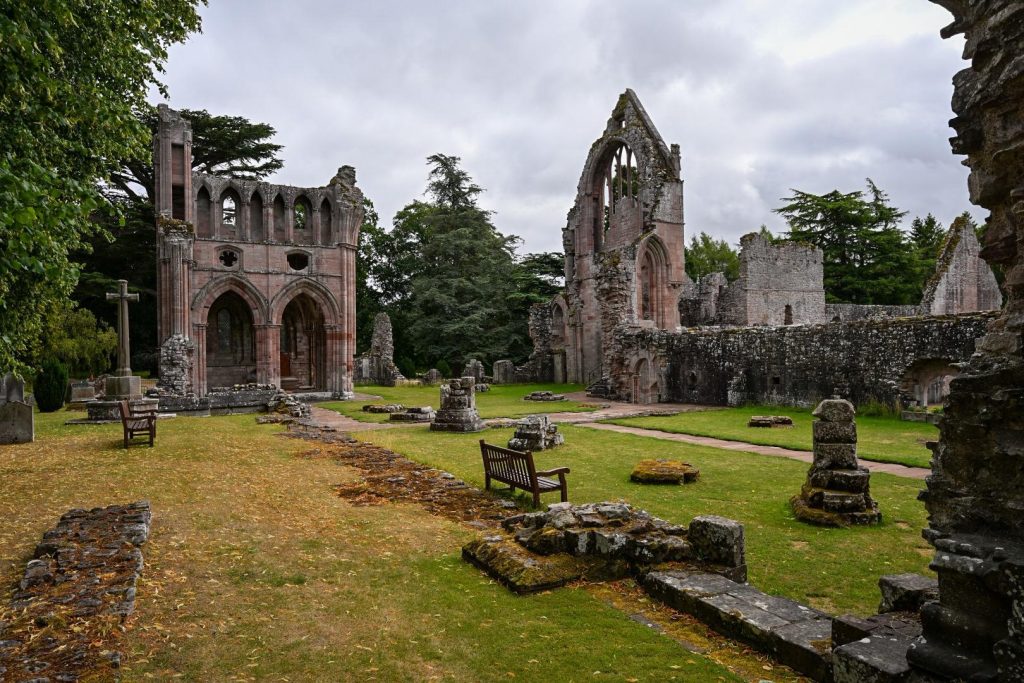
To the south lies Jedburgh, the city where Mary Queen of Scots stayed for a while. The city was fought over fiercly by the English and the Scots which resulted in the ruin of the abbey there. But from all abbeys we will visit today, this is the best preserved and best looking one. The abbey was founded in 1147 housing Augustinian canons (priest monks).
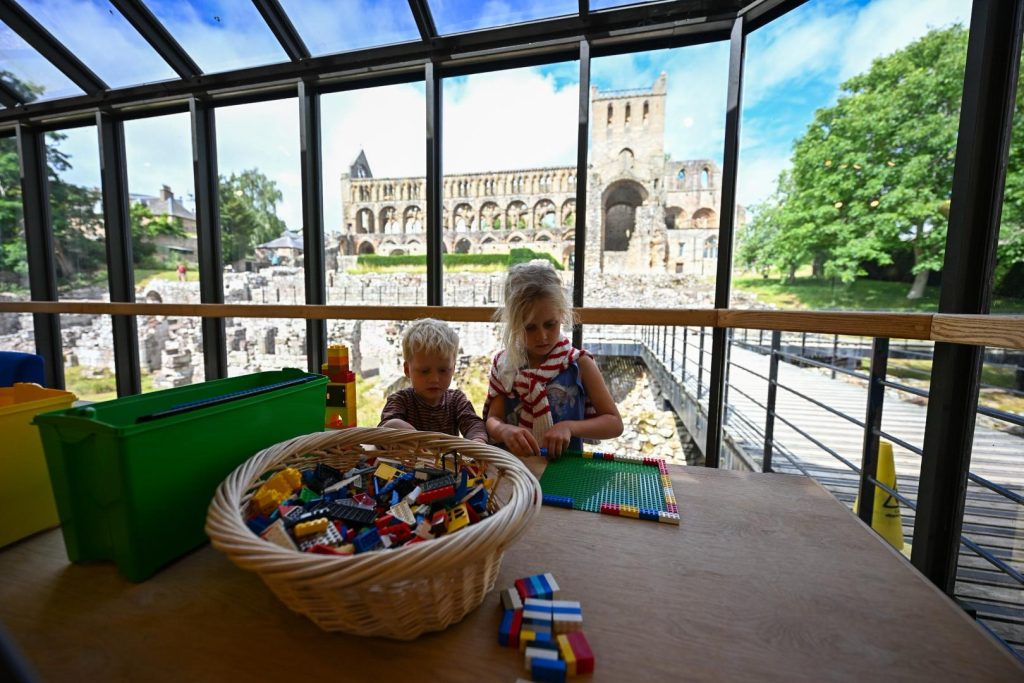
There is another lego bricks trail here which consumes the children. They even find other Dutch siblings and help each other to find all lego statutes. Tim is taking pictures when he wants to grab his 360 camera to get a nice perspective on the ruins. It’s noy in his bag, he had it at the previous abbey so it should be there. He returns to the car to look for it to no avail.
So we head back to Dryburgh in hope of finding it there. Olga runs in and there it is on the bench where Tim was watching the chess match. Reunited with our gear we head to Kelso for the last abbey of the day.
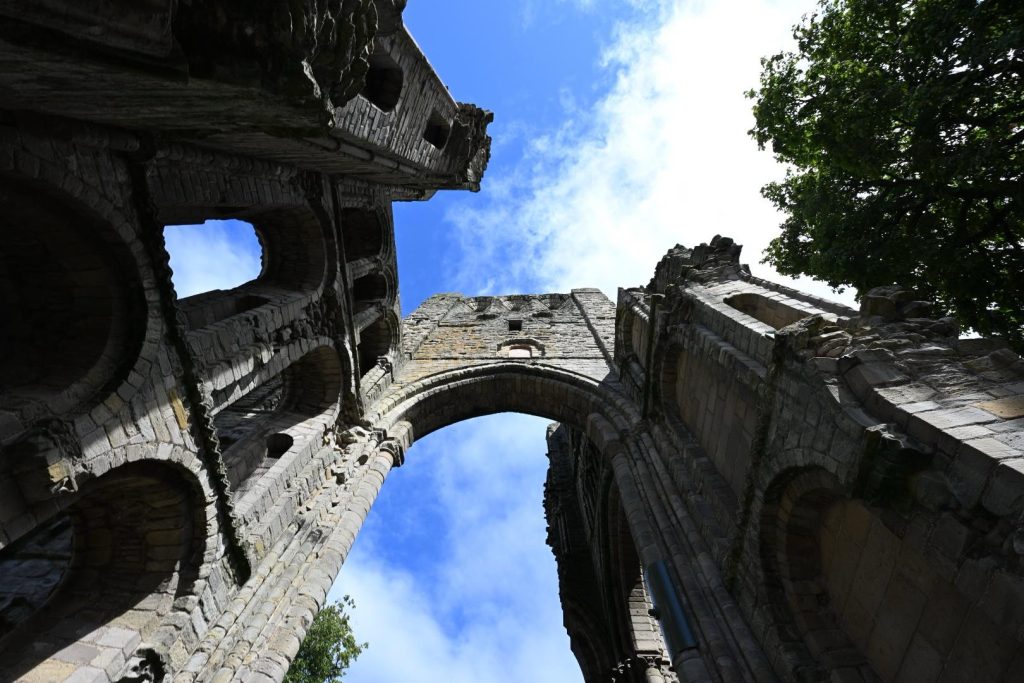
Kelso was consecrated in 1143 and now is not more than the remains of the west tower crossing and part of the infermary. However, the massive design and romaneque style of the tower indicate the importance with which Roxburgh was regarded when the abbacy was at the height of its power.
With all abbeys in the bag we get back in the car and drive to our caravan park. It’s raining again, but luckily it only rained while we were driving.


