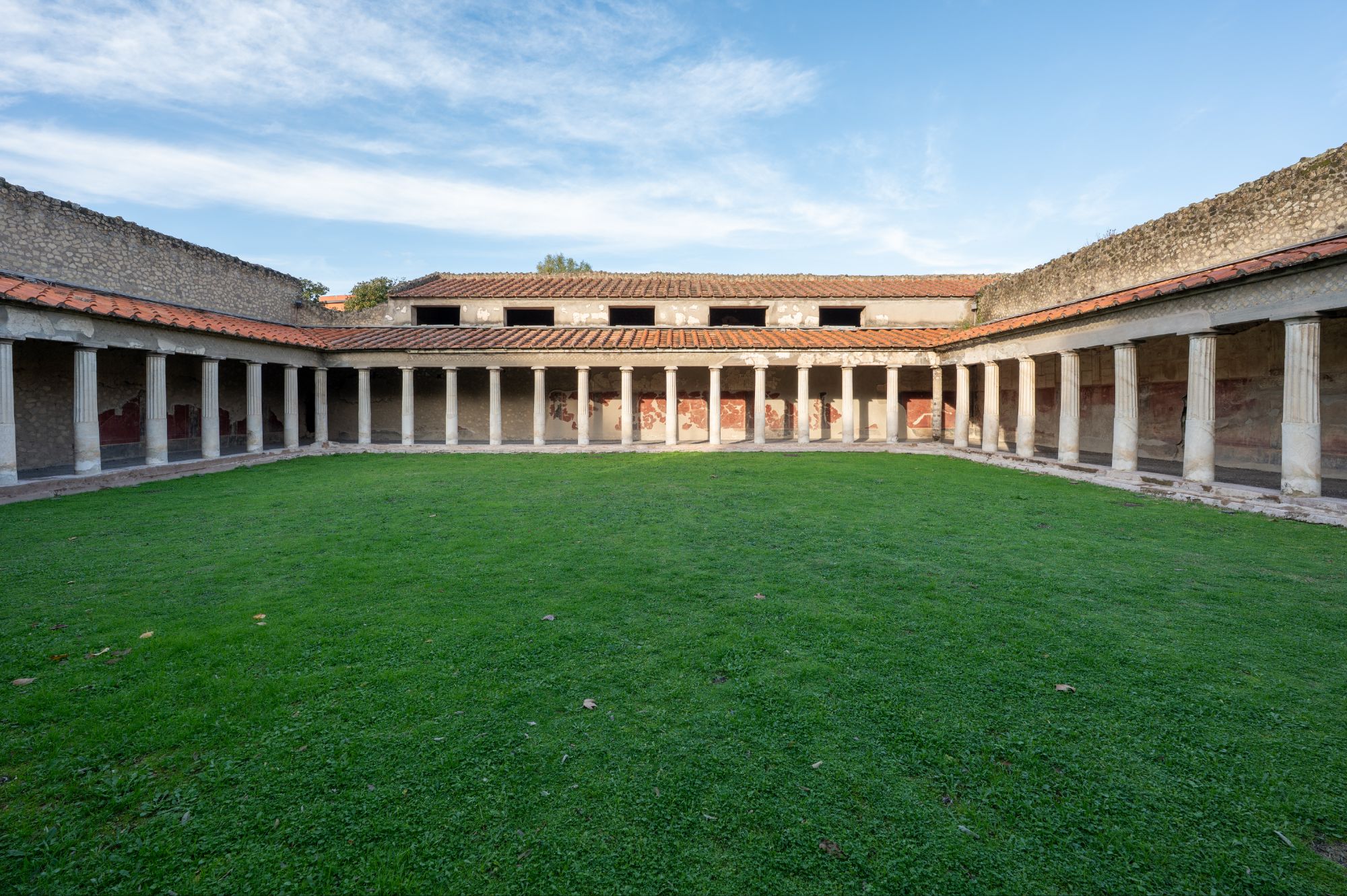
There is already a line when we arrive at Pompeii at 8:50. At 9, the port opens and we want to enter with our Pass, but we’re sent back to the ticket shop to exchange our pass into paper tickets. After 10 more minutes of queing, we can pass Pompeii’s city walls.
It’s not as well preserved as Heraculeum, but Pompeii is much bigger and since it’s literally an entire city there is a lot to see. So Tim made a top 10 of things to see and we’ll see what additional things we’ll pass along the way.
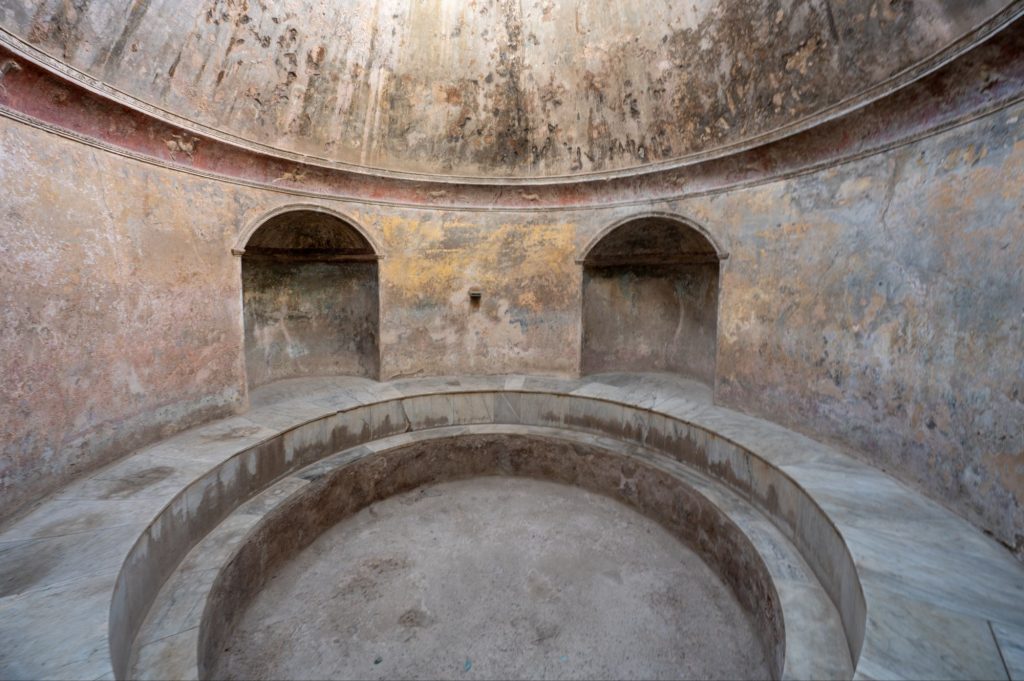
The first thing we see are the remains of the basilica, one of the oldest and the prototype design for most Christian churches for centuries to come. Not much is standing and Olga is instantly disappointed, this is not improved after seeing the forum, it’s a nice area but we’ve seen better. Luckily things improve when we explore the forum baths, these are one of the best we’ve seen as they still have a roof, decorated walls and intact floors.
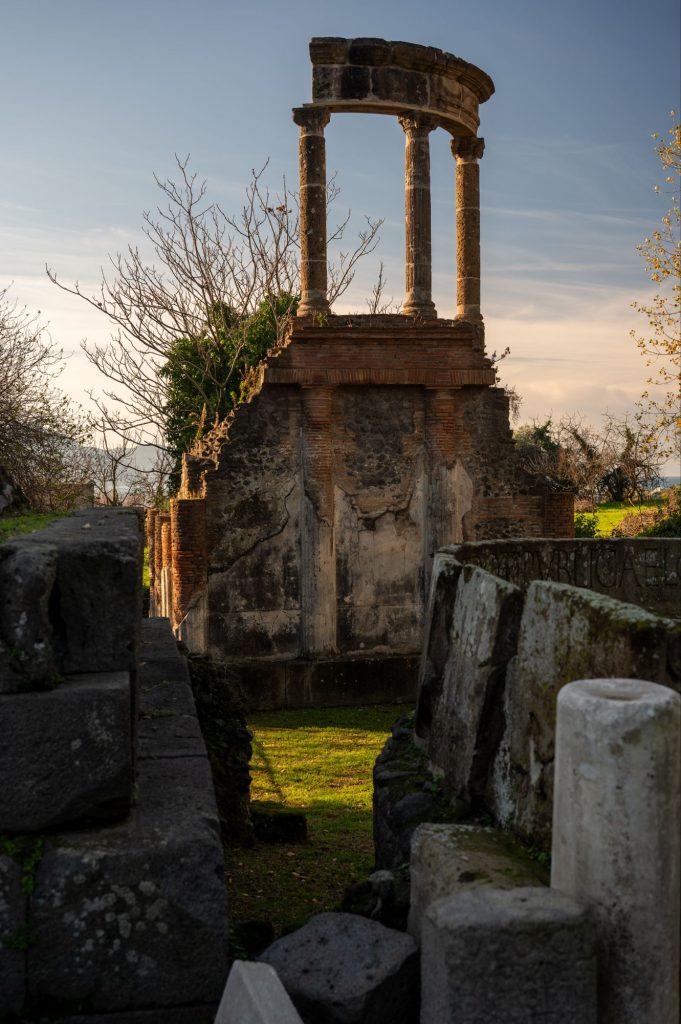
Next door is the famous Cave Canem mosaic (beware of the dog) guarding the entry to the house of the tragic poet. We can barely see it as it’s surrounded by a huge tour group. Since we’ve seen the original mosaic in the Naples Archeological Museum, we continue north and head out of the city. In the Northwest corner lie two suburban villas which are better preserved than most in the city. They are not included in our pass so we’ll have to pay 8 Euros pp extra. It seems like nobody wants to pay extra because we’re the only ones here. First we pass the necropolis outside the city gates before we come to the villa of Diomedes.
We enter this big villa on the upper floor which over looks the huge peristyle garden (surrounded by columns) below. The garden faces the bay of Naples and would have been a great place for dinner parties. The downstairs rooms still have painted walls but they aren’t in the best condition.
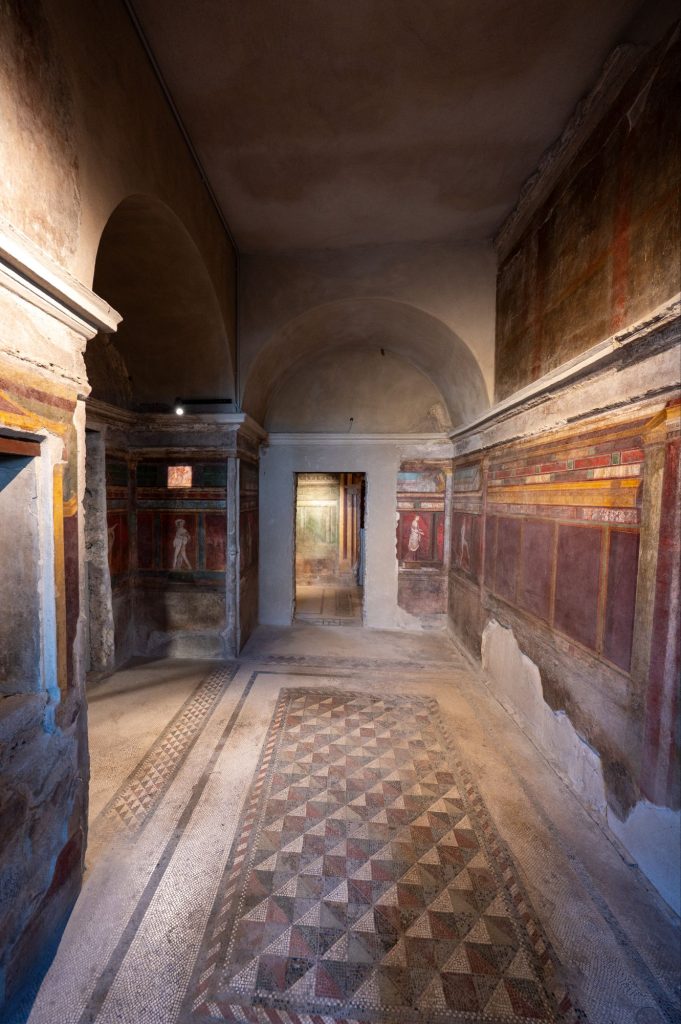
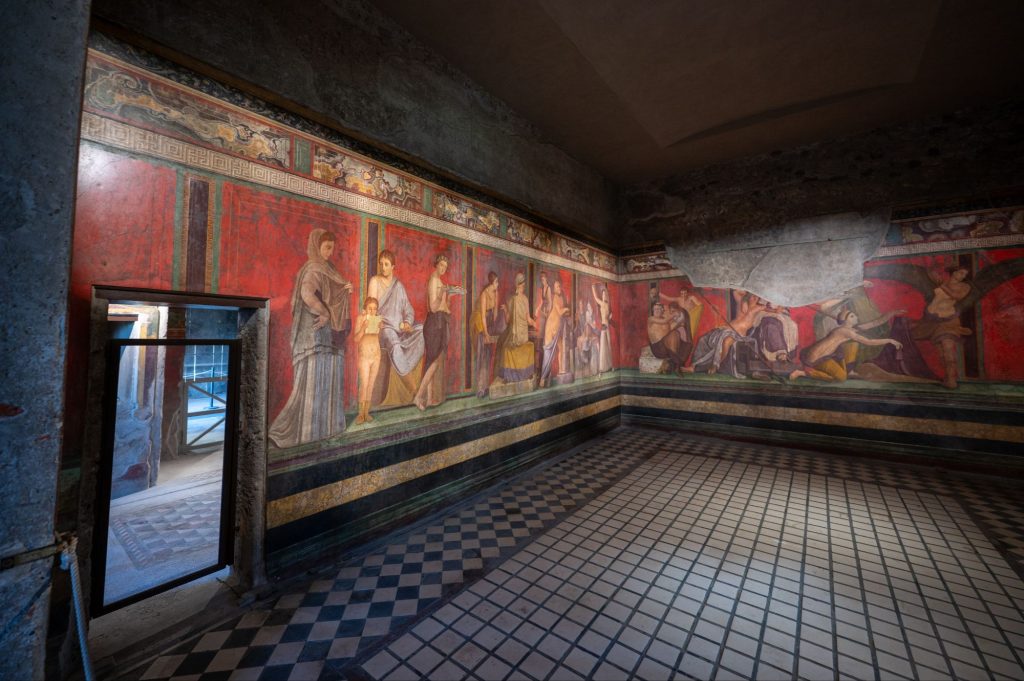
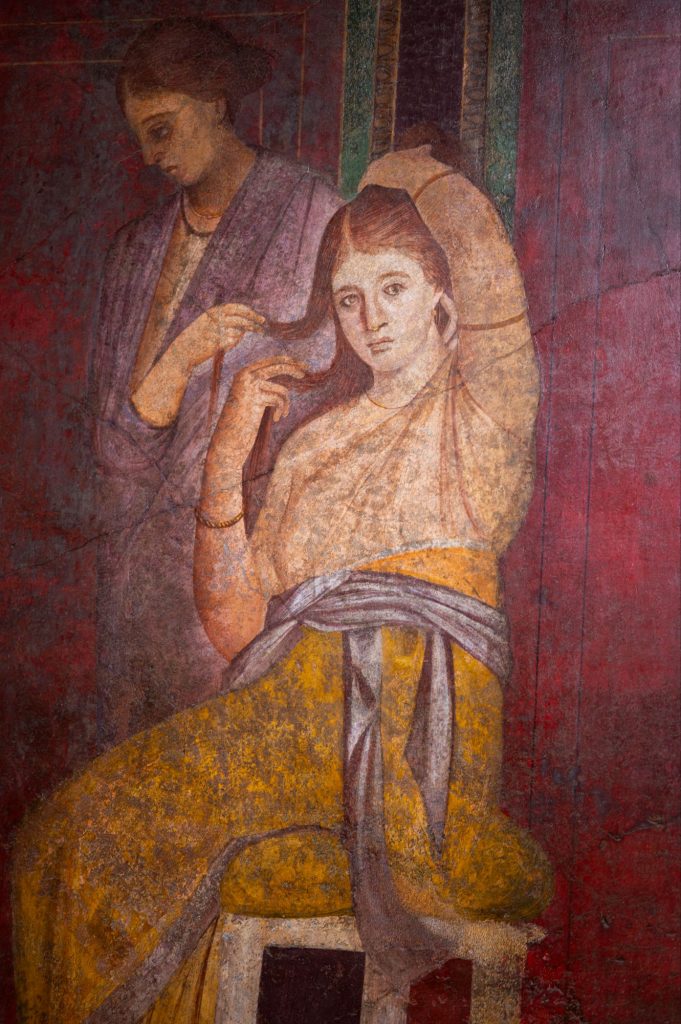
Just a bit to the north lies the villa of the mysteries, the reason why we’re here. This villa escaped the disaster mostly intact and the paintings there are in a great state. The villa gets its name after the paintings of a bride being initiated into a Roman cult. These are among the best surviving paintings from the first century BCE. It was money well spend to come this way and great to have the villas all for ourselves. When we get back to the city proper it has gotten a lot busier.
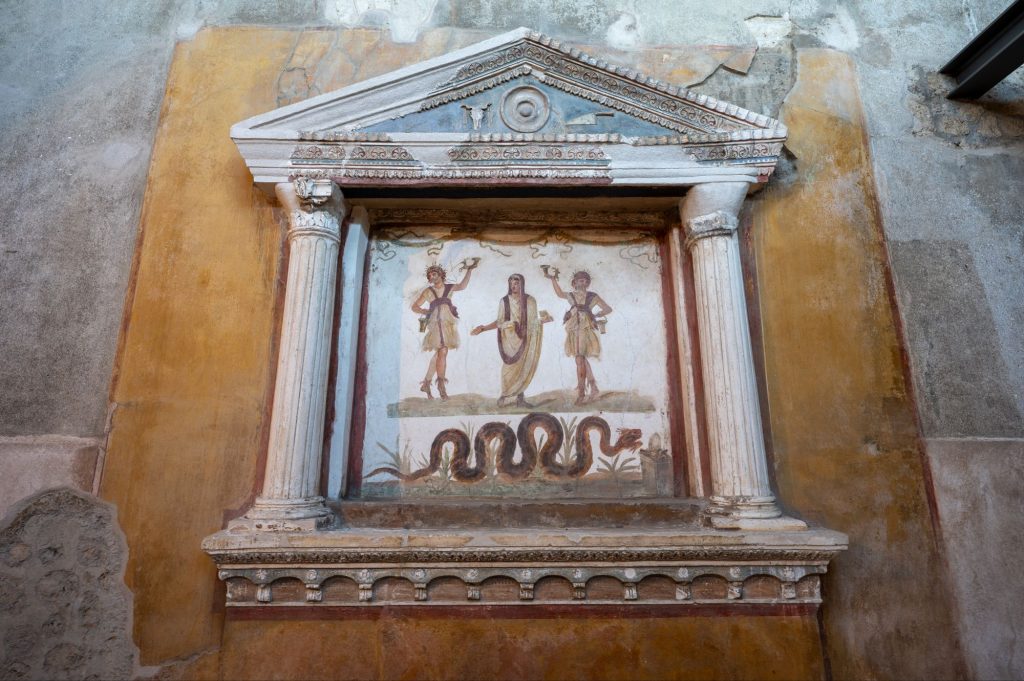
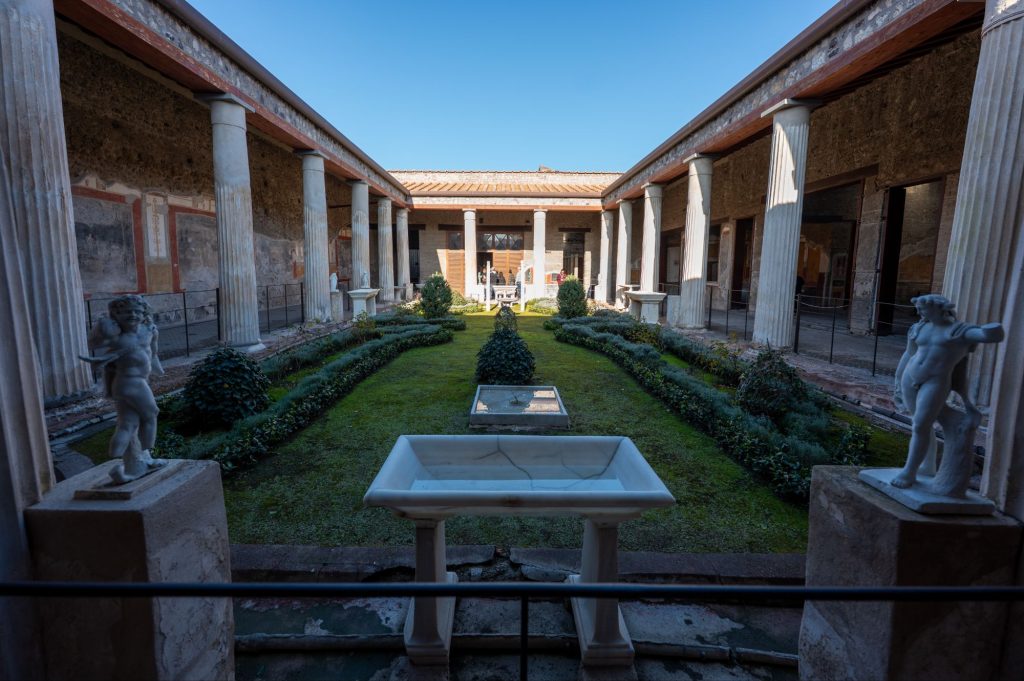
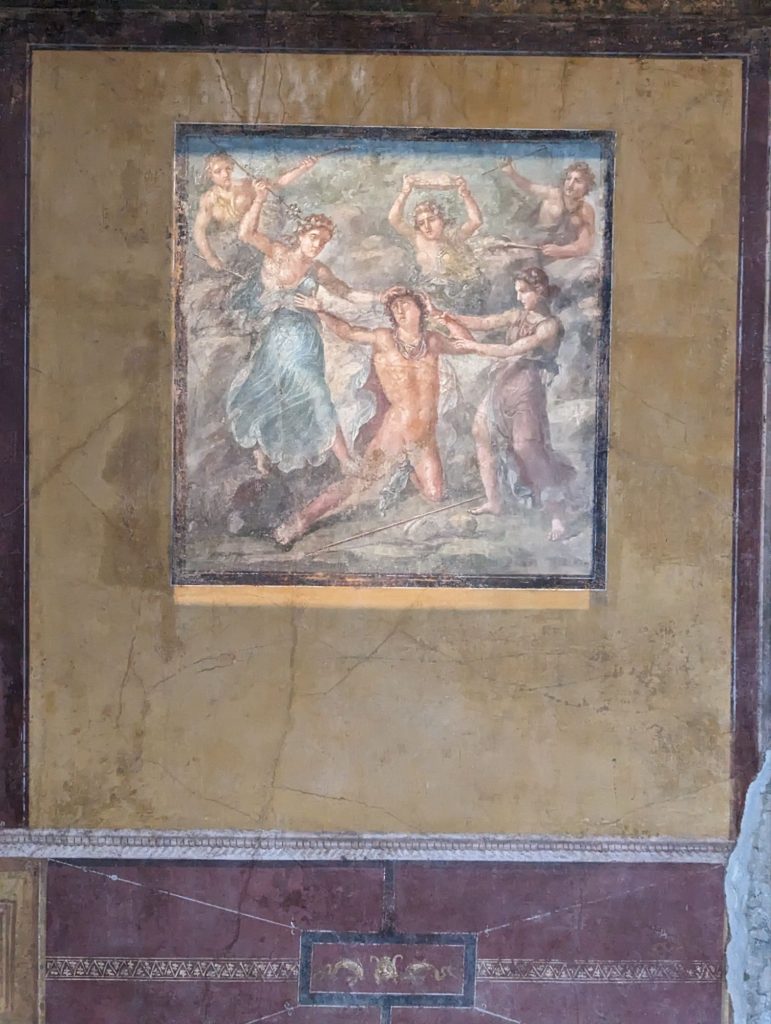
Walking through the small streets we avoid the biggest crowds until we make it to the house of the Vetii. The house was owned by two brothers, two freedmen (liberated slaves), who did very well for themselves and had a house the size of an entire city block. The paintings here are also in a great state but are somewhat later as they are dated to be completed after the earthquake of 62, so just before the destruction of 79. The paintings are scenes from mythology and we have a hard time explaining to Cleo why all the people depicted have to die….
Across the road is the back entrance of the house of the faun, famous for its statue of a little faun but even more for its huge Alexander mosaic. We couldn’t see the original in the museum in Naples, so we have to make due with this copy.
The next stop are one of the oldest bath surviving Roman baths(125 BCE), the Stabian baths. They are also in great condition and are famous for the early use of a concrete oculus dome for extra light in the men’s frigidarium. It get’s busier and busier and we have to wait in line to get to see the better parts of the baths.
Swirling passed tour groups we get to our penultimate stop, the small and big theatres which are adjacent to each other. The odeon, or small theater, was a roofed music hall. The grand theatre is in an okay state but we’ve seen grander and better preserved examples in Turkey. Olga and the kids stay and enjoy the sunshine while Tim makes a run for the last stop in the far corner of the city, the Amphitheatre. Once there this also disappoints, yes it’s fairly intact but not that big and partly over grown by grass.
It’s time to leave as the streets are getting busier and we’ve seen almost all the highlights we wanted to see (some were closed for « restauration »). On our way back we take one last detour to join the queue for the brothel. We’ve seen the original paintings in the erotic section in the archeology museum in Naples, and there isn’t much else there.
When we’re finally back in our car we’re glad to sit down. Stop at a tourist place to get a quick lunch to revitalize us for the last to stops of the day. We conclude that Pompeii is fantastic because of its size, and to wonder in the endless streets like a true Roman.
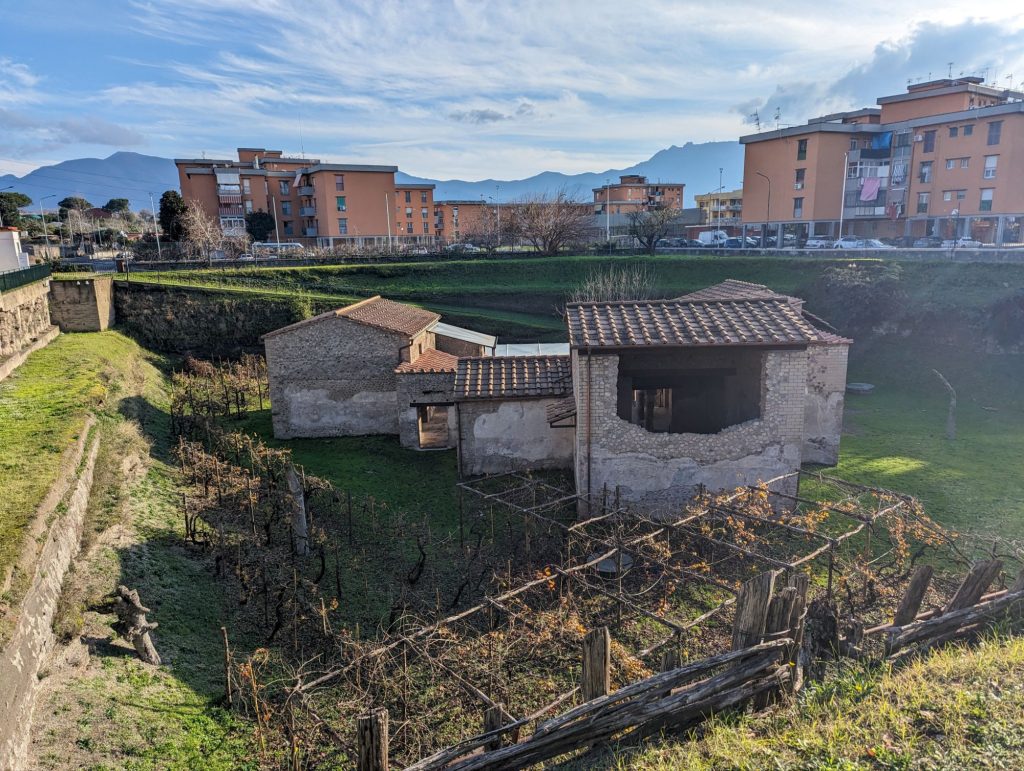
A few minutes by car lies Villa Regina, one of the Rustic villas in this district. It has a small museum which shows some of the finds among which a plaster cast of a dead pig and a dead horse. The pig was found in the next door agricultural villa Regina which is in a fairly good state.
Our last stop of the day is the Villa Poppaea, a huge villa which was probably owned by the emperor Nero and was the residence of his second wife Poppaea Sabina. Everything here is on a grander scale than what we have seen before, huge gardens with an Olympic size swimming pool. Huge dining areas and frescos of the highest qualities in all the rooms. Olga discovers one with an optical illusion and is so intrigued so goes back to figure it out, while Tim anf the kids head back to the car.
We get back at 15.00 and start up a final Christmas movie while we sit down and relax for the remainder of the day.


